



Somalia back on the maritime stage after 35 years
Somali Ship Register Limited CEO Çağdaş Oykun Saltaş explained the importance of the national ship registry re-established after 35 years in terms of the country’s maritime sovereignty, blue economy vision and goals in global maritime trade...
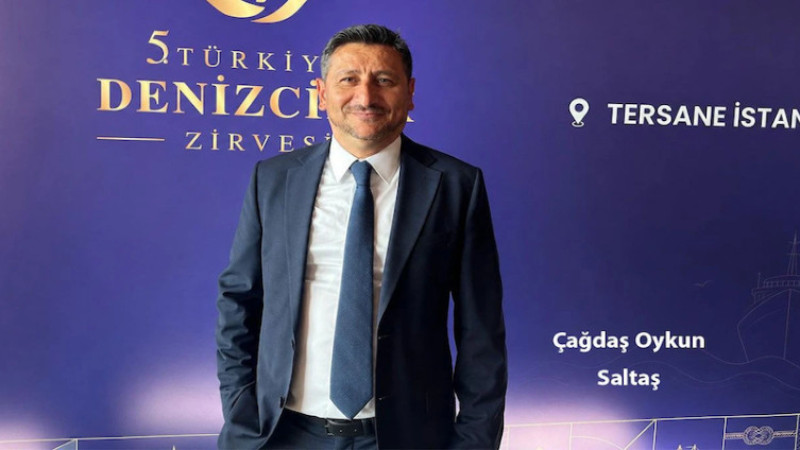

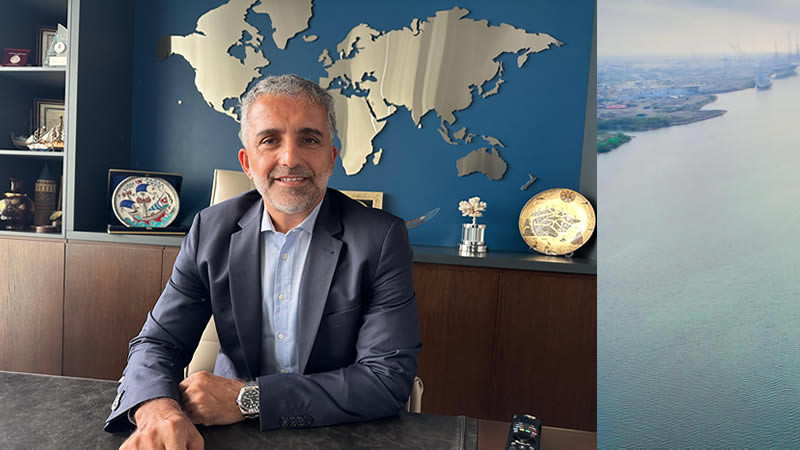
Somali Ship Register Limited CEO Çağdaş Oykun Saltaş explained the importance of the national ship registry, re-established after 35 years, in terms of Somalia’s maritime sovereignty, its blue economy vision and its ambitions in global maritime trade. Saltaş stated that SSRL had been appointed as the implementation partner for this process and said: “Our aim is not merely to register ships. Our objective is to establish a transparent, reliable and digital flag State administration fully compliant with international legislation and to contribute to Somalia achieving a respected and trusted position within the international maritime community.”
Somalia has decided to re-establish its national ship registry after approximately 35 years. How do you see and assess the potential contributions of this initiative to Somalia?
Somalia’s decision to revive its national ship registry is the result of the country’s determination to effectively exercise its sovereign rights in the maritime domain once again. As SSRL, we have been appointed as the implementation partner for this process. Our aim is not simply to carry out ship registration; it is to establish a transparent, reliable and sustainable ship registry system in line with international standards. We believe this initiative will strengthen Somalia’s position within the international maritime community.
As you know, Somalia’s Exclusive Economic Zone has for many years been exposed to illegal fishing activities by foreign fishing vessels. While this situation has led to the uncontrolled exploitation of the country’s marine resources, it has also contributed to weakening maritime security and creating conditions for negative developments such as piracy in the region. In order to exercise its sovereign rights over its maritime zones more effectively and restructure its maritime sector, the Somali Government decided to re-establish its national ship registry after approximately 35 years.
One of the main objectives of this decision is to encourage fishing vessels licensed by Somalia and operating within its territorial waters and Exclusive Economic Zone to operate under the Somali flag, thereby ensuring effective oversight and control. However, rather than establishing a system focused solely on the fishing fleet, Somalia has adopted a competitive Open Registry model in line with international maritime standards. This approach aims to encourage commercial vessels operating within the world merchant fleet to also choose the Somali flag. This will both increase Somalia’s maritime revenues and strengthen the country’s visibility and reputation within the international maritime community.
What exactly does your responsibility as Somali Ship Register Limited cover within this project?
Somali Ship Register Limited (SSRL) is an independent organization authorized to provide ship registry services under the Memorandum of Understanding and Authorization Agreement signed with the Somali Ministry of Ports and Marine Transport. However, I would particularly like to emphasize that final sovereignty and regulatory authority over the ship registry rests entirely with the Somali Ministry of Ports and Marine Transport. The Ministry is the sole sovereign authority acting on behalf of the flag State, while SSRL is the authorized operator providing technical and administrative services for the implementation of this authority.
Within this framework, we are responsible for carrying out ship registration procedures, conducting technical and administrative reviews, performing sanctions and compliance checks, operating the digital ship registry infrastructure, and coordinating technically with international organizations.
In addition, in line with the IMO’s recently issued guidelines and circulars concerning illegal shipping activities and the responsibilities of flag States, we are establishing the necessary administrative and technical infrastructure to ensure that the Somali flag fully meets international requirements. In this context, we make appointments of Recognized Organizations, Deputy Registrars and Flag State Inspectors, oversee their activities, and provide the Ministry with technical advice based on international conventions, IMO regulations and best practices.
Our objective is to establish a transparent, reliable and digital flag State administration fully compliant with international legislation and to contribute to Somalia achieving a respected and trusted position within the international maritime community.
What roadmap will you follow to ensure that the Somali flag achieves a respected position on the international stage?
Today, a reliable ship registry is not merely a structure that registers ships and issues certificates. A strong flag State administration must be a system that complies with international conventions, establishes effective inspection and oversight mechanisms, and continuously develops its digital infrastructure.
Our priority is to establish a flag State administration fully compliant with IMO conventions and international maritime standards. In this context, ensuring that all records and notifications in GISIS are maintained completely, effectively operating the LRIT system under IMSO oversight, and establishing the administrative and technical infrastructure required under the IMSAS framework are among our key objectives.
In the initial years, we will pursue a controlled yet commercially competitive growth strategy. While aiming to grow our fleet in a qualified and sustainable manner, we will further tighten our acceptance criteria and technical requirements as the system matures.
Our ultimate objective is not to become a registry distinguished merely by the number of ships registered, but to establish a flag State administration recognized within the international maritime community for its reliability, transparency and compliance with IMO standards.
The Somali Government emphasizes that this initiative will contribute to investment, employment and economic growth. In your view, how will a strong ship registry system affect the country’s maritime economy and the interest of foreign investors?
A modern ship registry is not merely a structure that generates registration fees. When properly designed, it is strategic infrastructure that supports the development of a country’s maritime ecosystem.
Our objective is to establish a reliable ship registry supported by robust KYC and due diligence processes, effective international sanctions screening, a fully digital infrastructure, a transparent management approach, close cooperation with authorized classification societies, and an effective flag State inspection system.
Such a system will create an environment of confidence for international shipowners and investors. A reliable ship registry that complies with international standards will contribute to increased foreign investment, the creation of new employment opportunities in the maritime sector, the development of local technical expertise, and Somalia’s stronger integration into the global maritime industry.
It will also generate economic activity in numerous related sectors, including ship management, classification, inspection, training, port services, insurance and maritime technologies.
As SSRL, we are focused on establishing the technical infrastructure for this transformation and contributing to Somalia becoming a reliable and respected flag State operating in accordance with international standards. We are building a strong and reliable system that will support the sustainable growth of Somalia’s maritime economy.
There has been notable cooperation between Somalia and Türkiye in recent years in the fields of defence, port operations, maritime security and shipping. How could this ship registry project give further momentum to maritime relations between the two countries?
Relations between Türkiye and Somalia have become one of the strategic partnerships that have attracted significant attention over the past decade. Following President Recep Tayyip Erdoğan’s historic visit to Somalia in 2011, relations between the two countries gained new momentum and evolved beyond humanitarian assistance into an institutional and strategic partnership. Today, concrete projects are being successfully implemented across a wide range of areas, including health, education, infrastructure, transportation, defence, security, economic development and institutional capacity building.
In particular, the steps taken in the maritime sector in recent years have become one of the most strategic dimensions of this partnership. Cooperation aimed at strengthening maritime security, developing the capabilities of the Somali naval forces and coast guard, protecting maritime jurisdictional areas, conducting oil and natural gas exploration activities, and advancing initiatives in line with the blue economy vision are among the clearest examples of the strategic partnership based on trust between the two countries.
In addition, cooperation in infrastructure investments, economic development projects and advanced technology demonstrates that bilateral relations are becoming increasingly comprehensive.
In this process, the vision and strong political commitment demonstrated by the Somali Minister of Ports and Marine Transport, Mr. Abdulkadir Mohamed Nur, have been an important driving force in restructuring Somalia’s maritime sector. The reforms led by the Ministry represent the beginning of a new era for Somalia in terms of strengthening maritime administration, enhancing maritime security and establishing an institutional structure in line with international standards.
Likewise, the knowledge, technical expertise and institutional support provided by the Republic of Türkiye’s Ministry of Transport and Infrastructure are of great importance in this process. Transferring Türkiye’s extensive experience in flag State administration, port State control, maritime safety, port operations, VTS, hydrography and international maritime practices to Somalia will make a significant contribution to the sustainable development of institutional capacity. We believe this support will continue to strengthen in the coming period.
We also see the Somali International Ship Registry project as an important component of this broader strategic vision. The ship registry is not merely a technical registration system; it is a strategic project supporting knowledge transfer, institutional capacity development, digital transformation and international integration.
Somalia aims to sign mutual recognition agreements with relevant maritime administrations under STCW Regulation I/10. In this process, we hope that the Republic of Türkiye will be among the first countries to provide support within the framework of the close cooperation and mutual trust between the two countries.
In addition, we are developing our projects in the fields of VTS and hydrography. By improving our maritime traffic management, navigational safety and hydrographic capabilities, we aim to establish a more effective maritime management and control system over Somalia’s territorial waters and Exclusive Economic Zone.
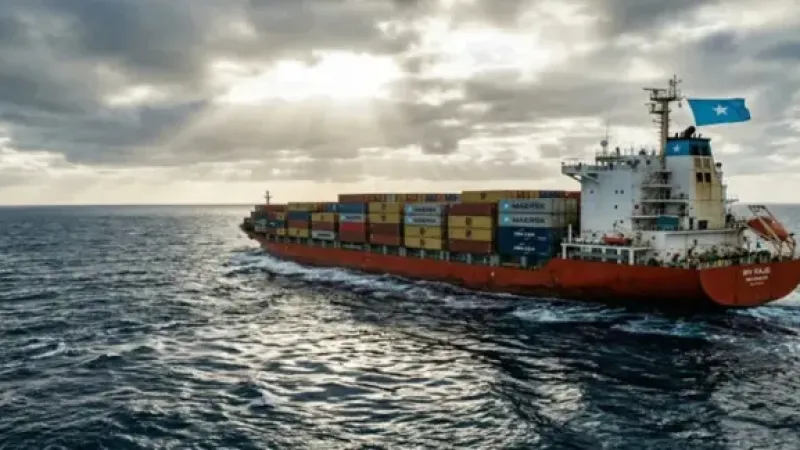
As of today, a direct container service has been established between Türkiye and Somalia, with regular voyages operated by Turkish-owned vessels, and the volume of trade between the two countries is increasing with every voyage.
In addition, the Çağrı Bey drilling vessel and three PSV vessels supporting it continue to operate off the coast of Somalia. Furthermore, following the end of the fishing season in Türkiye, Turkish fishing vessels have been licensed to operate in Somali waters. In this process, the objective is not only for them to conduct economic activities, but also to contribute to the development of local capacity by transferring their knowledge and experience to Somali fishermen.
In the field of education, cooperation planned with Piri Reis University aims to provide Somalia’s human resources with maritime training in accordance with international standards and bring them into the sector. In this way, while qualified seafarers will be trained in Somalia, an important pool of trained and internationally qualified seafarers will also be created for Turkish shipowners in the future.
We believe this model will become one of the cornerstones of sustainable and mutually beneficial maritime cooperation between the two countries.
The Somali Ship Registry operating in accordance with international standards will further strengthen these areas of cooperation. New business and investment opportunities will emerge for Turkish shipowners, classification societies, maritime training institutions, technical service providers and maritime consultancy companies.
At the same time, it will contribute to establishing stronger institutional ties between the two countries in areas such as STCW, port State control, ship registration procedures and technical cooperation.
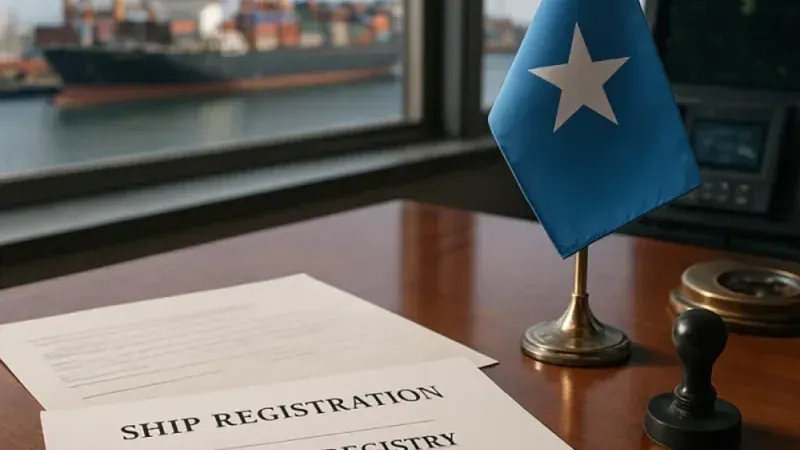
The registration of the ‘Guney’, the first vessel registered under the Somali flag since 1991, was a significant symbolic milestone. Where do you aim to position the Somali Ship Registry on the global maritime map over the next five years?
The registration of the “Guney” was not only the registration of the first vessel under the Somali flag; it was also a tangible indication that Somalia’s national ship registry had resumed operations after approximately 35 years.
As of today, 10 vessels have been successfully registered with the Somali International Ship Registry, while applications from nearly the same number of vessels are currently undergoing technical and legal evaluation processes. This level of interest is an important indication of the confidence international shipowners have placed in the newly established registry.
Considering the ages of the vessels we have registered to date, the fact that they have successfully passed their initial Port State Control inspections under the Paris MoU and Mediterranean MoU without any detentions is an extremely important indicator for us. This result demonstrates that our technical review, compliance assessment and flag State inspection processes are progressing in the right direction.
As a newly established ship registry, we have not yet been classified as a black, grey or white flag on the Paris MoU Performance List. However, through our operational performance, PSC results and full compliance with international obligations, we aim to become a reliable flag State listed on the white list within the next three years.
One of the important decisions taken at the latest meeting of the IMO Maritime Safety Committee (MSC 111) was the restructuring of the financial framework of the LRIT system. In this context, the principle of providing standard LRIT position information free of charge to coastal States for ships navigating within 1,000 nautical miles of their coastlines has been accepted in principle.
This decision is an extremely important development, particularly in terms of strengthening the maritime safety, maritime security and maritime domain awareness of developing coastal States.
Somalia has one of the longest coastlines in Africa. Therefore, this arrangement will provide access to LRIT data concerning ships navigating across a very large maritime area without creating an additional financial burden. This will contribute significantly to more effective monitoring of maritime traffic, combating illegal activities, enhancing search and rescue capabilities, and improving maritime safety and security in Somalia’s territorial waters and offshore areas.
As Somalia, we also regard full compliance with the LRIT system as one of our strategic priorities. By establishing our ASP and Data Centre infrastructure, we are integrating into the international LRIT system. In the coming period, we aim to establish our own National Data Centre, thereby not only strengthening our national capacity but also becoming a regional centre capable of providing LRIT services in East Africa and the Indian Ocean region.
Our ultimate objective is not to become a registry that grows solely in terms of the number of ships registered, but to establish a technically capable flag State that is fully compliant with IMO standards, serves as a model in terms of PSC performance, is listed on the white list, and is trusted by the international maritime community.
In line with this vision, we believe that the next five years will be a period of restructuring and international integration for Somali maritime affairs.