
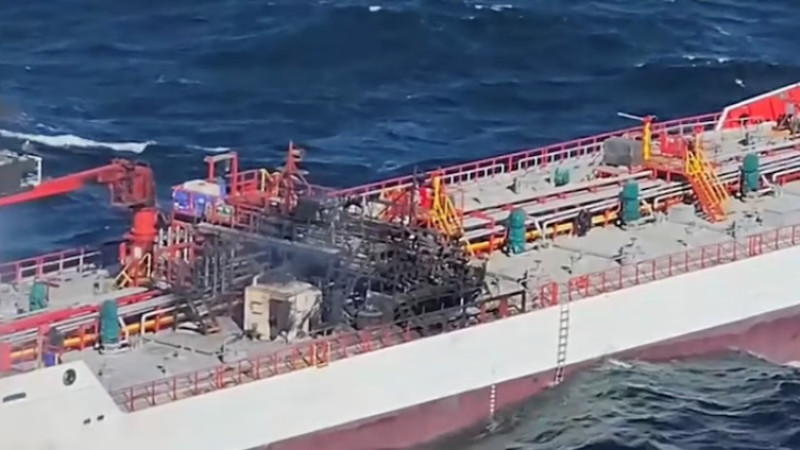
Nordic Marine Insurance Expands War Risk Coverage in 2027
The 2027 edition of the Nordic Marine Insurance Plan expands war risk and loss of hire coverage amid rising geopolitical tensions, while strengthening sanctions compliance and due diligence requirements for the insured.
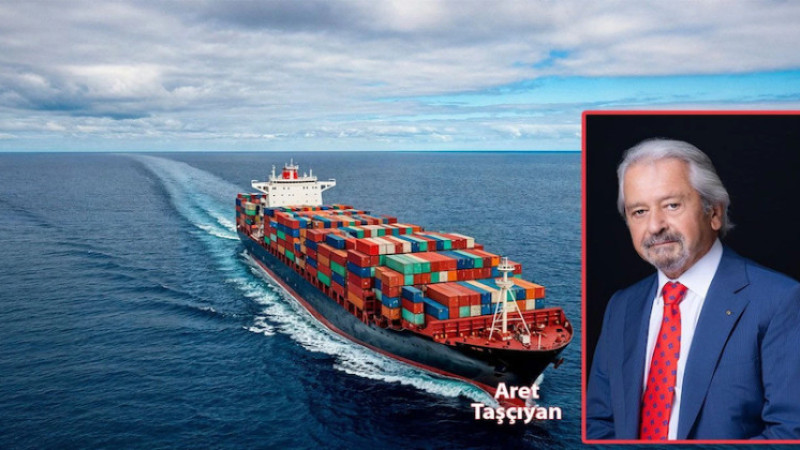

As we move rapidly towards 2027, international marine hull and machinery insurance markets remain competitive, and excess capacity continues to persist. According to CEFOR data, the increase in claims frequency during the first six months of 2026, compared with 2024 and 2025, has not been sufficient to prevent the competitive conditions created by excess capacity in the market. The positive aspect, however, is that no increase has been observed in total loss claims.
Significant increases are being observed, particularly in machinery claims, both in terms of claims frequency and claims costs. In an environment where repair, labour and spare parts costs continue to rise, claims compensation is also being adversely affected. The persistently high average age of vessels worldwide is regarded as the main reason why machinery claims, in particular, remain at elevated levels.
Geopolitical Tensions and Their Impact on the Maritime Industry
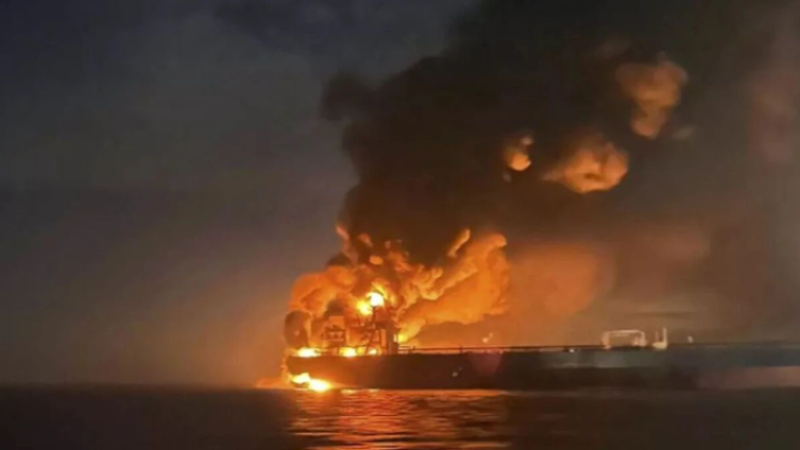
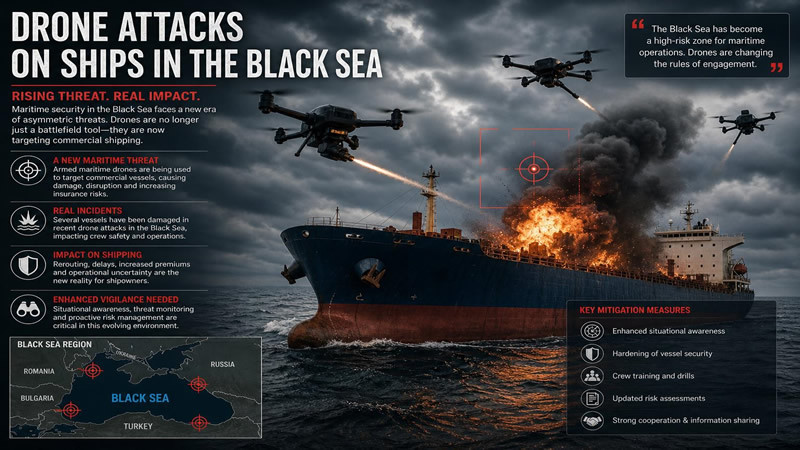
The risks arising from geopolitical and political tensions in regions such as the Red Sea, the Strait of Hormuz and the Black Sea have serious adverse consequences for both insurance and the safety and health of seafarers. Sanctions imposed in these regions and political disputes are also increasing tensions between the insured, insurers, carriers and cargo owners, leading to extraordinary practices.
New Edition of the Nordic Insurance Terms
After this brief overview of the insurance and maritime environment, let us turn to our main subject and examine the principal changes made to the Nordic insurance rules on 1 October 2026. Known as the Nordic Marine Insurance Plan (NMIP), the Scandinavian insurance terms have introduced a new set of interpretations in favour of the insured, with the 2027 edition of the Nordic Marine Insurance Plan 2023 coming into force.
The NMIP consists of a set of insurance rules that are unique in the world, developed through discussions and agreements between insurers (CEFOR) and shipowners (the Shipowners' Associations of Norway, Sweden, Denmark and Finland). First implemented in 1871, the plan has continued to evolve and adapt to current conditions up to the present day.
Expanded Coverage Under Hull War and Loss of Hire Insurance
One of the most important aspects of the new edition concerns Hull War and Loss of Hire (LOH) insurance under war risks coverage. As a result of current wartime conditions and the risks they create, it has now become possible for economic losses incurred when a vessel is unable to perform its commercial voyages, or when such voyages are delayed, without the vessel being officially blockaded, seized or subjected to physical damage, to be covered under the NMIP terms.
Examples of such events include restrictions or changes imposed on navigation routes during wartime, political interference, the closure of ports or their limited opening to trade, and security threats currently on the agenda. In other words, insurers will henceforth assess and decide on the reasons why a vessel is deprived of its commercial use from a more favourable perspective for the insured.
Sanctions, Compliance and the Duty of Due Diligence
In addition, insurers' position has been strengthened in relation to sanctions and compliance legislation, while the obligations of the insured in this regard have been significantly increased. The insured's duty of care, or obligation to exercise due diligence in relation to sanctions, has become an indispensable condition of insurance.
Before the policy is issued and throughout the entire policy period, the insured must confirm that they will not facilitate money-laundering activities, engage in attempts to support terrorism, and will comply with sanctions. Failure to meet any of these obligations means that the insurance policy will be invalid.
Other Important Changes in the 2027 Edition
The other significant changes in the 2027 edition can be summarised as follows, including the provisions concerning dispute resolution and arbitration under Clauses 1-4A, 1-4B and 1-4C.
Under the NMIP 2013, the governing law and jurisdiction applicable to dispute resolution were addressed under a single heading in Clause 1-4A, while arbitration arrangements were dealt with separately under an optional clause. Under the NMIP 2027, governing law, jurisdiction and arbitration are addressed separately and independently under Clauses 1-4A, 1-4B and 1-4C. Where the parties choose to resolve their disputes through arbitration, jurisdiction for arbitration is assigned exclusively to the Nordic Offshore and Maritime Arbitration Association (NOMA).
Clauses 15-11 and 15-17: Total Loss, Blocking and Trapping
The new edition further expands the concept of Total Loss arising from traditional war perils, as explained in Clause 2-9 (1) (A). It states that the insured may declare a Total Loss when the vessel has been deprived of use for at least 12 months as a result of war perils, intervention by foreign states, terrorism or any form of politically motivated violence.
The new edition also clarifies and broadens the concept of Blocking and Trapping. It states that if threats arising from war perils prevent a vessel from leaving a port, whether or not the blockade or obstruction has caused physical damage, the outcome may be interpreted as a Total Loss.
Clause 15-17: Loss of Hire (LOH)
Under the previous edition, for a risk to fall within LOH coverage, the vessel had to be deprived of movement due to a physical obstruction covered by Hull and Machinery (H&M) insurance. The NMIP 2027 expands this scope as follows:
If a vessel is prevented from leaving a restrictive area as a result of a threat arising from traditional war perils specified in Clause 2-9 (1) (a), or from intervention by foreign states, the insured is entitled to submit a claim under LOH coverage, whether or not the obstruction has caused physical damage.
To avoid any misunderstanding, I would like to emphasise a crucial point here. The threat in question must be imminent, unavoidable, specific and decisive. Furthermore, this is not a general rule; each case will be assessed individually.
Adapting to Current Wartime Conditions and Practical Challenges
As can be understood from the points discussed above, the ongoing wars in the Middle East and the Black Sea have prompted Scandinavian insurers to take action and introduce certain changes to marine insurance, particularly in the War Risks section, in favour of the insured, in order to adapt to the geopolitical conditions of the day.
Although certain arrangements are being introduced in favour of the insured within insurance terms, sanctions, compliance legislation and due diligence obligations continue to be a nightmare for both insurers and the insured. Because of the efforts required to monitor and comply with sanctions that change every day, we have reached a point where we are no longer able to perform our core activities, such as transportation, insurance and banking, as effectively as we should.
Since the EU countries, the United Kingdom and the United States have introduced these arbitrary sanctions and assigned us, insurers and bankers, the role of enforcers, this burden appears likely to continue for some time.
Aret Taşcıyan
Chairman of the Board, Lockton Omni