

Green Transition: A Cost or a Competitiveness Test for Turkish Shipping?
As the environmental regulations of the IMO and the European Union open the door to a new era in the maritime industry, carbon costs, fuel choices and energy efficiency are now directly determining the commercial performance of ships.


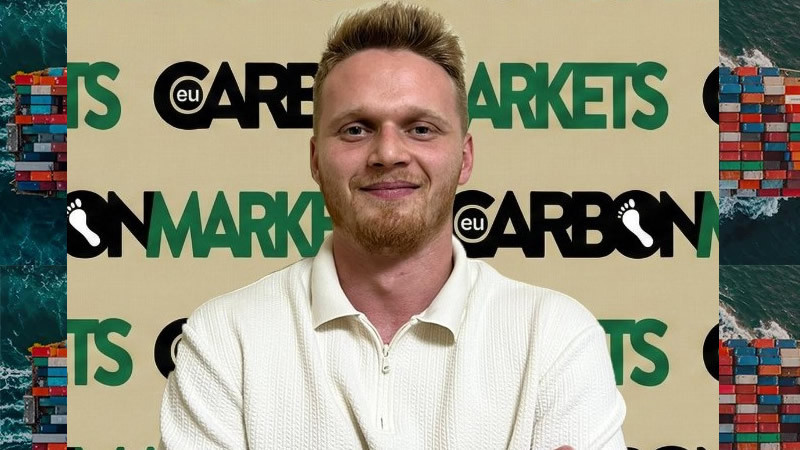
As the environmental regulations of the IMO and the European Union open the door to a new era in the maritime industry, carbon costs, fuel choices and energy efficiency are now directly determining the commercial performance of ships. According to Utku Türedi, Technical Manager at Atotech Maritim GmbH & Co. KG, the main challenge facing the Turkish maritime sector is not investing in a single technology, but establishing the right technical and economic roadmap for each vessel. “There is no benefit in speed if the course is wrong in shipping,” says Türedi, adding: “Today, it is time to chart the right course with figures, not slogans.”
The environmental regulations of the IMO and the European Union have opened the door to a new era in shipping. How prepared are Turkish companies for this transformation?
The Turkish maritime sector is aware of the seriousness of the issue. However, being aware and being prepared are not the same thing. While large fleets are following this process more closely, the intensity of daily operations can take priority over long-term preparations for small and medium-sized shipowners. I do not say this as a criticism. In ship operations, we deal with various issues every day, including fuel, personnel, maintenance, class, ports and freight rates. However, environmental regulations are no longer a separate subject outside these matters; they have become part of all these processes.
EU ETS is the clearest example of this. Shipping companies are required to surrender European Union Allowances (EUAs) corresponding to 70% of their verified emissions for 2025 by the end of September 2026. From emissions generated in 2026 onwards, the obligation rises to 100%. All emissions from voyages within the EU and those generated at EU ports are covered by the system, while 50% of emissions from voyages between the EU and third countries are included.
In September 2026, the EUA price stood at approximately €85. A vessel with annual emissions of 10,000 tonnes covered by the ETS must surrender 7,000 EUAs for its 2025 emissions. At September 2026 market prices, these allowances are worth approximately €595,000. If the same vessel generates another 10,000 tonnes of covered emissions in 2026, the value of the EUAs it must surrender will rise to €850,000 at the same price, due to the 100% obligation.
Therefore, we can no longer view carbon merely as a gas emitted from a funnel. Carbon has a price, and that price directly enters the voyage calculation. My view is clear: In the coming period, the difference between good technical management and poor technical management will be measured in hundreds of thousands of euros.
“Not Every Green Investment Is the Right Investment”
Alternative fuels, energy-efficiency investments and carbon-related measures create significant costs. Can this process turn into a competitive advantage in the long term?
It can, and it has already begun to do so. However, not every “green” investment is the right investment. Investing in a technology simply because it is new or popular is not the right approach. Decisions made without considering the vessel's age, remaining economic life, operating route, annual fuel consumption and engine configuration may cause more harm than good.
In mid-September 2026, VLSFO was priced at approximately $800 per tonne, while MGO stood at around $1,650 per tonne. The difference is $850 per tonne. Meeting a fuel requirement of 1,000 tonnes with MGO instead of VLSFO means an additional cost of $850,000 based solely on fuel prices. Therefore, we cannot make fuel choices by looking only at emission factors. We must evaluate fuel prices, EU ETS costs, the impact on the FuelEU Maritime balance and the vessel's technical suitability within the same calculation. Otherwise, a limited advantage in terms of emissions could turn into a much greater loss on the fuel bill.
Biofuels offer a rapid transition solution for the existing fleet. Methanol, ammonia, LNG derivatives and hydrogen, however, come with different investment and infrastructure requirements. Today, there is no single right fuel for every vessel. The solution for a bulk carrier cannot be the same as that for a container ship, nor can the requirements of a vessel operating on short routes be identical to those of one sailing on intercontinental routes.
“The Fastest Savings Come from Fuel We Do Not Consume”
Today, the fastest savings come from fuel we do not consume. A 5% reduction in consumption on a vessel that burns 5,000 tonnes of VLSFO annually means using 250 fewer tonnes of fuel. At a price of $800 per tonne, this represents annual savings of $200,000.
This reduction of 250 tonnes in fuel consumption also means approximately 780 tonnes less carbon dioxide emissions. If all these emissions are covered by the ETS, an additional carbon-related benefit of approximately €66,000 would arise at an EUA price of €85. Therefore, we should not underestimate a 5% saving. On one side, there is $200,000 in fuel savings; on the other, there is €66,000 in carbon costs.
For this reason, I do not believe we should immediately start with high-cost systems. First, we should examine whether the vessel's hull is clean, what condition the propeller is in, whether the main engine is operating within the correct load range, whether the trim is appropriate, whether unnecessary waiting periods or sudden speed changes occur, and whether consumption data is reliable. In my view, discussing technologies costing hundreds of thousands or even millions of dollars without resolving these fundamental issues is taking the easy way out.
Is the green transition financially sustainable for medium-sized Turkish shipowners?
It is sustainable if the right sequence is followed. However, we cannot bear this burden if we try to apply the same formula to every vessel and carry out all investments simultaneously. First, we need to establish an accurate picture of each vessel: How many more years will it operate? How much fuel does it consume annually? Which ports does it call at? To what extent is it exposed to the ETS? What is its FuelEU balance? What direction is its CII rating taking? All these factors must be assessed individually.
For example, implementing a very costly fuel conversion on a vessel that is more than 20 years old and has only five or six years of economic life remaining may not make sense. By contrast, achieving 5% savings on the same vessel by improving hull and propeller condition, monitoring consumption accurately and operating the engine efficiently is highly meaningful.
For a younger vessel that can operate for another 10–15 years, comprehensive retrofit investments may be considered. The decision here should not be ideological but entirely mathematical: What is the cost of the investment? How much fuel will it save annually? By how many tonnes will it reduce emissions? And how many years will it take to pay for itself?
We are no longer simply purchasing fuel; we are also acquiring added value in the form of emissions advantages and FuelEU balances. Shipowners who manage these systems correctly will not only comply with regulations but will also be able to generate revenue from their compliance surplus.
Is Türkiye's biggest shortcoming technology, financing or public policy?
In my view, the biggest shortcoming is a long-term public policy that clearly indicates the direction. Türkiye has the engineering capabilities, shipyard capacity and industrial infrastructure needed to develop technology. Although financing is expensive, resources can be secured when a project is sound and has a clear repayment model. However, investors want to see what lies ahead. Which ports will offer biofuels, methanol or LNG in five years? At which terminals will shore power be available? What support will be provided to domestic equipment manufacturers? How long will financing and tax advantages remain in place?
Türkiye needs a maritime transition plan that clearly defines the targets to be achieved by 2030. We must set these out clearly. The private sector does not like uncertainty. If the rules change every year, capital will choose to wait. If the state clearly charts the course, the maritime sector will not hesitate to invest.
What risks will companies that do not invest in the green transition face over the next five years?
The greatest risk is not paying fines; it is losing quality cargo, strong charterers and favourable financing. I call this the risk of “commercial stranding.” A vessel may be technically operational, have valid class certificates and be ready to sail. However, if its fuel consumption is high, its CII rating is poor and its carbon costs are heavy, quality charterers may choose not to use that vessel.
Banks may demand higher risk premiums when providing loans. Potential buyers may also deduct future compliance costs from the vessel's sale price. In other words, failing to invest has a cost as well. Moreover, this cost may often be higher than the investment itself.
What do the amendments to the NOx Technical Code, which entered into force on 1 September 2026, mean for shipowners?
The amendments introduced through MEPC.398(83) send shipowners a very clear message: if a significant change is made to an engine that could affect its emission values, that work cannot be treated as an ordinary maintenance activity.
Changes to the fuel injection system, air system, combustion chamber or timing settings can directly affect the engine's NOx values. Similarly, using a component not specified in the NOx Technical File or one whose emission performance has not been verified may create a need for retesting and recertification.
However, not every component replacement should be considered a “substantial modification.” Routine maintenance carried out in accordance with the NOx Technical File and standard replacement of approved components are not included in this scope. The main issue is work that changes the engine's approved power, speed or emission characteristics.
For example, if the engine's power or speed is changed, even replacing the engine's information plate may become necessary. In addition, the test plan for the applicable emissions test must be approved by the relevant Administration before the test date is finalised. Therefore, the engine manufacturer, classification society and flag state must be consulted before work begins, not after the decision to make the change has been taken. This is because an expensive component later found to be non-compliant can cost several times its original price when retesting, specialist attendance, certification procedures and several days of operational delays are taken into account.
In short, the rule of the new era is this: First, we check the technical file; then, we place the order. The approach of “let's install the component and sort out the paperwork later” now directly means a loss of time and money.
“It Is Time to Chart the Right Course with Figures”
Today, we do not need to commit all our capital to a single alternative fuel or technology. However, we also do not have the luxury of waiting. First, we will correct our data and then prepare a short- and medium-term roadmap for each vessel. We will also begin energy-efficiency measures that offer quick returns without delay.
Those who view the green transition solely as a new cost will remain on the defensive. Those who see this process as an opportunity for fuel savings, better technical operations and commercial resilience will move ahead in the competition.
There is no benefit in speed if the course is wrong in shipping. Today, it is time to chart the right course with figures, not slogans.