
The Cost of War for Turkish Shipowners: One-Quarter of 146 Attacked Vessels Were Turkish-Owned
Rising geopolitical tensions in the Black Sea, the Red Sea and the Middle East are putting pressure on Turkish shipowners in multiple areas, from security and insurance to voyage planning and market selection...


Rising geopolitical tensions in the Black Sea, the Red Sea and the Middle East are challenging Turkish shipowners in many areas, from security and insurance to voyage planning and market selection. Cihan Ergenç, President of the Turkish Shipowners’ Association, pointed out that, as of August 2026, approximately one-quarter of the 146 commercial vessels attacked or damaged in the Black Sea were Turkish-owned or under Turkish control. Emphasising that commercial vessels and seafarers must not be targeted under any circumstances, Ergenç called for Türkiye to pursue stronger maritime diplomacy on international platforms.
Developments in the Black Sea, the Red Sea and the Middle East are reshaping maritime trade. In which areas are Turkish shipowners most affected by these crises?
The most significant and direct impact on the Turkish maritime sector stems from developments in the Black Sea. The impact of the Russia-Ukraine war on commercial maritime transport and the threat it poses to navigational safety are seriously affecting Turkish shipowners, both operationally and economically.
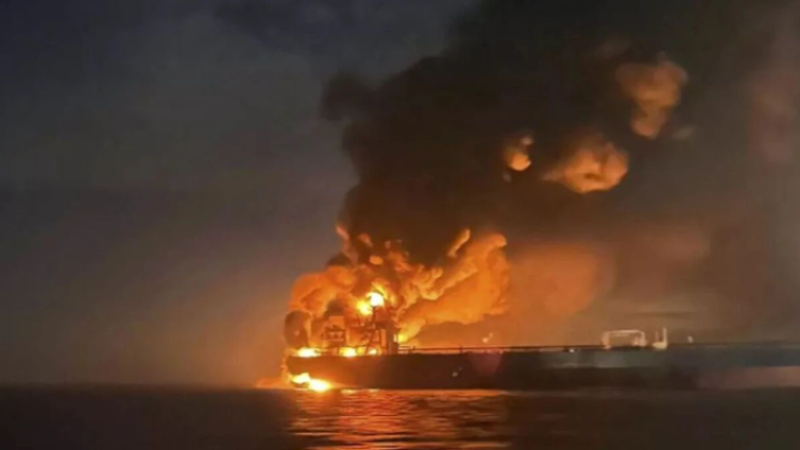
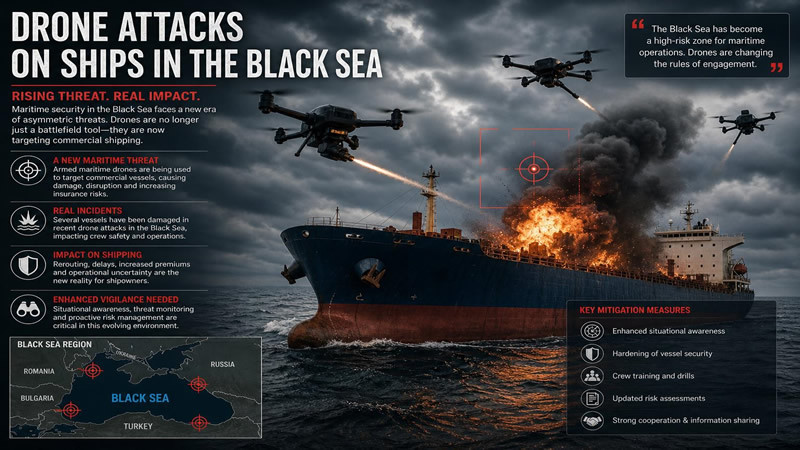
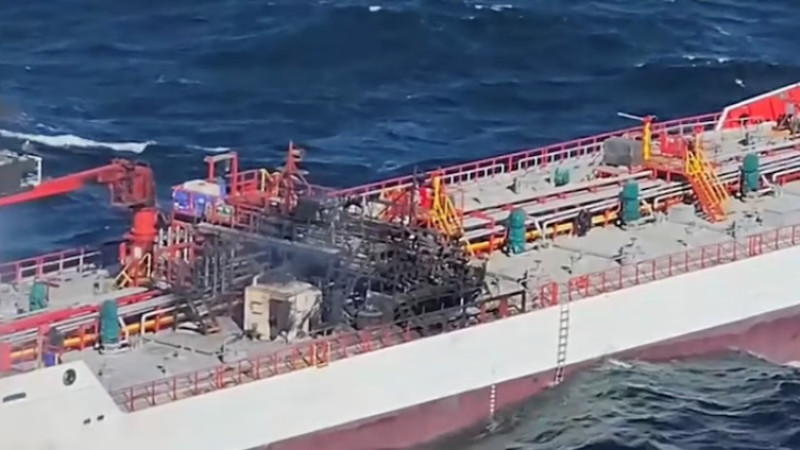
According to the monitoring work carried out by our Association since 24 February 2022, a total of 146 commercial vessels that had been attacked or damaged in the Black Sea had been identified as of August 2026. Approximately one-quarter of these vessels were Turkish-owned or under Turkish control. The deaths of 37 people and injuries to 48 others during the same period demonstrate that this issue is not merely commercial but also has a serious humanitarian dimension.
The scale of the risk becomes clearer when we look at cargo volumes in the region. In 2025, approximately 15 million DWT of cargo was transported from Türkiye to Black Sea ports through 3,147 voyages made by 666 vessels. In the opposite direction, 820 vessels made 4,111 voyages from the Black Sea to Türkiye, carrying approximately 28 million DWT of cargo. The persistence of security risks in a region with such intensive traffic creates serious vulnerabilities for the entire sector.
A significant portion of our coaster fleet operating in the Mediterranean basin carries cargo from the Black Sea to Mediterranean ports and transports cargo from the Mediterranean back to the Black Sea on return voyages. Therefore, security problems in the Black Sea affect not only voyages to the region but also the entire commercial cycle of vessels. A delay or cancellation at one port can also disrupt a vessel’s subsequent loading schedule.
Our tankers transporting Russian-origin crude oil to Türkiye and the Far East are also affected by uncertainties surrounding sanctions, insurance conditions and port acceptance requirements. A similar situation applies to grain transportation. Disruptions in the transportation of cargo originating from Russia and Ukraine to the Middle East and Africa negatively affect both regional food supply chains and the operations of the vessels carrying these shipments.
The Lloyd’s Joint War Committee’s expansion of the area subject to war-risk classification to cover the entire Black Sea, excluding national territorial waters, also means that more voyages are subject to war-risk assessments and the associated additional insurance costs.
How are rising war risks, insurance costs and security expenses changing operational planning?
Under normal circumstances, shipowners plan their operations based on factors such as a vessel’s technical specifications, fuel consumption, freight rates and voyage duration. In high-risk areas, however, the safety of the vessel and its crew, the scope of war-risk insurance coverage, additional premiums and the commercial viability of a voyage must also be taken into account.
This has tangible consequences, particularly for our coaster vessels operating in the Black Sea. Some shipowners postpone voyages for security reasons, while disruptions in cargo flows extend the periods during which vessels remain idle on the spot market. In some cases, these periods can reach 10 to 20 days. During this time, the vessel generates no revenue, while its operating expenses continue.
Having war-risk insurance coverage does not, by itself, mean that a voyage is operationally acceptable. When making the final decision, the actual risks faced by the vessel, its crew and its cargo must also be assessed.
Redirecting existing capacity to other regions is not always possible. The predominance of larger-tonnage vessels in markets such as the Baltic limits the ability of coasters to be easily redirected to these areas. As a result, shipowners face not only rising costs but also difficulties in making effective use of their commercial capacity. This situation is felt more acutely by companies engaged in short-sea shipping.
Some of these costs are directly related to human safety. Additional security training for crews, emergency drills and detailed briefings before voyages to high-risk areas have become permanent items in shipowners’ budgets. However, we do not regard these solely as costs, but as an indispensable requirement for safeguarding the lives of our seafarers.
Can we say that some routes have lost their commercial appeal due to geopolitical uncertainty? Are Turkish companies turning to alternative markets?
Yes, but this situation cannot be explained solely by fluctuations in freight rates. The commercial appeal of a route depends on a combination of factors, including security risks, insurance costs, voyage duration, continuity of cargo flows and the vessel’s ability to begin its next voyage on schedule.
It is not always easy for shipowners who postpone voyages because of perceived risks in the Black Sea to turn to other markets. Coaster shipping is based on a chain of consecutive voyages. There is no guarantee that a vessel withdrawn from the Black Sea will find a new cargo in the Mediterranean under the same commercial conditions. Therefore, a decline in cargo flows in the Black Sea affects not only that region but also the entire commercial cycle in the Mediterranean.
The type and tonnage of a vessel are also decisive when seeking alternative markets. The predominance of larger-tonnage vessels in regions such as the Baltic limits the ability of coasters to enter these markets. Therefore, it would not be accurate to consider cargo markets in different regions as direct alternatives to one another.
It is clear that current developments are pushing shipowners towards market diversification, the distribution of voyage risks and more flexible operational planning. However, from our perspective, the main issue is not merely finding alternative markets, but establishing the conditions necessary for the sector to operate sustainably across different regions. These include safe navigation, predictable insurance conditions and access to commercial information.
How do you assess the impact of sanctions and international regulations on the Turkish maritime sector in recent years?
Sanctions imposed on Russia have created a significant area of compliance and commercial risk management for Turkish shipowners. The issue is not limited to transactions involving parties directly included on sanctions lists. Many factors must be examined in detail, including the origin of the cargo, the ownership and control structures of commercial parties, the vessel’s history, payment channels, insurance conditions and port services.
For this reason, it is essential for companies to carry out the necessary checks for each transaction, monitor regulations on an ongoing basis and seek specialist legal advice when necessary. For our tankers transporting Russian-origin crude oil, the scope of sanctions and insurance conditions also directly determine whether a voyage can be carried out.
The impact on the sector is not limited to sanctions. Regulations concerning emissions monitoring and reporting, energy efficiency and the use of alternative fuels also shape shipowners’ costs and investment decisions.
What matters here is that regulations are implemented within a predictable and practical framework that takes into account the international nature of maritime transport. Shipowners need to know their obligations in advance and be able to plan their voyages accordingly.
As the Turkish Shipowners’ Association, we consider monitoring sanctions and regulations closely, informing our members in a timely manner and sharing their impact on the sector with the relevant institutions among our priorities.
What steps should Türkiye take in its maritime policies during this period of intensifying crises?
First, information flows concerning the activities of Turkish-flagged and Turkish-owned vessels in high-risk areas need to be strengthened. Effective coordination among shipowners, public institutions, insurance organisations and international maritime organisations would ensure that security advisories and risk assessments are shared in a timely manner.
Second, the protection of commercial vessels and seafarers must be a priority on international platforms. Seafarers are the people who ensure that international trade continues, even in crisis regions. No seafarer should be targeted while carrying out their profession. Türkiye’s strong advocacy of this principle at the International Maritime Organization (IMO) and other international platforms would make a significant contribution to a common approach to maritime safety.
Third, measures to strengthen the resilience of short-sea shipping in the face of crises should be considered. The impact of developments in the Black Sea on the Mediterranean coaster market makes it necessary to regularly monitor capacity losses in the sector and the periods during which vessels remain idle. The data collected should also be incorporated into policymaking processes.
Fourth, small and medium-sized enterprises should be supported in complying with sanctions and international regulations. Information sharing between the relevant public institutions and industry organisations should also be increased.
Fifth, greater importance should be attached to the digitalisation of risk intelligence. Improving vessel-tracking systems, collecting incident and attack data in a centralised system, and sharing this information with shipowners in real time would significantly strengthen pre-voyage decision-making. The Turkish Shipowners’ Association continues its own monitoring work in line with this objective.
Finally, Türkiye’s international cooperation and sectoral representation should be strengthened. Communicating the challenges faced by Turkish shipowners to international organisations and relevant countries using accurate and up-to-date data is essential for safeguarding safe navigation and ensuring that regulations remain predictable.
As the Turkish Shipowners’ Association, we consistently emphasise that maritime transport is not merely a commercial activity but also one of the fundamental pillars of global supply chains and economic relations between countries. Protecting the safety and continuity of maritime transport is a shared responsibility of shipowners, public institutions and the international community.
The seas should be spaces for trade, cooperation and peace. Protecting commercial vessels and seafarers is indispensable to ensuring the uninterrupted continuation of international trade.