
Serhan Özcan: “A Broker’s Value Goes Beyond Forwarding Messages”
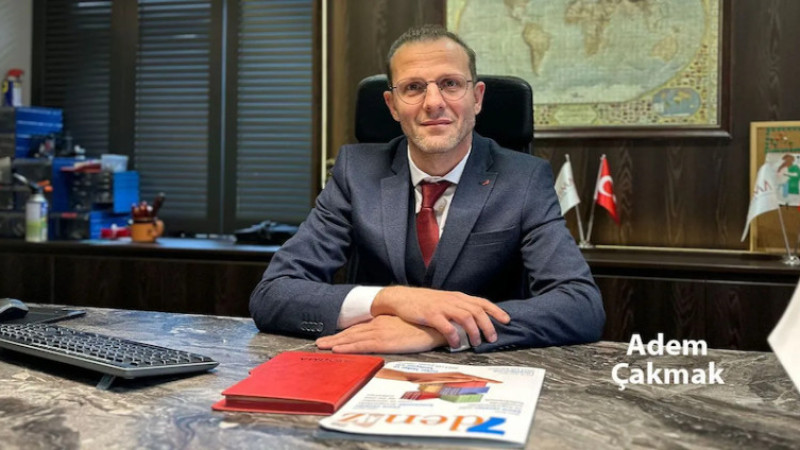
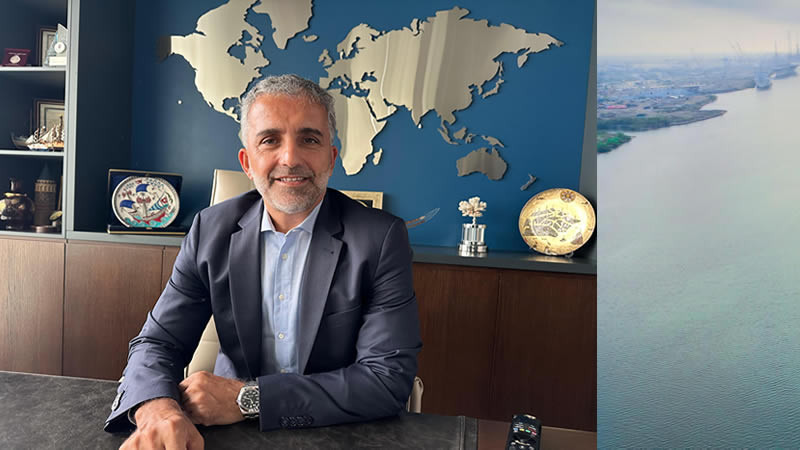
Ship Brokers Association President Serhan Özcan is shaping the roadmap for his new term around the vision of “Knowledge, Connections and Competence.”
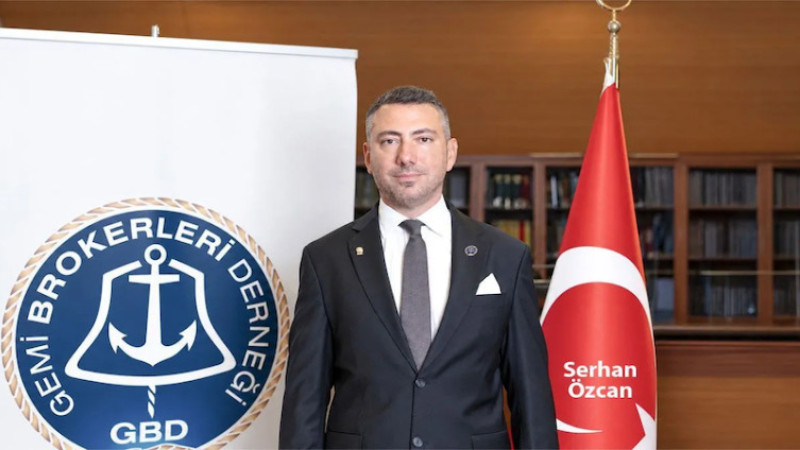

Serhan Özcan, President of the Ship Brokers Association, is shaping the roadmap for his new term around the vision of “Knowledge, Connections and Competence.” From scholarship and internship programmes to professional training, market intelligence and international relations, Özcan aims to introduce initiatives that directly benefit members’ professional lives. He believes artificial intelligence will not eliminate shipbroking but will challenge approaches based solely on passing on information.
As digitalisation and artificial intelligence reshape shipbroking, trust, experience and the ability to interpret market developments continue to occupy a central place in the profession. Having taken over as President of the Ship Brokers Association, Özcan aims to strengthen the value the association delivers to its members throughout this transformation.
Özcan has been involved with the association for eight years, serving as secretary-general and vice-president, as well as working on its education committee. He says the new board began working from day one. Its priorities include scholarship and internship programmes, improving communication among members, bringing professional competence in line with international standards and strengthening the association’s institutional structure.
For 7Deniz Magazine, we spoke with Özcan, who is also a shipowner, about the future of shipbroking, the impact of artificial intelligence on the profession and the association’s plans for its new term.
As you take over the presidency of the Ship Brokers Association, what is the first initiative you plan to implement?
I have been part of this association for eight years. I served as secretary-general for three years and vice-president for two years. During that time, I was also involved in the work of our education committee.
Our board largely consists of the same team. The new members we have brought on board were selected carefully and deliberately, in line with our objectives and strategy. Therefore, we do not need a period to get to know one another or settle in; we started working from day one.
Our first focus is our scholarship and internship programme. As the academic year has begun, this has naturally become a priority. We are continuing to work on it.
At the same time, we are preparing initiatives in areas that directly affect our members’ day-to-day professional activities. In particular, we are working on improving access to market intelligence and strengthening communication among members. We will share these initiatives with our members as they mature. I do not believe in announcing something before it is ready.
You have said that artificial intelligence poses a threat to shipbroking practices that fail to create added value. What steps will the association take to prepare Turkish shipbrokers for this transformation?
First, let us make one thing clear: I do not believe artificial intelligence will bring shipbroking to an end. Our work does not end at a screen; it is built on trust. No software can replace getting to know someone or a relationship built over many years.
However, there is also a reality we must acknowledge: there has been a model of shipbroking that survived while contributing very little beyond maintaining these relationships. That model will come under pressure. Shipbroking based solely on forwarding emails will not survive in the same way, because artificial intelligence can do that much more easily and quickly.
In this environment, what will make the difference is not information itself, but the ability to interpret it. The association’s role is to equip its members with this capability. Our vision of “Knowledge, Connections and Competence” is designed precisely to ensure that the Ship Brokers Association delivers value to its members in these areas.
There is one particular point I would like to emphasise. When we talk about market intelligence today, we mostly discuss the present and the past. Yet the real value a broker brings to a client lies in the ability to assess what lies ahead, understand expectations and anticipate where the market is heading. We will also be developing initiatives in this area.
I would also like to highlight another issue: there are serious considerations to take into account when using these tools. Client confidentiality, commercial secrets and data security are among the most important. As an industry, we have not yet discussed these issues sufficiently. I believe the association should also provide guidance in this area.
Your vision for the new term is built around “Knowledge, Connections and Competence.” How will these three pillars deliver tangible benefits to members’ professional lives?
Let me start with our approach. We will work around these three pillars and identify which one each initiative falls under. This will allow our members to see a board working within a clear plan rather than pursuing disconnected activities.
Knowledge is the most important of the three. We must provide our members with the tools they need to do their jobs better. We already publish a market report, but we want to expand and deepen its scope. We are working on several different areas.
When it comes to connections, we are already in a strong position; the association has high visibility in the market. However, there is an interesting gap: even our own members do not always know who belongs to the association and who does not. We will therefore introduce initiatives to strengthen communication among members. Our goal is clear: membership should become a privilege.
In terms of competence, we want to bring the level of professional knowledge in our industry in line with international standards. To achieve this, we will cooperate with international organisations in the sector. Professional knowledge is still largely passed down through the master-apprentice relationship. This is a valuable tradition, but it is not sufficient on its own.
You have announced plans to establish the association’s own scholarship and internship programmes. What will these programmes involve, and what opportunities will they provide?
Our association has been awarding scholarships for years, but until now, we have done so in partnership with other associations. I believe an association that stands on its own feet and generates its own income should have its own scholarship programme. This is no longer a question of capacity; it is a matter of institutional maturity.
We are currently working on the programme’s eligibility criteria, priorities and rules. Two issues are particularly important to us. First, there are already numerous scholarship programmes in the sector. We want to establish a programme that fills gaps left by existing initiatives rather than duplicating them. Second, the programme must align with our profession and the association’s objectives.
We also do not want the programme to target young students alone. We want to develop a separate programme for professionals already working in the sector who wish to improve their skills and strengthen their professional competence. Our aim is to establish two distinct structures to address these different needs.
The internship programme is at least as important to me as the scholarship initiative. While a scholarship supports a student’s education, an internship opens the door to entering the profession. We want to create a two-way structure that brings together students who want to experience the profession in practice and member companies that need well-trained young brokers.
One of the biggest challenges in our industry is that young people make career decisions without first understanding the profession. From the outside, shipbroking can be perceived as an easy way to make money with little effort. In reality, it is a profession that requires experience gained through real situations, continuous self-development, discipline, attention to detail and commercial intelligence.
You only fully understand what this means once you enter the profession. I therefore believe the steps we take as an association will help demonstrate the seriousness of shipbroking and its importance to the maritime industry.
You have said that you want to add “new pillars” to the association alongside expanding the Bosphorus Shipbrokers Dinner. Which projects will stand out during the new term?
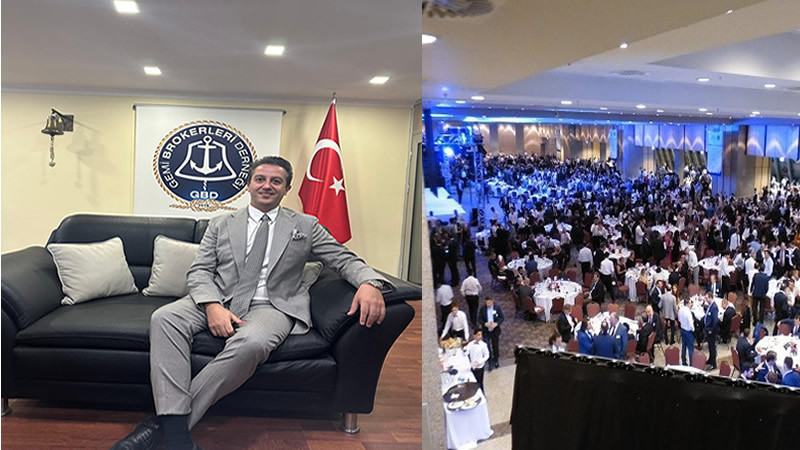
First, we should recognise the value of the Bosphorus Shipbrokers Dinner. This event was one of the founding purposes of our association, and today it serves as our international showcase. We will continue to expand it and improve its quality.
However, relying on a single pillar makes an institution vulnerable in the long term. I want our association to stand on several pillars. Some will relate to services offered to members, while others will concern the association’s own sustainability. We will share the details as these initiatives develop.
There is one issue I can already mention: our statutes. Since its establishment, the association has been governed by largely the same statutes. Yet the organisation has grown. Today, we are talking about an institution with its own income and property. Its needs have changed over time.
I therefore believe a comprehensive review of our statutes is necessary. We plan to carry out this work through a dedicated committee, bringing together former presidents, founding members and colleagues who can contribute to the process. What we are looking for is experience and expertise in this area. An association’s statutes are its constitution.
We are not doing this solely for our own term. Our aim is to leave a stronger foundation for the boards that follow us. Once the work is complete, we will present it to our members. Institutions endure through rules, not individuals.
You are also a shipowner. How does seeing both sides of the table influence your presidency?
This is genuinely an advantage for me because I understand what a broker experiences, as well as what the other side expects.
When you sit on the shipowner’s side, you see that the difference between a good broker and an average one can be significant enough to determine whether a deal is concluded. A good broker does not simply bring you cargo or a vessel; they interpret the market, identify risks and understand timing.
This reinforces the perspective I want to bring to the association: a member’s value lies not in forwarding messages, but in the insight they contribute.
There is another point, too: the association presidency is a representative role. Understanding the language of the other side makes that responsibility easier to fulfil.
How will international relations develop during the new term?
Our association is a member of FONASBA and BIMCO, both influential organisations on the international stage. Last year, we hosted FONASBA’s annual meeting. In other words, we have a solid foundation. We are currently working on initiatives that we can pursue in cooperation with these two organisations.
We also want to deepen our relationships with fellow shipbroking associations in the world’s major maritime centres. Hamburg, Piraeus, Varna and London are just a few examples. Each has developed different solutions and programmes. We have much to learn, but also much to share.
As the Ship Brokers Association, our ambitions extend beyond Europe. We want to establish connections with every major maritime region, including the Far East and the Americas. Our aim is to develop initiatives that open up new opportunities and broaden our members’ perspectives.
Because in today’s competitive environment, a member’s international network is just as valuable as market intelligence.