

Those Who Hold Their Course on the Front Line…
Seafaring is often an invisible profession. When it becomes visible, unfortunately, it is usually through accidents, the destruction they cause, and the loss of life...
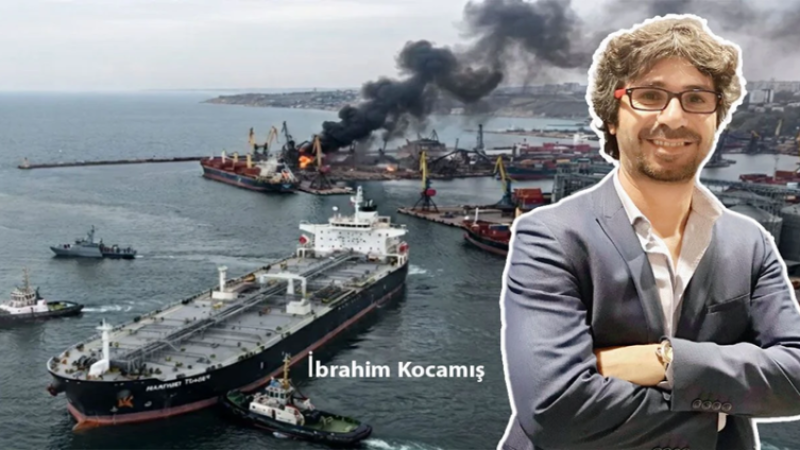

Seafaring is often an invisible profession. When it does become visible, unfortunately, it is usually through accidents, the destruction they cause, and the loss of life. Yet behind the products we see on store shelves, the grain arriving at ports, and the raw materials delivered to factories, there are people who spend months away from their homes... Although this alone contains many deeply sorrowful life stories, we often focus on whether the cargo has arrived on time; we rarely think about the conditions under which the people carrying that cargo are working. For this reason, I wanted to write this month's article by thinking of the heroes of these invisible lives.
In recent days, many seafarers working particularly in the Black Sea are not only dealing with longing for their children, spouses, friends and families, or with the harsh nature of the sea. At the same time, they are also facing the uncertainty created by war every single day.
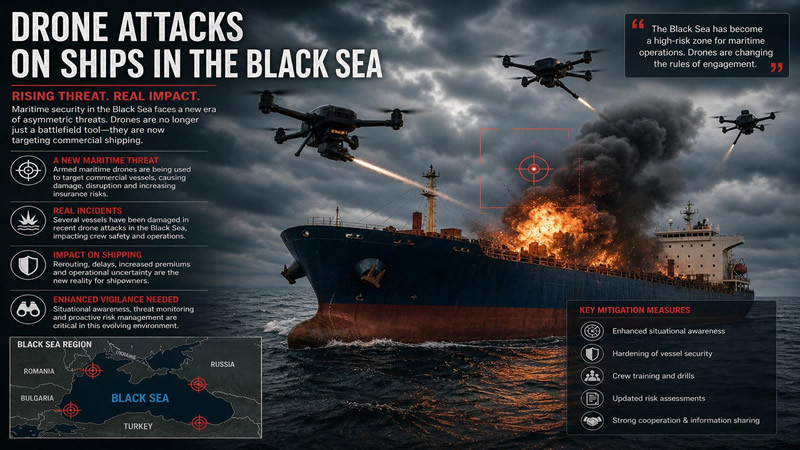
The Black Sea today is not merely a theatre of military conflict. Drone attacks, missile threats and communication disruptions may appear to be topics confined to war coverage. However, these are also the daily realities of civilian seafarers who carry the weight of global trade. That silent reality weighs heavily every day on the shoulders of a master trying to maintain his course at the helm. The same anxiety has taken root in the heart of an engineer continuing his duties in the engine room. And, of course, it has become the greatest concern in the hearts of all seafarers trying to deliver their cargo without knowing when they will be able to return home...
Today, we are writing about these realities specifically in the context of the Black Sea. Yet the risks faced by civilian seafarers operating in war zones are not new. They existed in the past and, unfortunately, they appear likely to continue in the future. Perhaps the most troubling aspect is this: international law recognizes the protection of civilians in warfare as a fundamental principle. The Geneva Conventions and their Additional Protocols impose an obligation on parties to armed conflicts to distinguish between military objectives and civilians. In theory, this protection covers everyone who is unarmed and not a party to the conflict. Seafarers serving aboard civilian merchant vessels should also be considered within this scope. However, the complex and unpredictable nature of war makes the gap between what is written in legal texts and what is experienced at sea increasingly visible every day.
The maritime industry will continue to talk about ships, tonnage, freight rates and delivery times. All of these are, of course, important. But sometimes there is a need to pause and make the people who keep that steel moving visible as well. Because the true carriers of global trade are not only ships; they are the nameless seafarers who continue to perform their duties even on the front line...
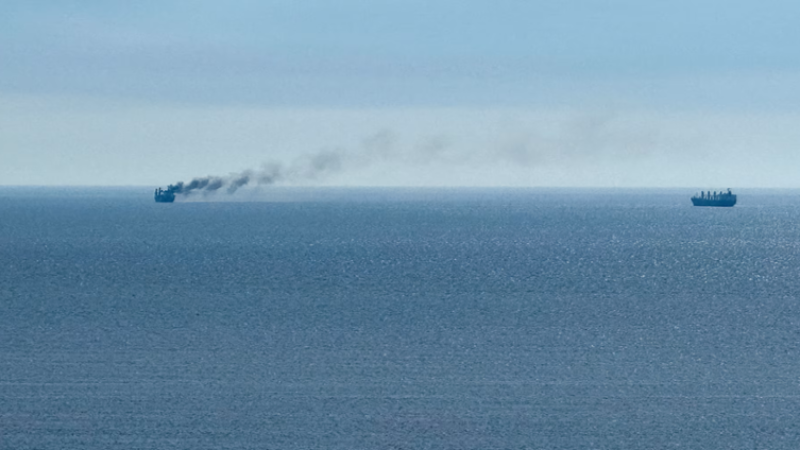
Finally, I would like to share one of the latest developments received by 7Deniz Haber: a Turkish-linked merchant vessel that had sailed to the Kavkaz area of Russia to load cargo was subjected to three separate drone attacks within just two days. During the first attack, shrapnel struck the merchant vessel after a nearby ship was targeted. Later that same day, in two separate attacks, the vessel's stern section sustained severe damage; the emergency generator room was hit, a fire broke out, the lifeboat was completely burned, and serious structural damage occurred to the deck and ship's sides. The greatest relief was that no seafarers lost their lives.
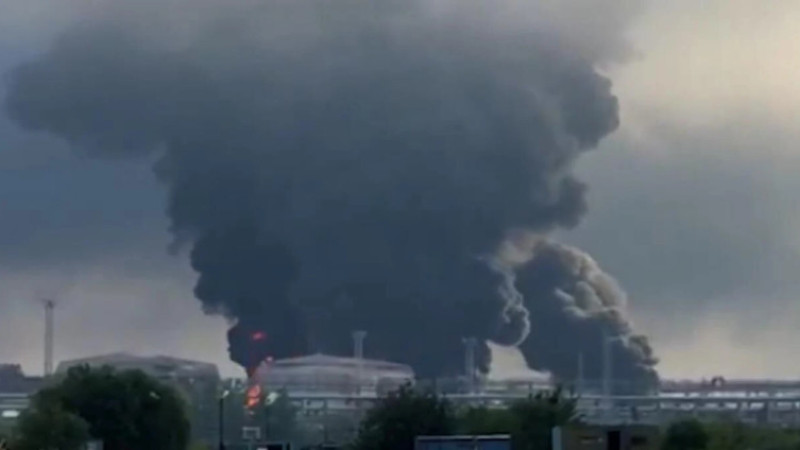
Yet what happened did not end there. Reports that the crew's distress calls went unanswered for a prolonged period, communication systems were not functioning, satellite communications were disrupted, internet access was completely cut off, and the vessel was not permitted to leave Russian territorial waters demonstrate the extent to which the war has pushed maritime trade into an impasse. Information coming from other industry sources also confirms the picture. Approximately 20 days ago, the berthing manoeuvre of another vessel operating in the same area was cancelled after the crew witnessed a drone attack on another merchant vessel right before their eyes. Following the strike on Taman Port, plumes of smoke could be seen rising for days. Masters have been forced to take extraordinary precautions to protect the accommodation, even to the extent of leaving cargo hatch covers open.
There is no longer a voyage plan being made in the Black Sea; a survival plan is being made. Accounts that communication systems are not functioning and that passports and seaman's books are being confiscated at ports, effectively making it difficult for vessels to depart, further increase the psychological pressure on seafarers. Despite all this, it is troubling that no measures appear to be being taken to prevent this situation in the Black Sea. Another troubling matter is that the Black Sea has failed to receive the same level of attention as the Strait of Hormuz... I leave that matter to your judgment.
I would like to conclude by stating another undeniable reality: seafarers are now, quite rightly, unwilling to sail to the Black Sea. Because the issue is no longer merely the sustainability of trade; it is about ensuring that innocent people who earn their livelihoods from the sea can return home safely...
On this occasion, I pray for God's mercy upon all innocent seafarers who have lost their lives to date, and I wish a speedy recovery to those who have been injured.
Stay safe...
İbrahim Kocamış