Common Sense, Discipline and Proper Communication Are as Important as Knowledge
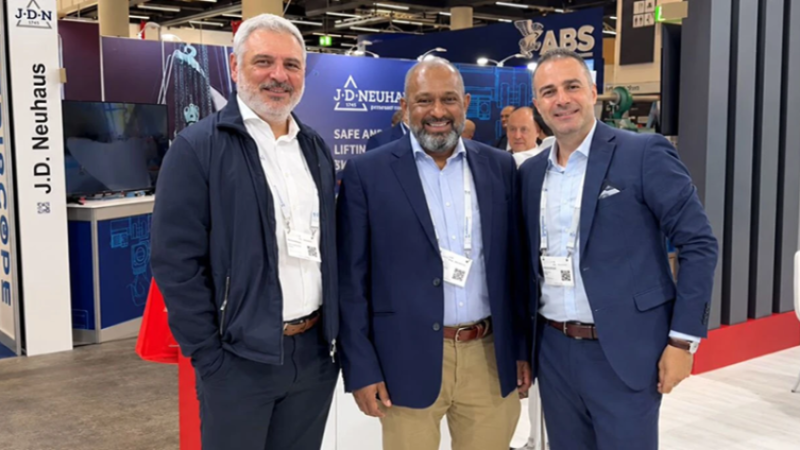
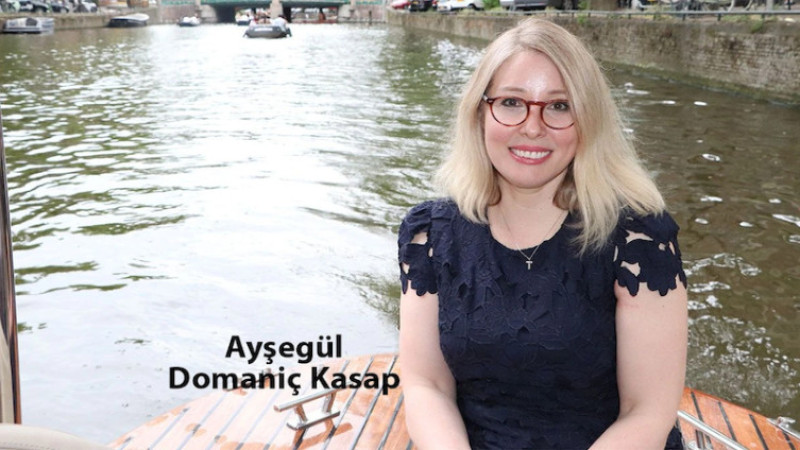
With nearly 25 years of maritime experience, Ayşegül Domaniç Kasap continues her international career in the Netherlands, combining engineering expertise with a strategic maritime perspective.

In insurance and claims management, you can never know what kind of scenario an event that may arise tomorrow will create. The only certainty is that even if you are handling your hundredth collision case, it will never be exactly the same as the previous ninety-nine. In fact, the most certain piece of knowledge is knowing that you cannot know the future precisely. In my view, learning to live with uncertainty and being prepared for it is one of the most valuable skills that a long career can bring. In today’s popular terminology, its contribution to developing resilience is invaluable.
The maritime industry is a sector where crises and unexpected developments occur from time to time. When you encounter a serious maritime accident or claims case, what is your first instinct?
My first instinct is not to assume that I know anything. I try to understand every new incident within its own circumstances. Because someone who assumes they “know” is often destined to be mistaken. My priority is to listen to all parties, obtain verified information and bring the right experts to the same table as quickly as possible. At the heart of crisis management in maritime operations are common sense, discipline and proper communication, as much as information itself.
What are the key differences in working culture that you observe between the Dutch and Turkish maritime industries?
In the Netherlands, and more broadly in Northwestern European societies, organizational hierarchy functions very differently. In Turkey and societies with more vertically structured organizations, superior-subordinate relationships can play a more decisive role in decision-making processes. In the Netherlands, however, age or seniority is not equally decisive when it comes to expressing opinions and taking initiative. An example given during one of The Swedish Club’s training sessions has always stayed with me. In some cultures, an officer on the bridge may hesitate to tell the captain, “If we continue like this, we will run aground.” In the Netherlands and similar cultures, much more open communication is established while respect is maintained, and responsibility is shared. I believe this makes a significant contribution to safety culture in particular.
In your view, which areas should the Turkish maritime industry focus on in order to achieve a stronger position in global competition?
I believe the most important issue is to aim to become a global player rather than defining ourselves solely within the boundaries of “Turkish maritime industry.” Although it has almost become a cliché, the fact that our country is surrounded by seas on three sides and controls some of the world’s most strategic waterways is an extremely important advantage. I believe that in order to fully realize this potential, public policies, legal regulations and sectoral incentives need to be shaped within the framework of a long-term strategy. At the same time, the culture of cooperation within the industry needs to become stronger. Unfortunately, I do not think that rational, sustainable cooperation based on ethical values is yet at the desired level. Moreover, I have not merely observed this; I have experienced it firsthand. After all, you cannot become a good trader without first being a good person!
What do you think will be the most important developments shaping the maritime industry in the coming years?
Maritime transport carries more than 90 percent of global trade. Therefore, every development on the world’s agenda affects the maritime industry, while every transformation in maritime affects the world. In fact, maritime is often not merely a sector affected by change, but one of the sectors shaping change.
Just this morning, I watched a presentation of software that uses a drone inside a ship’s tanks to carry out thickness measurements while simultaneously performing highly precise three-dimensional modelling. This is just a small example related to survey processes. Artificial intelligence, digitalisation, autonomous systems and data analytics are now part of the industry’s daily life. Of course, new technologies have some shortcomings in their early stages. However, we are not merely users of this transformation; we are also stakeholders contributing to its development.
What challenges have you encountered throughout your career? What advice would you particularly like to give to professionals who are pursuing a career in the maritime industry?
I would like to make a small correction to the question. I do not want my advice to be directed only at women. I strongly believe in education, merit and equal opportunity. I believe that placing the right person in the right job and providing people with the training they need is the healthiest formula. I am also confident that this approach will not fail us in the long run.
Joking aside, the most important thing I would like to tell my female colleagues is not to see themselves as disadvantaged based on any parameter. Knowledge, work discipline, curiosity and character are far more decisive factors than gender.
They should never stop investing in themselves, learning and taking responsibility. The maritime industry is a sector that offers great opportunities as well as significant challenges. What brings lasting success in this industry is consistency, expertise and reliability. It is also important to remember that maritime is one of the most international industries in the world. Do not limit yourself to the country you are in; see the world as your field of work. Because what often expands your career is not your geography, but your vision.