
Somalia Reclaims Its Sovereignty at Sea
Somalia is rebuilding its maritime sector with the reactivation of its national ship registry after 35 years.
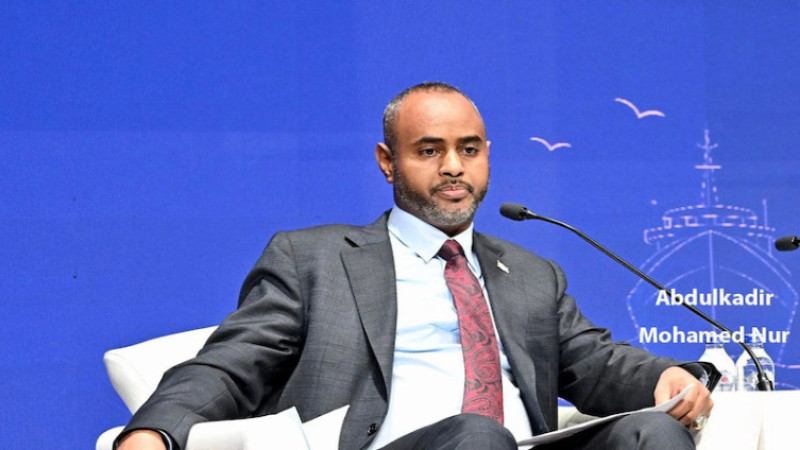

In every line of our interview with the Federal Republic of Somalia’s Minister of Ports and Maritime Transport, Abdulkadir Mohamed Nur, you can sense that the national ship registry, reactivated after 35 years, is seen not merely as a maritime reform but as the restoration of state sovereignty. Yet there is another element that stands out between the lines: the sincere trust in Türkiye. Minister Nur expresses this with the following words: “The trust between us is a capital you cannot find in any other partnership. When the Somali people see the Turkish flag, they see a friend, they see a brother. This feeling cannot be written into any feasibility report; but everyone working in the field knows its value. Let us turn this trust together into investment, trade and shared prosperity. Centuries ago, the Indian Ocean connected Somalis and Turks. Today, the same sea is bringing the two countries together again as strategic partners shaping the future of trade and connectivity. We invite Turkish maritime professionals to become partners in this future.” Perhaps this is precisely what makes this interview different… It offers an opportunity to view the relationship between the two countries not only through ports, ships or trade, but through years of trust, friendship and a shared understanding of the future. Two peoples who met centuries ago along the same routes of the Indian Ocean are now preparing to build a shared future on the same sea once again…
Somalia has reactivated its national ship registry after approximately 35 years. What are the main objectives behind this decision, and what is Somalia’s long-term vision for the maritime sector?
First of all, I would like to say this: the reactivation of the ship registry is not a technical procedure for us, but a matter of sovereignty. The fact that ships flying the flag of a state sail the world’s seas is one of the most tangible indicators of that state’s presence in the international system. For nearly thirty-five years, Somalia was deprived of this opportunity. When our state collapsed, we lost not only our institutions but also our identity at sea.
Today, we are reclaiming that identity. The reopening of the registry is a declaration of Somalia’s return to the international maritime community. However, we do not see this as an isolated step. The registry is part of a much broader national transformation encompassing port modernisation, maritime security, fisheries, the blue economy and maritime education.
Our long-term vision is clear. Somalia has the longest coastline on the African mainland. For centuries, we were one of the most important maritime civilisations of the Indian Ocean. Our port cities such as Mogadishu, Berbera, Marka and Barawa were centres of trade networks connecting Africa with Arabia, India and the Persian Gulf. We are not building a new maritime nation. We are reviving the maritime heritage that has existed for centuries.
How has your government’s approach to the seas changed? How do you aim to position the Somali flag within the international maritime industry?
In fact, what has changed is not our approach to the sea, but the removal of the obstacles that came between us and the sea. The Somali people have never turned their backs on the sea. Our oldest cities were established along the coast. For generations, our merchants, seafarers and shipbuilders contributed to one of the world’s oldest maritime trade networks. Somalia was not simply a country with ports; Somalia was a civilisation that grew around its ports.
The civil war severed this connection. Our institutions weakened, our ports deteriorated and our maritime trade was disrupted. Today, however, that period is behind us. Peace and stability are strengthening every day, international confidence is being restored, and investors are once again turning towards Somalia. Under the leadership of our President, H.E. Dr Hassan Sheikh Mohamud, maritime affairs are now at the centre of our national development strategy. The sea is not a peripheral element for us; it is where our future will be written.
Our objective regarding our flag is clear: a respected, reliable and well-regulated flag. We have no intention of entering a race to become a flag of convenience. We want the Somali flag to be known for compliance with international standards and transparent management, and to become a flag that shipowners can choose with confidence. This is a long-term undertaking, and we have embarked on this journey with patience and determination.
What kind of preparation process did you carry out before reactivating the national ship registry? How will the new structure contribute to maritime security, state authority and your blue economy objectives?
You have made an accurate observation. For many years, Somalia was associated with piracy, illegal fishing and insecurity. At one point, the world remembered our seas not for trade and opportunity, but for risk. We also knew that changing this perception would require institutional steps rather than statements.
Therefore, before opening the registry, we established the legal and institutional foundation. We incorporated key international maritime instruments into our national legislation, including the United Nations Convention on the Law of the Sea, SOLAS and the ISPS Code. In June this year, we also announced that we had acceded to twenty additional key international maritime conventions. I would like to remind you of this: since gaining independence in 1960, our country had ratified only three conventions. A country with such a significant maritime heritage and strategic importance could no longer remain outside the international maritime legal order.
At this point, I would like to acknowledge a contribution. At every stage of this journey, from the re-establishment of the ship registry to the convention processes, we have received and continue to receive tremendous support from our counterparts at the Ministry of Transport and Infrastructure of the Republic of Türkiye. Whenever we knocked on their door, we never left empty-handed. They opened their entire body of knowledge, institutional capacity and experience to us; throughout this process, they effectively acted as mentors and sponsors to us. On behalf of the Somali people, I would also like to extend my special thanks to the Ministry’s leadership and staff, in the person of Minister Abdulkadir Uraloğlu, and to everyone who contributed to this process.
During the same period, we strengthened our coastal surveillance capacity, established port state control mechanisms, re-established our relations with the International Maritime Organization and actively participated in regional security cooperation within the framework of the Djibouti Code of Conduct. The registry is built upon this foundation. Every vessel sailing under the Somali flag will be a vessel whose compliance with international standards is inspected. This means the return of state authority to our seas. From the perspective of our blue economy objectives, safe waters are a prerequisite for investment. Without security, neither fisheries can develop, nor ports can grow, nor can trade flow.
What kind of transformation is being targeted in Somalia’s maritime education through the planned cooperation with Piri Reis University? Are new joint projects with Turkish maritime education institutions also on your agenda?
You can build ports and purchase ships; but what keeps the maritime industry standing is people. The most critical pillar of Somalia’s maritime transformation is developing a qualified human resources base. For many years, our young people did not have access to maritime professions. We are now changing this picture.
Our cooperation with Piri Reis University has a special meaning for us in this regard. Working with an institution named after a great seafarer who commanded the Ottoman fleet in the Indian Ocean and charted the seas stretching from the Red Sea to the Persian Gulf is also a reflection of the responsibility our history places upon us. Within the scope of this cooperation, we are working on a comprehensive programme covering everything from seafarer training to the education of maritime administration personnel, from curriculum development to academic exchange. Our goal is to raise a generation of Somali seafarers who are educated to international standards, capable of serving on fleets around the world and working aboard vessels flying our own flag.
Our cooperation with DEHUKAM, operating under Ankara University, is also part of this vision. DEHUKAM is one of Türkiye’s institutions with the strongest expertise in the field of maritime law; through its activities ranging from legislative studies to capacity building, it has become a centre that guides this field not only in Türkiye but also in our region. We already had ongoing work with them; with the agreements we signed in Istanbul, we have now placed this cooperation within an institutional framework. In the coming period, we also want to develop similar programmes with other Turkish institutions. Türkiye has world-class experience in every field, from maritime education to shipbuilding, from port operations to maritime law, and this accumulated knowledge is a ready-made school for us. On this occasion, I would also like to express my gratitude to Mr Tamer Kıran, Chairman of the Chamber of Shipping, for his role and valuable contributions at every stage of this process.
It is known that Somalia is preparing a comprehensive Shipping Act. What legal safeguards do you aim to provide through the new legislation for international shipowners, investors and financial institutions?
In maritime affairs, capital goes where the law is predictable. We are fully aware of this. The Shipping Act we are preparing will serve as the overarching legislation for Somalia’s maritime sector and will provide a modern legal framework fully aligned with international standards.
Our direction is clear: we will establish a law that provides the legal security and predictability sought by shipowners choosing the Somali flag, investors coming to our country and the financial institutions supporting them. The international conventions we have acceded to form the foundation of this law, and the new legislation is being prepared in full compliance with these commitments. Our objective is to ensure that no actor doing business with Somalia faces legal uncertainty. Once the law is completed, the message we will send to the world will be clear: maritime business in Somalia is now operating on a rules-based, transparent and reliable foundation.
Somalia’s ambitions are not limited to the ship registry; a comprehensive transformation is envisaged in port operations, logistics, fisheries, shipbuilding, maritime security and the blue economy. What opportunities do you see for foreign investors, particularly Turkish companies?
Somalia today offers one of the most underdeveloped investment opportunities in Africa, and this picture is changing rapidly. We have successfully cleared our international debt burden, the arms embargo has been lifted, we have joined the East African Community and have been elected as a non-permanent member of the United Nations Security Council. In other words, the opportunities now stand on an institutional foundation.
The picture in port operations is clear. We strongly invite Turkish contracting, infrastructure and logistics companies to take part in our port investments. In addition to Mogadishu, there is a wide range of opportunities in Bosaso, Kismayo and Hobyo, from berth expansion to cold-chain facilities, from port digitalisation to free-zone infrastructure. In Hobyo in particular, investors have the opportunity to build a port from the ground up with a modern design.
The potential in fisheries and the blue economy is enormous. Our waters are home to high-value species ranging from tuna to lobster and from shrimp to mackerel; however, processing facilities, cold-chain infrastructure and modern fleet investments are still at an early stage. Considering our proximity to the Gulf and Asian markets, investors entering the market early have the opportunity to establish the entire value chain. In shipbuilding and ship repair and maintenance, we are open to partnerships that will bring the expertise of Turkish industry to Somalia. My message to Turkish companies is this: in Somalia, you are not simply entering a market; you are becoming a partner in the reconstruction of a country. Those who arrive early will be among the architects of this transformation.
Global maritime trade is undergoing a major transformation. How does Somalia, located at the intersection of the Indian Ocean and the Gulf of Aden, plan to leverage its strategic position amid new geopolitical and commercial balances?
Geography does not change; what changes is the value of geography. With a coastline exceeding 3,300 kilometres, Somalia is located immediately alongside one of the world’s busiest maritime trade corridors. Our proximity to the Bab el-Mandeb Strait means that we are at the very intersection of routes connecting Europe with the Middle East, South Asia and East Africa.
Developments in recent years, from threats in the Red Sea to tensions extending to the Strait of Hormuz, have shown everyone how vulnerable global transport corridors can be. Supply chains are now planned not only around cost, but also around resilience and security. In this context, the importance of coastal states with scalable port capacity is structurally increasing. Somalia is precisely such a country.
We want to leverage this position without becoming dependent on a single port. Mogadishu, Berbera, Kismayo, Bosaso and Hobyo together form a multi-centre port system. Our flagship project, the New Mogadishu Port, has been designed as a green port and is part of an integrated development incorporating a free economic zone, a new international airport and a satellite city. All feasibility, environmental and legal assessments have been completed. Our goal is to transform Somalia into a modern trade gateway not only for the Horn of Africa but also for landlocked countries in the region. Global connectivity is only possible with a fully connected Africa, and a fully connected Africa is not possible without Somalia.
From a maritime perspective, how do you view Türkiye as a strategic partner in Somalia’s transformation process? Which areas of cooperation do you expect to come to the forefront?
To understand our relationship with Türkiye, we must first look at history. Our partnership began at sea. During the period when the Ottoman Empire strengthened its presence in the Red Sea and Indian Ocean, the support delivered via the Red Sea to Ahmed Gurey’s struggle was one of the earliest examples of cooperation between our peoples. Piri Reis and Seydi Ali Reis undertook voyages extending from the Red Sea to the Indian Ocean, while Mir Ali Bey strengthened this connection by sailing as far as Mombasa along the East African coast. Today, we are not establishing a new partnership; we are reviving the partnership that history began in the same waters.
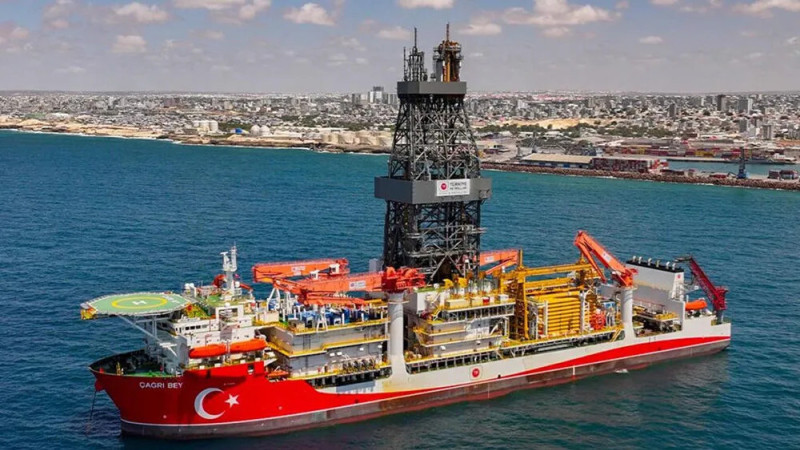
In more recent times, Türkiye has been the country that stood by us during our most difficult days. In 2011, when Somalia was struggling with famine and chaos, at a time when everyone was staying away from Mogadishu, President Erdoğan came to our country despite all the security risks. Moreover, he did not come alone; he brought his family with him. That family walking through the streets of Mogadishu that day was a breath of fresh air for a nation. The message to the world was clear: Somalia is not alone. That visit was not merely a diplomatic choice, but a moral stance; it gave hope to a nation that was about to lose its hope. The presence of dozens of foreign diplomatic missions in Mogadishu today is a direct result of that courageous step taken at the time. Türkiye came to the field, touched people’s lives and presented a model aimed not at making Somalia dependent, but at helping it stand on its own feet. The Defence and Economic Cooperation Framework Agreement we signed in 2024 was built upon this foundation, and its maritime dimension is one of the most dynamic areas of this agreement.
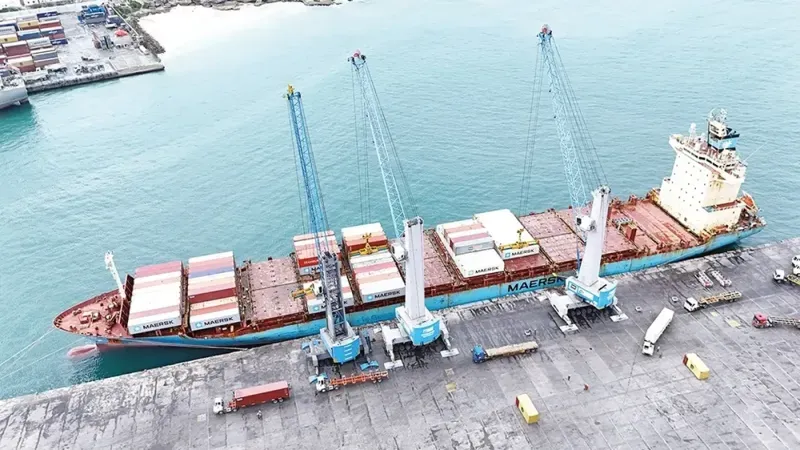
Today, this partnership is producing tangible results. For the first time in many years, direct cargo ship services from Türkiye to Somalia have begun; the route launched by Akkon Lines is strengthening trade between the two countries every day. Our ship registry is operating again through the partnership we established with the Turkish business community, and ships have once again begun flying the Somali flag. Mogadishu Port is operated by Albayrak, a Turkish company, and the efficiency of our port has visibly increased through this cooperation. In other words, from port operations to the ship registry, our partnership with Türkiye is not merely an intention on paper; it is a reality operating on the ground. We have demonstrated the same commitment in fisheries. SOMTÜRK, established under the Strategic Cooperation and Service Agreement signed between OYAK and our Ministry of Fisheries and Blue Economy, has undertaken the licensing and registration of fishing activities within our exclusive economic zone. On the one hand, this structure ensures that our marine resources are managed sustainably and in a controllable manner; on the other, it opens the door for the Turkish fishing industry to one of the world’s richest fish reserves. In the coming period, we want to build new layers on this foundation in maritime security, capacity building and other areas of the blue economy. Türkiye is not merely a partner for us; it is a natural companion on this journey.
What message would you like to convey to the Turkish maritime industry and investors?
My message to the Turkish maritime industry is clear: Somalia has opened its doors to you. For Türkiye’s shipowners, port operators, shipyards and logistics companies, Somalia is a natural gateway to Africa. Moreover, those who passed through this gateway first have already begun to benefit. Today, Mogadishu Port is operated by a Turkish company, our ship registry is functioning through our partnership with the Turkish business community, Akkon Lines vessels operate regular services between the two countries, and fisheries in our waters have been brought into an orderly framework under SOMTÜRK. In other words, we are inviting you not to a promise, but to a partnership that is already working.
The trust between us is a form of capital that you cannot find in any other partnership. When the Somali people see the Turkish flag, they see a friend, they see a brother. This feeling cannot be written into any feasibility report; but everyone working in the field knows its value. Let us turn this trust together into investment, trade and shared prosperity. Centuries ago, the Indian Ocean connected Somalis and Turks. Today, the same sea is bringing the two countries together again as strategic partners shaping the future of trade and connectivity. We invite Turkish maritime professionals to become partners in this future.
Finally, if you had the opportunity to give a single message to shipowners, investors and the maritime industry around the world, how would you summarise Somalia’s new maritime vision? What kind of Somalia do you envision at the end of the next decade?
If I had to summarise it in a single sentence, I would say: Somalia is returning, and this time it is returning to stay. The message I want to give the world is this: evaluate Somalia not through the news of the past, but through the realities of today. Today’s Somalia is a country that has acceded to international conventions, reactivated its ship registry, modernised its ports, cleared its debts and returned to the world stage. The sea is our greatest national wealth, and we are determined to manage this wealth responsibly, in accordance with international law and hand in hand with our partners. An investor who comes early will capture not merely an opportunity, but the establishment phase of a transformation.
As for ten years from now, I envision a Somalia where the Somali flag is welcomed with respect in ports around the world, Mogadishu has become one of East Africa’s leading trade gateways, our young people serve on international fleets and our own vessels, and our fisheries and blue economy generate prosperity for our people. To me, this vision is not far away because we are not starting from zero. We are reviving the heritage of a people that has existed at sea for centuries. Somalia’s future will not be written only on land. It will also be written at sea.