
Strong interest in the 5th Türkiye Maritime Summit
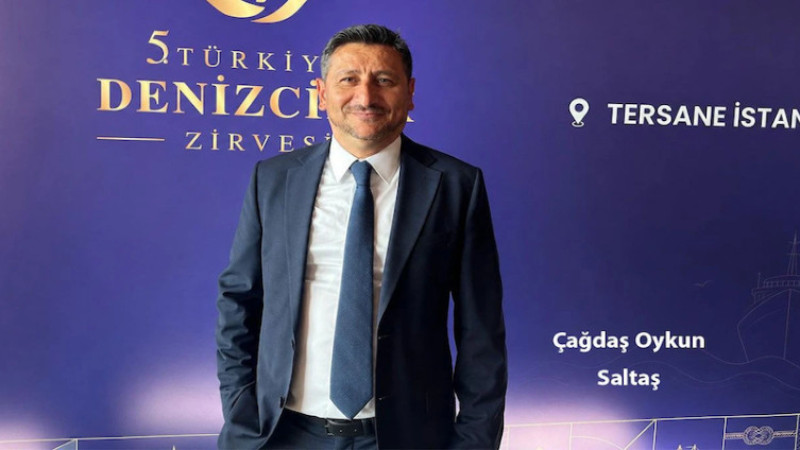
The 5th Türkiye Maritime Summit, held in Istanbul, brought together domestic and international representatives of the maritime industry.
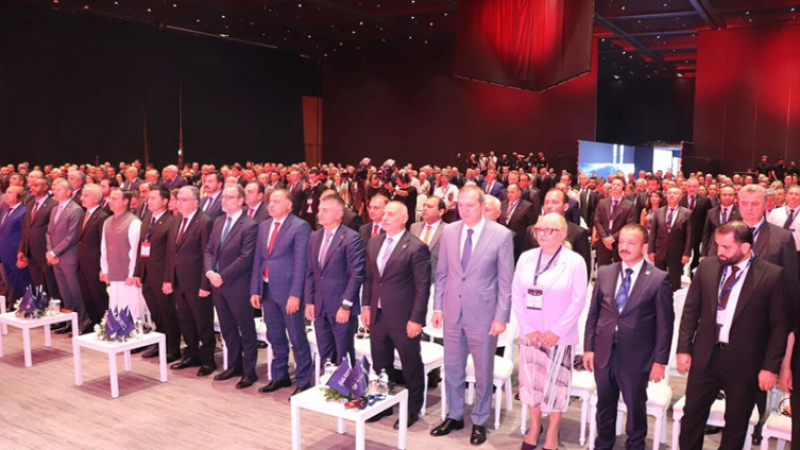

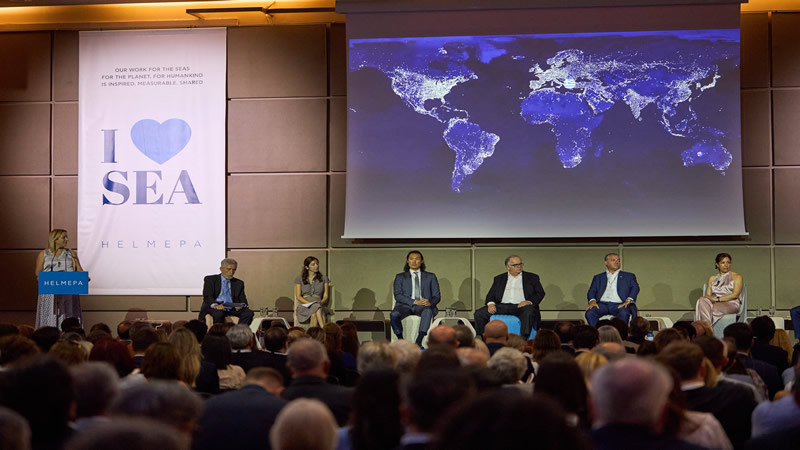
The 5th Türkiye Maritime Summit, organized by the Ministry of Transport and Infrastructure at Tersane Istanbul, brought together representatives from the public sector, private industry, academia, and civil society under one roof with broad international participation.
Held at this historic venue, founded by Sultan Mehmed II in 1455 and regarded as one of the most significant symbols of Türkiye’s maritime heritage, the summit celebrated the 100th anniversary of the Cabotage Law while providing a comprehensive platform to discuss the future of global maritime trade, digital transformation, geopolitical crises, and the blue economy.
During the opening session, protocol members addressed both domestic and international maritime authorities, delivering strategic messages that highlighted the journey of the Turkish maritime sector from its rich historical legacy to its global vision.
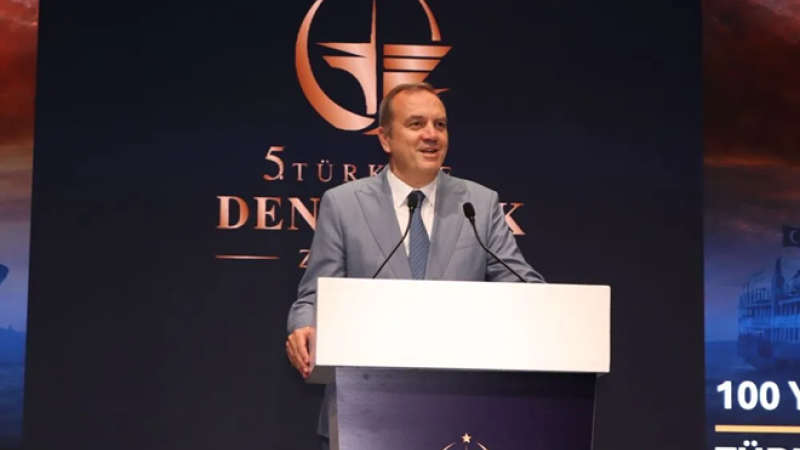
Speaking at the opening of the summit, İMEAK Chamber of Shipping Chairman Tamer Kıran said that the 100th anniversary of the Cabotage Law marks a historic milestone for the Turkish maritime sector, adding that the industry's future will be shaped by a green, digital, and sustainable transformation. Kıran began his speech by thanking Minister of Transport and Infrastructure Abdulkadir Uraloğlu and ministry officials for leading the organization, emphasizing the significance of the legislation that entered into force on 1 July 1926.
The Cabotage Law established the legal foundation of Turkish maritime
Highlighting the 100th anniversary of the Cabotage Law, Kıran said the legislation, which came into force on 1 July 1926, represented a historic turning point in the development of Turkish maritime.
He recalled that the Cabotage Law granted the right to conduct coastal shipping under the Turkish flag exclusively to Turkish citizens, stating that this regulation laid the legal foundation of the national maritime industry.
Kıran also noted that Türkiye’s sovereign rights at sea were fully secured with the Montreux Convention Regarding the Regime of the Straits, signed on 20 July 1936, describing these two historic milestones as the cornerstones of Türkiye’s maritime vision.
Türkiye has risen to 11th place in the world merchant fleet rankings
Kıran said the Turkish maritime sector has gained significant momentum in recent years, noting that as of 2026 Türkiye ranks 11th in the world merchant fleet.
He stressed that success in shipping should not be measured solely by fleet size, adding that shipyards’ production and export performance, contributions to the defense industry, the operational capacity of ports, maritime education, and the availability of a skilled workforce are also key indicators of the sector’s level of development.
Geopolitical developments have increased the strategic importance of maritime trade
Recalling that approximately 87% of global trade is carried by sea, Kıran said recent global developments have further increased the strategic importance of maritime transportation.
He stated that the Russia–Ukraine war, conflicts in the Middle East, security risks in the Red Sea and the Strait of Hormuz, and disruptions in global supply chains have directly affected the maritime sector, making it not only a commercial industry but also a strategic one.
Competition is no longer measured only by the number of ships
Kıran also addressed the green transition taking place in shipping, saying that environmental regulations, alternative fuel technologies, and efforts to reduce carbon emissions are driving the industry through a historic transformation.
Referring to the International Maritime Organization’s (IMO) 2050 net-zero emissions target, Kıran said achieving this goal requires joint efforts not only from shipowners but also from shipyards, equipment manufacturers, ports, and public authorities.
He emphasized that competitiveness in shipping is no longer determined solely by owning more vessels, but by building a greener, more digital, safer, and more resilient maritime ecosystem. He added that Türkiye has significant advantages to achieve this transformation thanks to its strategic geographical location, modern port infrastructure, advanced shipyards, qualified workforce, and dynamic private sector.
Public-private cooperation is of critical importance
Kıran stressed that strong cooperation between the public and private sectors is vital for the future of the industry, expressing his belief that the initiatives led by the Ministry of Transport and Infrastructure will further strengthen the international competitiveness of the Turkish maritime sector.
Concluding his speech, Kıran celebrated the 100th anniversary of the Cabotage Law and the 1 July Maritime and Cabotage Day, expressing his hope that the 5th Türkiye Maritime Summit would deliver productive outcomes for both the Turkish maritime industry and the international maritime community.
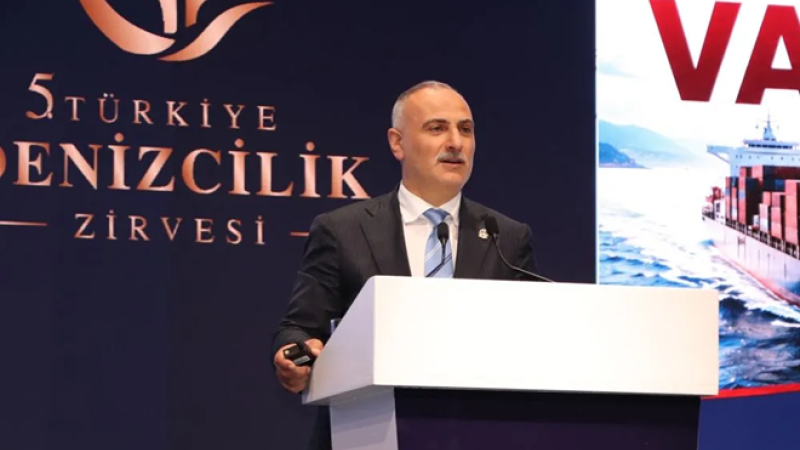
Taking the floor after Tamer Kıran, Director General of Maritime Affairs Ünal Baylan said that the 100th anniversary of the Cabotage Law is not only a historic milestone but also an important threshold at which the future vision of the Turkish maritime sector will be shaped.
Baylan noted that the historic venue, established as a shipyard by Sultan Mehmed II in 1455, is one of the most significant symbols of Turkish maritime history.
The Cabotage Law is one of the most important symbols of national sovereignty
Highlighting the historic role of the Cabotage Law in the development of Turkish maritime, Baylan recalled that the legislation, which entered into force on 1 July 1926, granted the exclusive right to transport passengers and cargo between Turkish ports to Turkish citizens.
Baylan stated that the Cabotage Law legally secured Türkiye’s sovereign rights over its seas, saying, “This law, which strengthened the awareness of protecting our seas, is one of the most important symbols of our independence and national sovereignty, and one of the most significant turning points in our maritime history.”
The Turkish maritime sector has reached a strong position internationally
Emphasizing that Türkiye has achieved significant progress in the maritime sector over the past century, Baylan said that Turkish shipping has now reached internationally recognized standards and has become a strong model in many areas.
Drawing attention to the strategic importance of the Turkish Straits—the Bosphorus and the Dardanelles—for global maritime trade, Baylan said Türkiye also bears a critical responsibility for ensuring the sustainability of maritime trade for the countries bordering the Black Sea.
Global maritime agenda to be discussed at the summit
Baylan stated that the 5th Türkiye Maritime Summit was specially organized to mark the 100th anniversary of the Cabotage Law. Throughout the summit, national and international stakeholders will discuss a wide range of topics, including global maritime trade, green and digital transformation, the blue economy, transportation, foreign policy, defense, the environment, and maritime education.
Türkiye maintains its strong position in international maritime affairs
Baylan said that since 1999, Türkiye has continuously fulfilled its responsibilities as a flag, port, and coastal state through its uninterrupted membership on the IMO Council. He added that the IMO IMSAS audit conducted in 2024 confirmed that Türkiye’s maritime administration operates above international standards.
Baylan also announced that efforts to update the existing legislation into a comprehensive maritime jurisdiction law, aimed at strengthening the protection of Türkiye’s rights and interests in the Blue Homeland, have reached their final stage.
Seafarers are on the front line of geopolitical crises
Stating that maritime transport is the backbone of global trade, Baylan said that wars, geopolitical tensions, the pandemic, and economic fluctuations in recent years have had a direct impact on maritime commerce.
He welcomed recent developments aimed at restoring diplomacy and stability in the Gulf region and expressed hope that navigational safety on critical sea routes, particularly the Strait of Hormuz, would continue to improve.
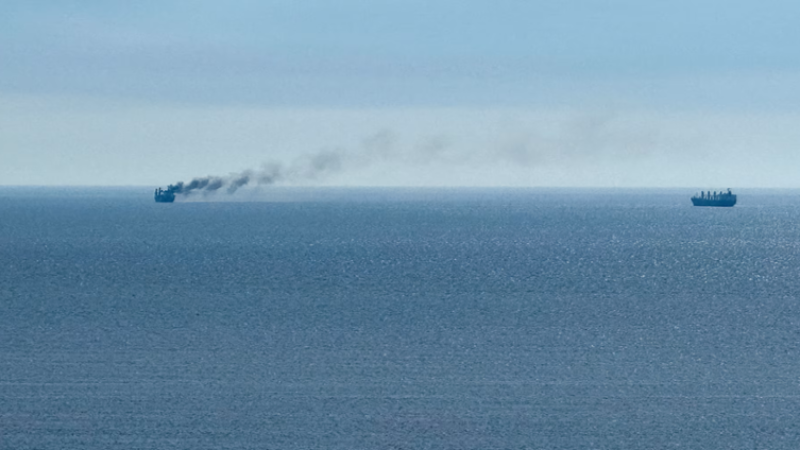
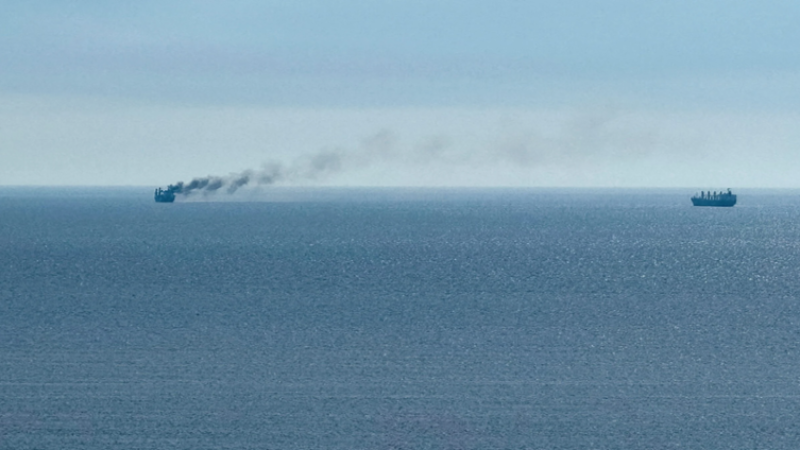
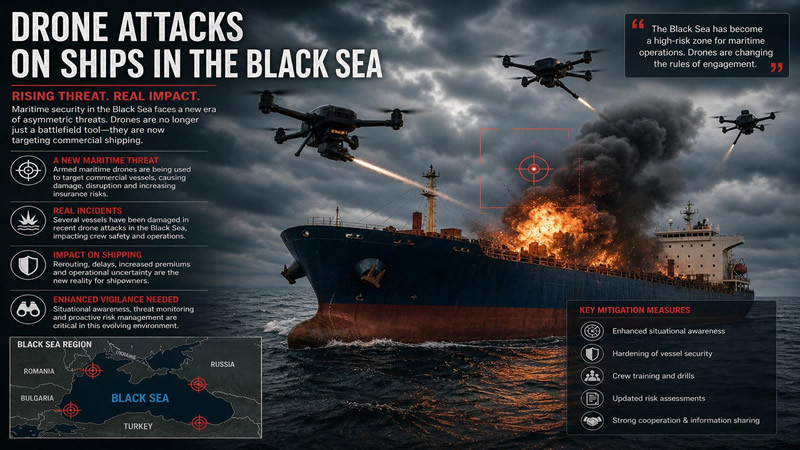
Recalling that seafarers have lost their lives in attacks on civilian vessels in the Black Sea, Baylan said, “Seafarers are serving on the front line of geopolitical crises through no fault of their own. Ensuring the safety and welfare of the seafarers who keep global trade moving is a shared responsibility for all of us.”
We are moving forward with a long-term vision in maritime
Concluding his remarks with an assessment of the future of the maritime sector, Baylan emphasized that maritime has always required a long-term vision.
“Ships are built for long voyages. Our institutions must also prepare for the future with the same mindset,” Baylan said, adding that the Directorate General of Maritime Affairs remains firmly committed to strengthening its institutional capacity and implementing structural reforms for the sector.
Baylan thanked all guests from Türkiye and abroad for participating in the 5th Türkiye Maritime Summit and expressed his hope that the event would produce fruitful outcomes for both the Turkish and global maritime industries.
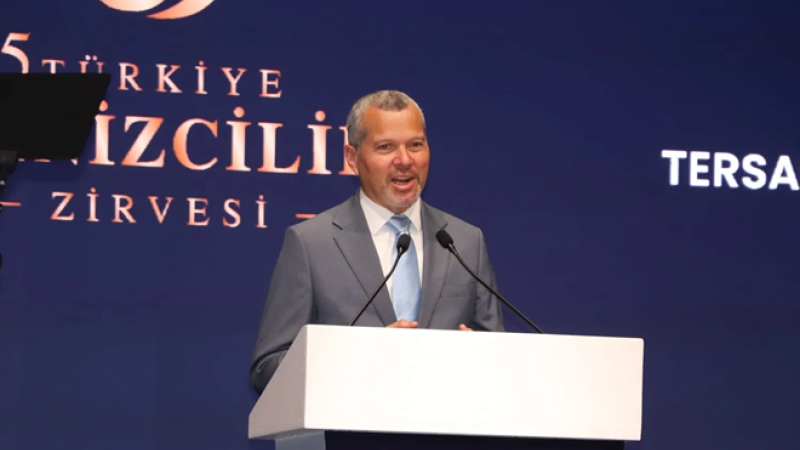
Among the international guests attending the summit, International Maritime Organization (IMO) Secretary-General Arsenio Dominguez delivered a speech in which he made striking remarks, stating that the geopolitical crises experienced in recent years have had a direct impact on maritime transport and seafarers.
He said that the geopolitical crises of recent years have directly affected maritime transport and seafarers, adding, “Innocent seafarers should not pay the price for geopolitical conflicts.”
Expressing his pleasure at being in Türkiye, Dominguez thanked Minister of Transport and Infrastructure Abdulkadir Uraloğlu for his hospitality and for his vision in strengthening the international profile of the summit with each passing year.
Recalling that he had also attended the Türkiye Maritime Summit two years ago, Dominguez said the event is now being held with much broader international participation.
Türkiye is one of the natural centres of maritime
Emphasizing that Türkiye has maintained strong ties with maritime throughout history, Dominguez said the country plays a significant role in global maritime trade thanks to its strategic location connecting Europe and Asia, the Black Sea and the Mediterranean, as well as the Middle East.
Dominguez noted that maritime plays an important role in the daily life of Türkiye, which has a well-developed multimodal transport infrastructure. He also congratulated Türkiye on the 100th anniversary of the Cabotage Law and the Maritime and Cabotage Day.
The maritime industry has been battling continuous crises over the past six years
Addressing the impact of global geopolitical developments on maritime transport, Dominguez said the industry has faced one major challenge after another over the past six years.
He recalled that during the COVID-19 pandemic, thousands of seafarers were unable to leave their ships for months, and in some cases for nearly two years, while also being deprived of access to healthcare. He added that the war in the Black Sea, attacks on commercial vessels in the Red Sea, and most recently developments surrounding the Strait of Hormuz have placed severe pressure on maritime transport.
Seafarers carry the burden of the world
Dominguez said that seafarers have borne the greatest burden of these crises, emphasizing that those who transport the goods the world depends on are not parties to any political dispute.
He stated that geopolitical tensions not only threaten the safety of seafarers but also directly affect the global economy, adding that these developments are making it increasingly difficult to attract younger generations to maritime careers.
The maritime industry is resilient
Despite all these challenges, Dominguez said the maritime industry has maintained its resilience, recalling that following the attacks in the Red Sea, the sector developed alternative routes to ensure the continuity of global trade.
However, he stressed that disruptions at critical chokepoints such as the Strait of Hormuz cannot be offset through alternative transport methods. He noted that approximately 20% of the world's oil trade, 19% of global liquefied natural gas shipments, and a significant share of chemical and fertilizer cargoes pass through these routes.
Innocent seafarers must not become part of conflicts
Calling on the international community, Dominguez said that maritime transport and seafarers must not be turned into instruments of geopolitical conflicts.
“Maritime is resilient, and seafarers are resilient. However, there is also a limit to that resilience,” Dominguez said, stressing that the security risks facing the industry must be reduced through international cooperation.
More than 100,000 additional officers expected to be needed by 2030
Drawing attention to the growing workforce challenge facing the maritime industry, Dominguez said that, according to the latest report prepared by the International Chamber of Shipping (ICS) and BIMCO, the world will require more than 100,000 additional certified officers by 2030.
At the same time, he noted that global trade will continue to expand, stating that, according to United Nations data, global seaborne trade is expected to maintain average annual growth of around 2% in the coming years.
Türkiye is a major force in maritime
Describing Türkiye as one of the world's largest economies, Dominguez pointed out that more than 85% of the country's foreign trade is carried by sea.
He said that Türkiye’s more than 80 shipyards have developed significant capacity not only in shipbuilding but also in ship repair, maintenance, and ship recycling, adding that the country's influence within the global maritime industry continues to grow year by year.
IMO is preparing for the next generation of maritime
Dominguez said that the IMO continues its work on the future of shipping, explaining that the ongoing revision of the STCW Convention covers key contemporary issues such as automation, emerging technologies, cyber risks, mental health, and social and sexual harassment.
He emphasized that preparing the next generation of seafarers requires not only technical skills but also social competencies, adding that new education models are being developed to meet the evolving needs of the maritime industry.
Maritime is also part of the solution to climate change
Concluding his speech, Dominguez recalled the IMO’s 2050 net-zero emissions target adopted in 2023, saying that the maritime industry continues to take responsibility in the fight against climate change.
Pointing out that the maritime sector carries more than 80% of global trade while accounting for approximately 3% of global carbon emissions, Dominguez said, “This figure is sometimes interpreted negatively. The reality, however, is that maritime transport is one of the most environmentally friendly and sustainable modes of transport for moving large volumes of cargo. Our goal is to improve this performance even further.”
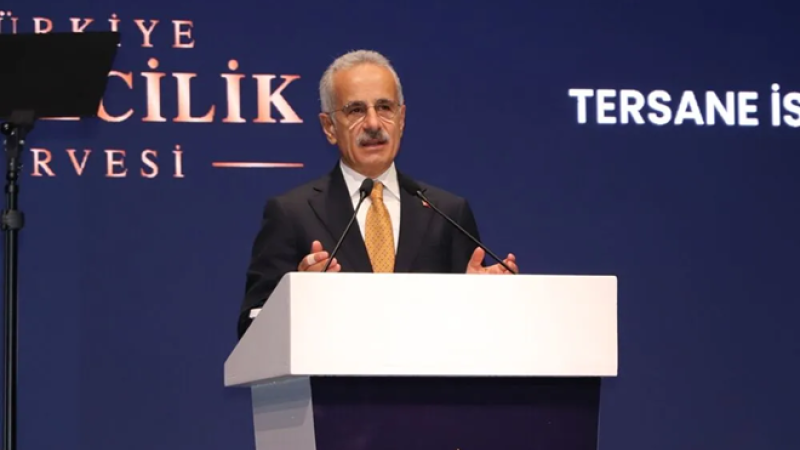
Turkey’s Maritime Sector Achieves Historic Growth Over the Past 24 Years, Says Minister Uraloğlu: "We are building the second century of the Cabotage Law with the 'Century of Turkey' vision."
Speaking at the opening of the 5th Turkey Maritime Summit, Abdulkadir Uraloğlu, the Minister of Transport and Infrastructure and host of the event, delivered a comprehensive speech highlighting Turkey’s historic growth in maritime affairs over the last 24 years. Welcoming domestic and international maritime authorities to Istanbul, Minister Uraloğlu emphasized that the summit serves as a crucial platform shaping the future of Turkish maritime transport.
Maritime Transport is the Backbone of Global Trade
Reminding the audience that approximately 88% of global freight transport is carried out by sea, Uraloğlu noted that 85% of Turkey’s foreign trade by tonnage is also maritime-dependent.
He stated that these figures clearly demonstrate that shipping is the cornerstone of the global economy and supply chains. Uraloğlu underlined that the strategic importance of Turkey’s maritime vision and its "Blue Homeland" doctrine grows stronger by the day, emphasizing that the centenary of the Cabotage Law stands as one of the most powerful symbols of the nation's sovereign will over its seas.
Turkey Lies at the Heart of Global Transport Corridors”
Pointing out that Turkey has historically stood at the crossroads of continents, civilizations, and trade routes, Uraloğlu stated that the country remains at the center of international transport corridors today.
As the key nation of the Middle Corridor, the sole authority over the Turkish Straits, and the main actor in the Development Road Project, Turkey is an indispensable link between north-south and east-west corridors. “A transport corridor without Turkey is simply unthinkable,” Uraloğlu stated.
Developments in the Strait of Hormuz Highlight the Need for Alternative Corridors
Uraloğlu noted that recent geopolitical developments have exposed the vulnerability of transport systems, specifically drawing attention to the impact of tensions around the Strait of Hormuz on global energy supplies and supply chains.
With nearly 20% of the world's petroleum trade passing through this strategic waterway, any disruption directly affects the global economy. Consequently, Uraloğlu emphasized that creating alternative transport routes is just as vital as strengthening existing corridors.
The Middle Corridor and the Development Road are Turkey's Strategic Projects”
Stating that Turkey aims to transform the Middle Corridor—which stretches between Asia and Europe—into a high-capacity, competitive trade backbone, Uraloğlu announced that the Development Road Project will establish a new logistics corridor connecting the Persian Gulf to Europe via Turkey.
Minister Uraloğlu also revealed that under a memorandum signed with Saudi Arabia, a significant step has been taken to revitalize the historic Hejaz Railway.
This project will create an alternative trade route to the Strait of Hormuz, providing a new logistics option for cargo moving from the Gulf region to Europe, thereby making global trade flows less vulnerable to regional crises.
Turkey is a Key Actor in Global Security
Uraloğlu noted that upcoming international summits will further highlight Turkey’s strategic importance. With its geographical location, advanced transport infrastructure, central role in energy corridors, and regional stabilizing identity, Turkey remains a critical nation for global security.
He reiterated that Turkey will continue to serve as a bridge during times of crisis and a reliable partner for development and cooperation during times of peace.
Maritime is the Key to the Future
Observing that seas have historically carried not just trade, but also knowledge, technology, and culture, Uraloğlu stated that the nations driving the future world order will be those possessing strong fleets, modern ports, green technologies, and smart logistics systems.
He added that in the second century of the Cabotage Law, Turkey aims to stand at the forefront of global competition by merging its historic maritime heritage with a forward-looking vision.
Historic Growth in Maritime Affairs Over the Past 24 Years
Uraloğlu stated that under the leadership of President Recep Tayyip Erdoğan, the maritime sector has experienced its greatest period of growth in history. Today, Turkey boasts 218 port facilities, 85 shipyards, 181 boat manufacturing and slipway sites, 65 marinas, 23 ship recycling facilities, 400 fishermen’s shelters, 144,000 seafarers, and nearly 1 million amateur sailors.
Emphasizing that the Turkish-owned merchant fleet continues to expand, Uraloğlu noted that as of January 1, 2026, the fleet reached 2,234 vessels and a capacity of 51.8 million DWT, secure among the world’s leading fleets.
Following the protocol speeches, Tamer Kıran, Chairman of the Board of the Turkish Chamber of Shipping (İMEAK), took the stage to present a comprehensive historical review of Turkish maritime development from the founding of the Republic to the present day, marking the centenary of the Cabotage Law.
Kıran began by addressing a technical glitch that occurred during the program, expressing his regrets for the interruption given the long period of preparation for the event. He then proceeded with his presentation detailing the milestones achieved by Turkish maritime transport over the past 100 years.
Stressing that the Cabotage Law was not merely a transport regulation, Kıran said: “Enacted on July 1, 1926, the Cabotage Law is one of the strongest manifestations of the young Republic’s economic sovereignty over its seas. Today, we are celebrating not only the centenary of the Cabotage Law but also the 100th anniversary of the legal foundation of Turkish maritime trade.”
Maritime Became a Strategic Development Area for the Republic
Kıran stated that the Republic viewed maritime affairs not just as a transport activity, but as a pillar of economic development, foreign trade, and national sovereignty. He noted that Mustafa Kemal Atatürk's words, "We must think of maritime affairs as the great national ideal of the Turk and achieve it in a short time," are the clearest reflection of this vision.
In line with this vision, the Ports Law was enacted first, followed by the Cabotage Law, which reserved coastal shipping within Turkish territorial waters exclusively for vessels flying the Turkish flag. Kıran also noted that the emphasis placed on maritime education during the early years of the Republic formed the foundation of today's qualified workforce.
The Institutionalization Process: From Montreux to the 1980s
In his speech, Kıran touched upon the significance of the Montreux Straits Convention for Turkish maritime affairs, noting that in 1936, Turkey fully regained its sovereign rights over the Straits.
He stated that the subsequent 45-year period was marked by institutionalization and infrastructure investments, during which state-owned institutions like State Steamship Lines , Maritime Bank and Maritime Transport played key roles in fleet and port investments.
Law No. 2581: A Turning Point in Maritime History
Kıran identified Law No. 2581 on the Development of the Maritime Merchant Fleet and the Incentive of Shipbuilding Facilities, enacted in 1982, as one of the most critical thresholds for the Turkish merchant fleet. This regulation incentivized new vessel investments, developed shipyards, and lent international competitiveness to Turkish shipping.
He noted that the Ship Construction, Ship Purchase, Yard Establishment and Development Fund (GİSAD), created during the same period, provided crucial financing for the sector's growth. Furthermore, easier access to international financial markets after 1989 accelerated fleet investments by Turkish shipowners.
Tuzla and Altınova Transformed into World-Class Production Hubs
Recalling that the sector relocated to Tuzla due to capacity shortages at the Haliç (Golden Horn) shipyards, Kıran said that Tuzla has now become Turkey’s largest shipbuilding cluster.
Moving into the 2000s, Yalova Altınova developed as the second-largest shipyard region. Kıran stated that Turkey has achieved international competitiveness across a vast product range, from tugboats and mega yachts to ferries and offshore support vessels.
The Turkish International Ship Registry Boosted Competitiveness
Kıran pointed out that the Turkish International Ship Registry Law, which took effect in 1999, was one of the most critical steps in boosting the global competitiveness of the Turkish flag.
Coupled with the SCT-free (Special Consumption Tax) fuel incentive introduced in 2004, operating costs fell, making maritime transport far more competitive. Kıran noted that all these reforms contributed significantly to the sector's expansion.
Our Greatest Capital is Our Trained Workforce
Dedication a major portion of his speech to maritime education, Kıran emphasized that a robust maritime sector is only possible with a qualified workforce.
Today, Turkey trains approximately 18,500 students across 15 maritime faculties, 15 vocational schools, and 51 maritime vocational high schools, bringing an average of 1,800 young professionals into the sector each year.
Kıran added that Turkish officers and engineers serve in international fleets worldwide today, reflecting the global prestige of Turkish maritime education.
Turkish Maritime Today Among the World’s Leaders
Recalling that the Republic started with a fleet of only 88 vessels and roughly 35,000 gross tons, Kıran stated that the Turkish-owned merchant fleet has now reached approximately 51 million DWT, ranking 11th globally.
He highlighted that with its 85 shipyards, Turkey possesses a powerful manufacturing infrastructure that builds ships not only for its own fleet but for numerous countries worldwide, while also serving as one of Europe's primary hubs for maintenance and repair.
Kıran noted that the domestic defense industry’s journey, which began with the MİLGEM (National Ship) project, now extends from corvettes and frigates to amphibious platforms and unmanned marine vehicles, alongside a world-renowned success story in mega-yacht construction.
The Agenda of the New Century: Green Transition and Digitalization
Concluding his speech with an outlook on the future of maritime, Kıran stated that the green transition, digitalization, alternative fuels, artificial intelligence, autonomous vessels, and decarbonized transport will be the core competitive pillars of the new era.
Emphasizing the value they place on the International Maritime Organization’s (IMO) leadership in this process, Kıran stated that the Turkish maritime sector will continue to actively contribute under the IMO umbrella regarding safety at sea, environmental protection, sustainable transport, and fair competition.
Closing with the words, “Our goal in the second century of the Republic is not just to own a larger fleet, but to build a Turkish maritime sector that is more competitive, innovative, green, digital, safe, and influential on a global scale,” Kıran celebrated the centenary of the Cabotage Law and thanked everyone who has contributed to Turkish maritime history, starting with the founder of the Republic, Gazi Mustafa Kemal Atatürk.
Strategies to Dominate the Seas Play a Decisive Role in World Politics
Another prominent guest at the summit, Prof. Dr. Hüseyin Bağcı, delivered a strategic address titled "Geopolitical and Geoeconomic Approaches to Maritime Trade Historically in the Centenary of Cabotage."
Bağcı emphasized that maritime trade should be evaluated not just as an economic activity, but as a strategic domain intersecting history, security, foreign policy, geopolitics, and geoeconomics.
Pointing out that the world order is undergoing a massive transformation, Bağcı noted that the old order is dissolving while the new one is not yet fully formed. In this transition, sea lanes, straits, trade routes, and energy transit lines remain the core elements determining countries' positions in the global power struggle.
Drawing on historical examples of the rise and fall of empires, Bağcı discussed how the maritime dominance strategies of major powers—from the Ottomans to Great Britain, and Russia to the United States—have played a decisive role in global politics.
Bağcı observed a direct link between economy and security, stating: “If you have an economy, you can invest in security; if you have security, you can operate with greater economic freedom.”
Citing examples from the Strait of Hormuz, the Persian Gulf, the Mediterranean, and historical trade routes, Bağcı emphasized that a strategic geopolitical location is not just an advantage for nations, but also a profound responsibility.
Touching upon the capitulations in his speech, Bağcı reminded the audience that privileges granted during the Ottoman era to facilitate trade eventually led to severe complications once power and control over the seas were lost.
Stating that it is impossible to understand the present or shape the future without knowing the past, Bağcı concluded that on the 100th anniversary of the Cabotage Law, maritime must be treated as an issue of sovereignty, security, economics, and global competition, rather than just transportation.
We Rank Among the Top Three Countries Internationally in Ship Recycling
In the final segment of his speech at the 5th Turkey Maritime Summit, Ünal Baylan, Director General of Maritime Affairs at the Ministry of Transport and Infrastructure, drew attention to Turkey’s capabilities in the ship recycling and shipbuilding industries, stating that the nation has reached a premier global position in these fields.
Baylan noted that the recycling of vessels that have completed their service life has become a strategic sector in world maritime trade, and that Turkey possesses a highly capable infrastructure for it.
“We rank among the top three countries in the world in ship recycling,” Baylan stated. He added that the sector operates successfully under the coordination of the Ministry of Environment, Urbanization and Climate Change alongside related institutions, emphasizing the major importance of recycling facilities for both environmental sustainability and economic value creation.
High-Tech Vessels Built in Turkish Shipyards
Stating that Turkish shipyards have moved beyond conventional merchant ships to deliver innovative projects that capture global attention, Baylan provided examples of eco-friendly, high-tech vessels built in Turkey.
Baylan noted that one of the world's first wind-assisted Ro-Ro car carriers was constructed in Turkey, with the second vessel currently underway in Turkish yards, indicating that these projects are ongoing.
Additionally, Baylan recalled that one of the largest fully electric ferries in history was built in Turkey, proving that Turkish shipyards have reached the capacity to produce the high-tech, environmentally friendly vessels demanded by the modern global maritime industry.
A Success Story Extending from Merchant Ships to the Defense Industry
Emphasizing that the current level achieved by the Turkish shipbuilding industry is the result of long-standing accumulation, Baylan stated that the engineering and production capabilities gained in merchant ship production now power the most critical projects of the national defense industry.
Baylan stated that thanks to the expertise accumulated in Turkish shipyards, some of the world's most advanced warships can now be manufactured domestically. He added that maintaining and continuously revitalizing this production infrastructure is of paramount importance.
Concluding his speech by thanking all sector representatives who attended the event marking the 100th anniversary of the Cabotage Law, Baylan expressed his firm belief that Turkish maritime transport will enter its second century with a much stronger sectoral structure.
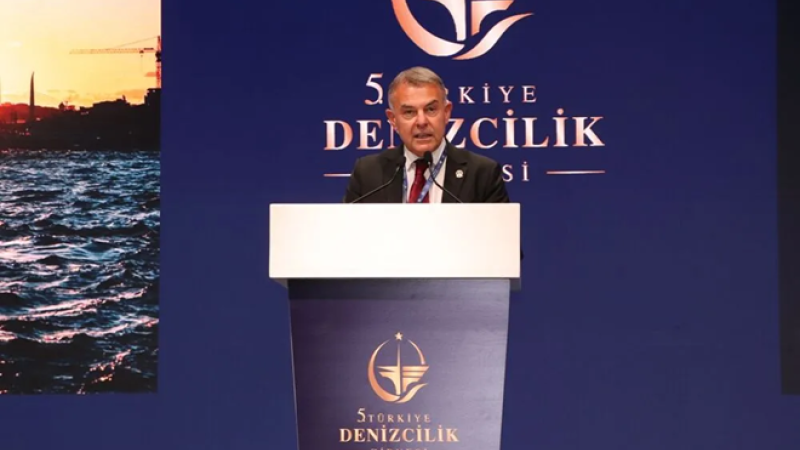
A national capacity has been established in marine insurance
Turkish P&I Chairman of the Board Ufuk Teker evaluated the transformation of the Turkish maritime sector on the 100th anniversary of the Cabotage Law. Teker said that the Cabotage Law was not merely a transportation regulation, but a historic development project that built Türkiye’s sovereignty at sea, economic independence, and national maritime capacity.
Emphasizing that Türkiye’s sovereign rights at sea were completed with the Montreux Convention Regarding the Regime of the Straits following the Cabotage Law, Teker stated that over the past 100 years, the maritime sector has undergone a significant transformation in the fields of human resources, fleet, port operations, shipbuilding industry, insurance, and maritime law.
Teker stated that the Turkish-flagged merchant fleet, which stood at approximately 35,000–40,000 DWT in 1926, has today exceeded 52 million DWT, adding that the Turkish-owned fleet is now among the world's leading fleets. He also noted that the port sector has experienced major development, stating that ports such as Ambarlı, Mersin, Aliağa, and Yarımca have become regional logistics hubs.
Stating that Turkish shipyards are now competing worldwide in ship design, shipbuilding, ship repair and maintenance, and exports, Teker said that Türkiye has reached a significant level in the field of engineering. He added that in the second century of the Republic, green transformation, digitalization, autonomous systems, and sustainable maritime technologies will come to the forefront.
Teker also stated that a national capacity has been established in the field of marine insurance, noting that today more than 10,000 marine vessels are insured by Turkish insurers and that the total insurance cover provided exceeds USD 500 billion.
In his speech, Teker also touched upon maritime education and the legal infrastructure, stating that Türkiye is a party to the majority of international maritime conventions and that Turkish seafarers have become a significant source of employment in the global fleet.
Drawing attention to the development of non-governmental organizations, Teker stated that the Chamber of Shipping serves as the umbrella organization of the Turkish maritime sector and plays an important bridging role between the public sector and the industry.
At the summit, ICS Secretary General Thomas Kazakos, BIMCO Secretary General & CEO David Loosley, and EMSA Executive Director Maja Markovčić Kostelac also delivered speeches.
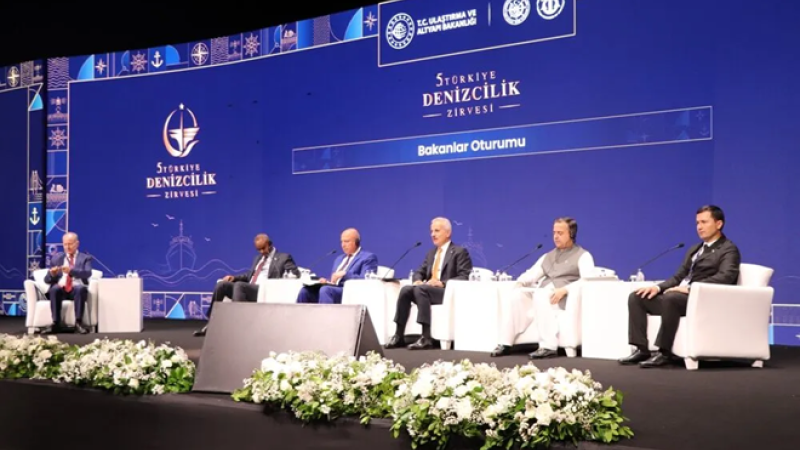
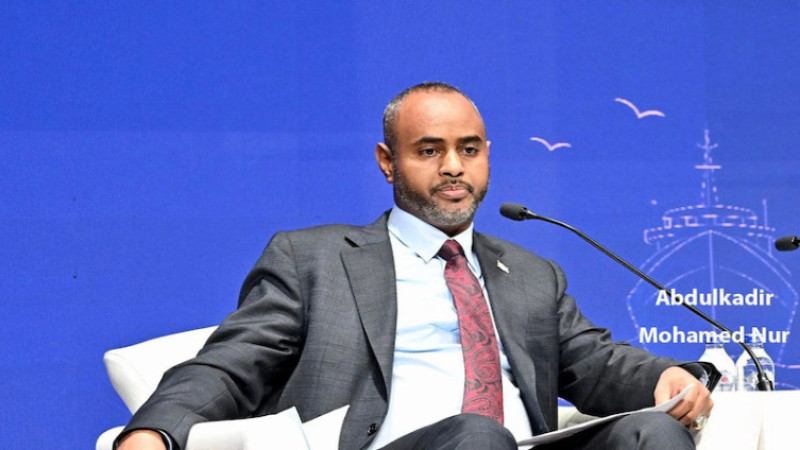
At the summit, the “Ministers’ Session” was held under the moderation of Prof. Dr. Oral Erdoğan, Chairman of the Board of Turkish Lloyd. Held in two separate sessions, the international summit brought together ministers and deputy ministers from Türkiye, Egypt, Somalia, Pakistan, Turkmenistan, Georgia, and Italy. Maritime cooperation between countries, the search for new shipping routes, and maritime security were evaluated within a strategic framework.
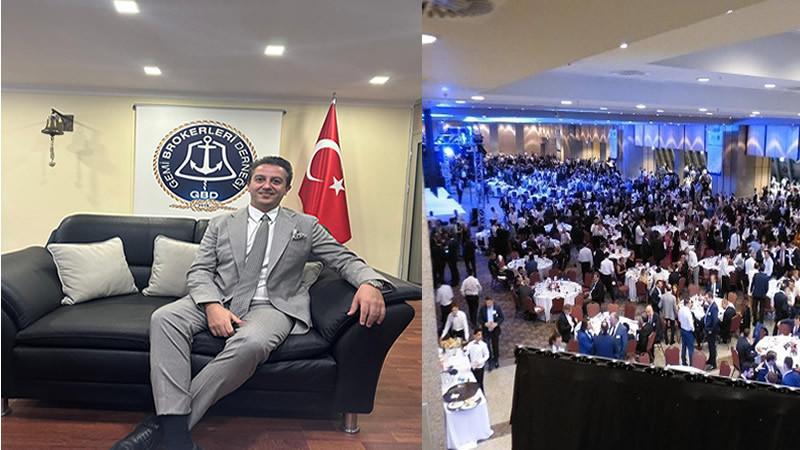
The first day of the summit concluded with a gala dinner that brought together stakeholders from across the maritime industry, following the speeches and panel sessions.