
Port Congestion Puts Pressure on Liner Operators
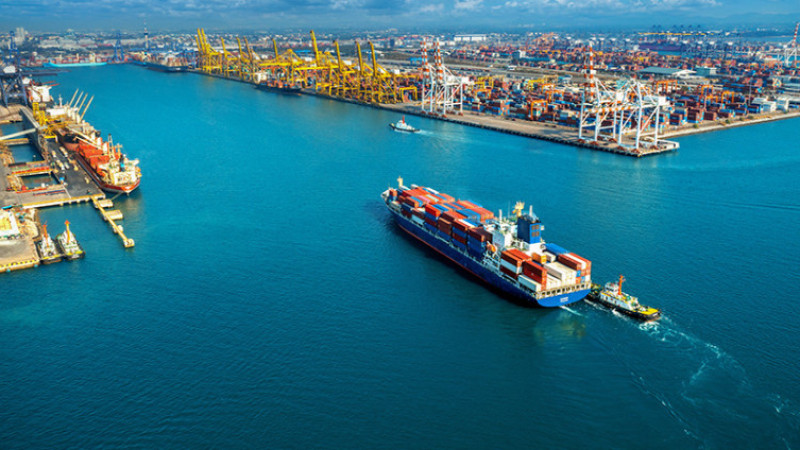
Port congestion and climate-related disruptions are putting increasing pressure on liner operators, while larger cargo volumes per megamax port call are intensifying strain on terminals.
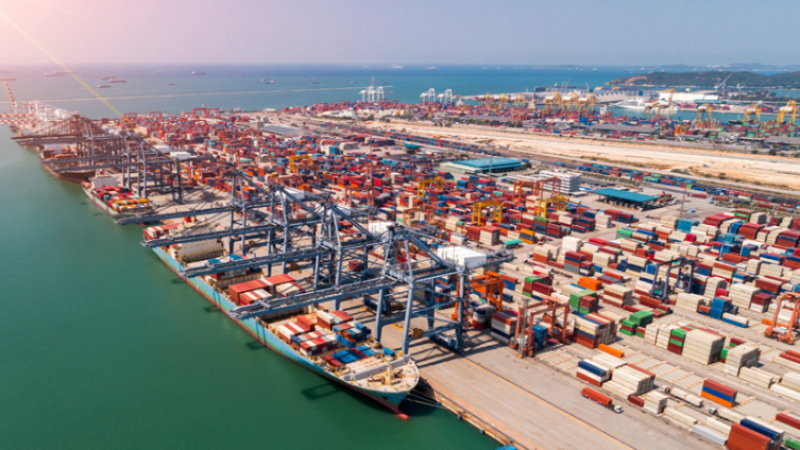

Port congestion continues to be a growing problem for the liner operator sector. In addition to typhoons and heavy rainfall, climate change, which is also causing periods of severe drought, is increasingly disrupting liner operators’ sailing schedules.
On the port side, a commonly raised issue among terminal operators is that pressure on their facilities has increased further because the cargo volumes carried by megamax vessels on port calls have risen significantly in recent years.
Information on the exact cargo volumes handled per port call is not publicly available, as it is considered commercially sensitive. However, an indication of potential cargo volumes per port call can be obtained by dividing a service’s nominal capacity by the number of discharge ports on the respective rotation.
According to Alphaliner data, the average vessel capacity of each service on the Far East–North Europe westbound trade was divided by the number of westbound calls in Europe. Tanger Med Port in Morocco was exceptionally considered part of “Europe” in the analysis, as it can be the first discharge port for vessels arriving from the Far East.
There are significant differences in potential cargo volumes per port call among different services. MSC’s ‘Swan’ service, operated with vessels of 15,000 TEU capacity, calls at an average of six discharge ports in Europe. This theoretically corresponds to a volume of 2,500 TEU per port.
On the other hand, Evergreen’s ‘CEM’ service operates with vessels averaging 23,490 TEU in capacity. As the service makes westbound calls at only three ports, this results in a volume of 7,830 TEU per port.
The ‘FE3’ service, operated by HMM under the Premier Alliance and using vessels with an average capacity of 22,200 TEU, also performs discharge operations at three ports. This means a theoretical port-call volume of 7,400 TEU per port.
When Maersk and Hapag-Lloyd’s Gemini Cooperation launched a hub-and-spoke model in February 2025, featuring a very limited number of port calls on its mainline services, this approach was considered an innovation.
Meanwhile, the Danish and German carriers added additional port calls at Gothenburg, Aarhus and Antwerp to their Far East–North Europe services.