



Russia Increases Oil Tanker Traffic in the Arctic
Russia has intensified oil tanker traffic along the Northern Sea Route, with vessels carrying around 8 million barrels of crude as Moscow seeks to increase shipments to Asia before Arctic sea ice returns.
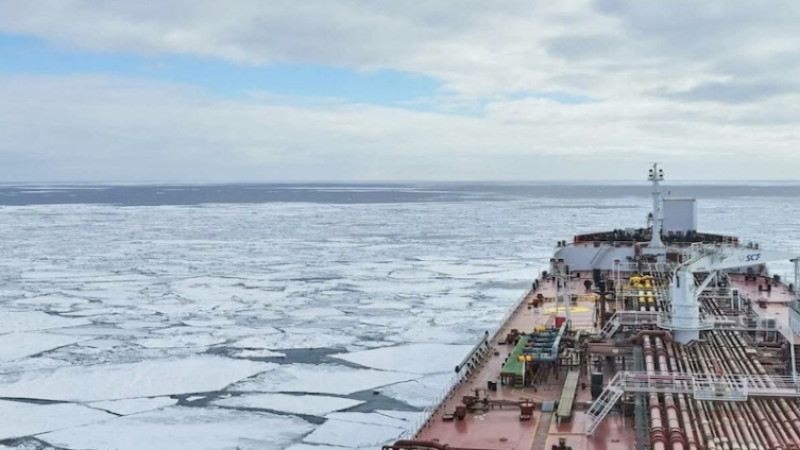

Russia has intensified tanker traffic along the Northern Sea Route to increase crude oil shipments to Asia. Tankers carrying approximately 8 million barrels of oil are sailing in the Arctic or waiting to proceed.
Following changes in its oil exports to Europe, Russia has begun using the Northern Sea Route more intensively to reach Asian markets. At the beginning of August, numerous Suezmax, Aframax and Medium Range tankers were operating in the Arctic, while some vessels were waiting in the Kara Sea to proceed eastward.
The amount of crude oil carried by the tankers in the region has reached approximately 8 million barrels. Last year, around 13.1 million barrels of oil were transported via the Northern Sea Route during the four-month summer navigation season.
The tanker group formed in the Kara Sea includes the Suezmax Dinasty and five Aframax tankers, Viktor Bakaev, Vostochny Prospect, Liteyny Prospect, Jagger and Ligovsky Prospect. Several Medium Range tankers are also part of the group.
A significant number of the tankers are waiting for nuclear-powered icebreaker assistance to pass through ice-covered sections of the route. Some vessels are also waiting for sea ice to retreat further.
Russia has deployed three nuclear-powered icebreakers, Sibir, Yakutiya and Ural, to support tanker movements along the Northern Sea Route this year. Ice conditions, particularly in the East Siberian Sea and around Wrangel Island, are playing a decisive role in the vessels’ progress.
The Northern Sea Route offers a route thousands of nautical miles shorter than the Suez Canal route for maritime transportation between Russia and Asia. However, the route can only be used during certain periods of the year, and conventional tankers may require icebreaker assistance to navigate in heavy ice conditions.
Russia’s increasing tanker presence in the Arctic highlights its efforts to transport as much oil as possible to Asia before the summer navigation season ends. As sea ice intensifies again in autumn, the use of the route is expected to become significantly more difficult.