


Prof. Dr. Aykut Ölçer: Hybrid Technologies Key to Shipping Decarbonisation
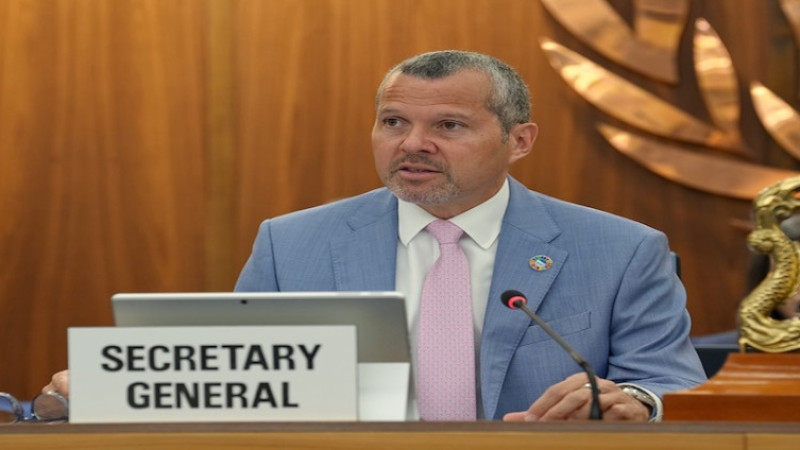
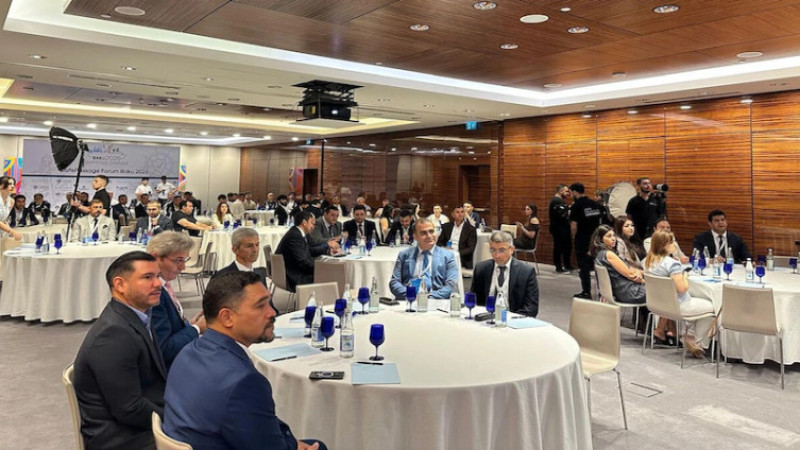
Speaking at SAFEPASSAGE FORUM 2026 in Baku, Prof. Dr. Aykut I. Ölçer said shipping decarbonisation requires international cooperation, regulation, and a shift in mindset alongside technology.
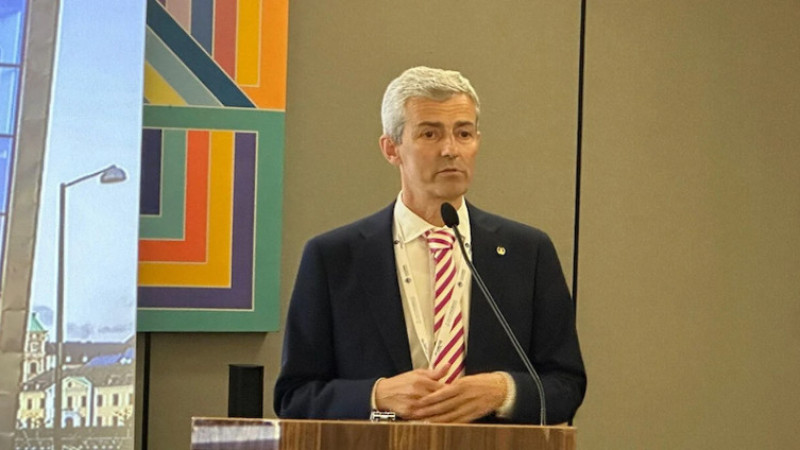

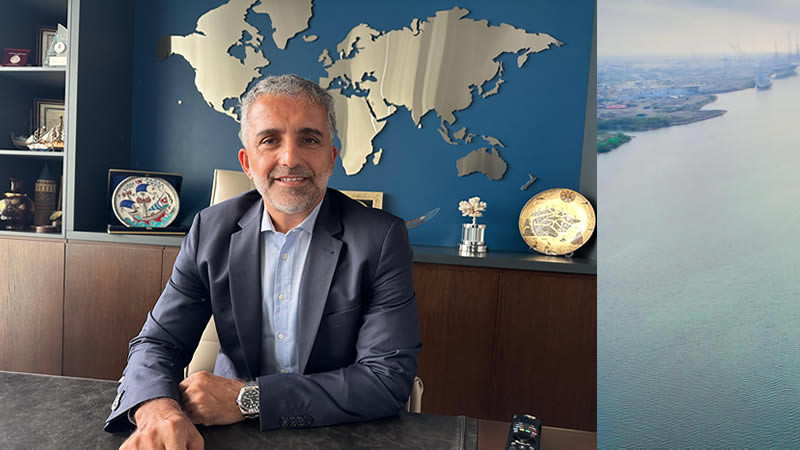
Speaking at the SAFEPASSAGE FORUM 2026 held in Baku, Prof. Dr. Aykut I. Ölçer, Director of Maritime Climate Research and Head of the Green Energy Management Department at the World Maritime University (WMU), evaluated the future of decarbonisation in international shipping, the IMO’s new targets, and the sector’s green transition roadmap.
A naval architect and mechanical engineer, Prof. Dr. Ölçer said that for 43 years the World Maritime University has been educating maritime professionals from developing countries and producing leaders who shape the future of the industry.
“The green transition is not only about reducing carbon emissions”
In the first part of his speech, Ölçer clarified the concept of the green transition, saying that environmental transformation in shipping is not limited to reducing carbon emissions alone.
He stated that the environmental impacts of ballast water, marine pollution, underwater noise, chemical discharges, and air emissions are also important components of the green transition, adding that most of these areas are regulated by the International Maritime Organization (IMO).
He also said that regulations on underwater noise are expected to become mandatory within the next five to seven years.
International shipping accounts for 3% of global emissions
Prof. Dr. Ölçer stated that international shipping is currently responsible for approximately 3% of global carbon emissions, warning that although this share appears low today, it could rise to 10–20% in the future if the necessary measures are not taken.
He noted that the highest greenhouse gas emissions come from tankers, bulk carriers, and container ships, adding that green transition efforts will primarily focus on these vessel types.
IMO targets net-zero emissions by 2050
Prof. Dr. Ölçer said that the international framework for reducing greenhouse gas emissions in shipping has been established under MARPOL Annex VI and that regulations covering greenhouse gases have developed rapidly in recent years.
According to the IMO’s updated greenhouse gas strategy adopted in 2023, the targets are:
- A 30% reduction in carbon intensity by 2030,
- An 80% reduction by 2040,
- Net-zero emissions by 2050.
Ölçer said that at the IMO Marine Environment Protection Committee (MEPC) meeting to be held in November, the IMO Net-Zero Framework, which includes emission limits as well as carbon pricing, will be discussed, describing it as a major turning point for international shipping.
Hybrid propulsion systems are the near-term solution
Prof. Dr. Ölçer stated that a complete transition to zero-emission ships is not considered feasible in the short term for international shipping, adding that the industry will move toward hybrid propulsion systems in the coming years.
He explained that hybrid systems will not completely eliminate the use of fossil fuels but will combine them with electricity, wind-assisted propulsion systems, LNG, fuel cells, and other clean energy technologies. Ölçer also stressed that transforming the existing global fleet of 50,000 to 70,000 merchant ships will take many years.
Ölçer stated that electrification could progress more rapidly for small-scale vessels and ships operating in inland waters, while the transition process would take longer for large merchant ships engaged in transoceanic trade.
Technology alone will not be enough
Ölçer said that decarbonisation cannot be achieved through new technologies alone, adding that a successful transition requires regulatory frameworks, economic mechanisms, innovation, capacity building, and the human factor to be addressed together.
He stated that shipping no longer requires a multidisciplinary approach, but rather a transdisciplinary one, emphasizing that all stakeholders in the sector must act together.
“Transformation is impossible without a change in mindset”
Concluding his speech, Prof. Dr. Ölçer said that the green transition cannot be achieved solely through new ships or new fuels, stressing that the most important change must begin with people’s way of thinking.
Ölçer stated that shipping needs a new perspective in every field, from design philosophy to operations, and from energy use to transport choices, adding:
“This transformation is a long journey that we will all undertake together. The key to success is not only technology, but also international cooperation, a shared sense of responsibility, and a change in mindset.”