
Hormuz Strait Security Crisis
Hormuz Strait security has come back into focus after Iran rejected the CENTCOM-led meeting in Bahrain. While oil prices have declined, markets continue to monitor the transit regime and regional military coordination.
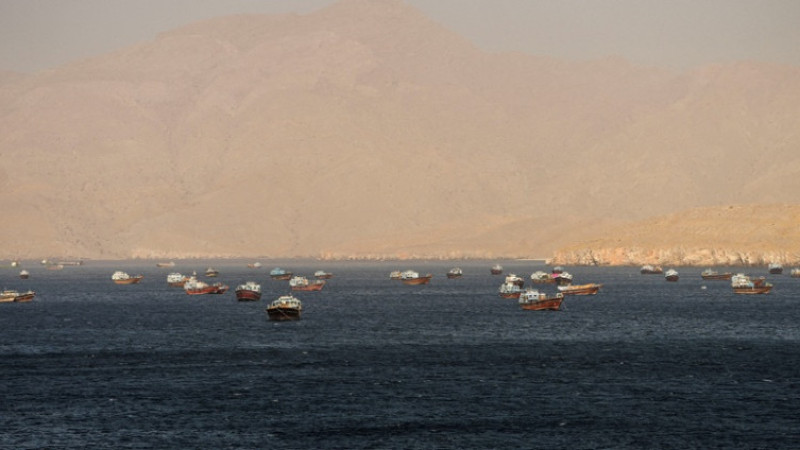

Hormuz Strait security returned to the forefront of regional tensions after Iran rejected the CENTCOM-led meeting in Bahrain. Iranian Deputy Foreign Minister Kazem Gharibabadi argued that the strait is not defined under the authority of the U.S. Central Command (CENTCOM), but under Iran’s command. His remarks came after the United States held a regional security dialogue in Bahrain with representatives from 12 countries.
Gharibabadi said the U.S.-led military meeting could not establish a legal framework for the Persian Gulf and the Hormuz Strait. The Iranian diplomat argued that regional security should be ensured through arrangements among neighboring countries rather than through foreign military coalitions.
Iran rejects CENTCOM’s role
In a statement posted on X, Gharibabadi criticized Washington’s attempt to establish a regional security framework. The Iranian official said Tehran does not consider Western efforts to impose a security order on the Persian Gulf and the Hormuz Strait to be legitimate.
Tehran continues to insist that long-term stability requires an end to the U.S. military presence in the region. Gharibabadi argued that security can only be achieved through the end of external interventions, the withdrawal of U.S. forces, respect for the sovereignty of regional states, and recognition of new geopolitical realities.
For Iran, Hormuz Strait security is not viewed solely as an issue of maritime transportation. Tehran uses its claim over the strait as an instrument of sovereignty, deterrence, and regional balance.
Washington, on the other hand, views the passage through the lens of international trade and energy security. The United States considers the uninterrupted flow of commercial shipping through the strait a shared priority with its Gulf partners.
Twelve countries attended the Bahrain meeting
CENTCOM announced that the Bahrain Defence Force hosted a regional security dialogue on 1 July 2026. The meeting was chaired by CENTCOM Commander Admiral Brad Cooper. Senior military representatives from Bahrain, Egypt, Jordan, Kuwait, Lebanon, Oman, Qatar, Saudi Arabia, Syria, the United Arab Emirates, and Yemen attended.
The meeting addressed the current security environment in the Middle East and options for strengthening defense cooperation. Participants reaffirmed their commitment to maintaining the free flow of commercial traffic through the Hormuz Strait.
CENTCOM also highlighted that the meeting marked the first time military leaders from Syria and Lebanon participated in a U.S.-led regional defense conference. Washington described the participation as part of its efforts to expand regional defense cooperation.
Admiral Cooper said the discussions demonstrated a shared commitment to regional security and stability. CENTCOM also emphasized that the United States and its regional partners operate one of the largest and most advanced active air and missile defense networks in the Middle East.
Maritime trade and energy flows remain in focus
Hormuz Strait security continues to be a direct pricing factor for global energy markets. The strait is a strategic chokepoint for oil and liquefied natural gas shipments. During periods of crisis, any developments affecting maritime traffic can rapidly influence energy prices and freight rates.
Oil prices declined following reports of progress in indirect U.S.-Iran talks held in Qatar. As of 01:02 GMT, Brent crude futures fell by 73 cents, or 1.02%, to $70.84 per barrel, while U.S. West Texas Intermediate (WTI) crude dropped 83 cents, or 1.21%, to $67.75 per barrel.
Markets continue to price in lower supply risks as long as shipping through the strait remains uninterrupted and diplomatic channels stay open. However, Iran’s explicit rejection of CENTCOM suggests that geopolitical risk premiums have not disappeared entirely.
According to shipping data from Kpler, traffic through the Hormuz Strait remained stable on 1 July, with 34 verified vessel transits recorded. Traffic was evenly balanced in both directions, indicating that maritime flows continued uninterrupted in the short term.
Air defense coordination expands
CENTCOM said that regional air and missile defense coordination was also high on the agenda. The United States and regional partners established a new Middle East Air Defense Coordination Cell in January to facilitate information sharing, threat warnings, and coordinated responses to potential crises.
Washington aims to strengthen regional security through an integrated defense architecture. Iran, however, views the same framework as an expansion of the U.S. military umbrella. The differing interpretations of the regional security landscape have transformed the Hormuz Strait security issue from a purely technical matter into a broader geopolitical dispute.
The Bahrain meeting brought together air defense, maritime trade, and regional military coordination under a single framework. Iran’s reaction demonstrated that Tehran continues to oppose any Gulf security arrangement centered on external powers.
Doha channel seeks to contain tensions
The United States and Iran also held indirect technical talks in Qatar during the same week. Qatari and Pakistani mediators met separately with delegations from Washington and Tehran. Qatar said positive progress had been achieved on issues related to a 14-point memorandum of understanding.
The negotiations are part of broader efforts to transform the existing ceasefire arrangement between the United States and Iran into a more durable peace framework. Iran raised concerns over what it described as U.S. violations of previous commitments and said a communication channel would be established with Washington to report and discuss such issues.
Former U.S. President Donald Trump said significant progress had been made during the Qatar talks. Washington continues to assess the negotiations alongside issues related to Iran’s nuclear program, maritime security, and wider regional tensions.
As a result, Hormuz Strait security remains caught between diplomacy and military deterrence. While the Doha track seeks technical compromises, the Bahrain track focuses on strengthening regional defense coordination. Iran’s latest statement suggests that the parallel progress of both tracks could further narrow the room for negotiation.
Markets continue to monitor transit arrangements
For energy markets, the key question remains how the transit regime through the strait will ultimately be defined. The United States and Gulf states seek to preserve the free flow of commercial shipping, while Iran insists that navigation and security arrangements should remain under its own command.
Without a common framework for Hormuz Strait security, volatility in oil prices could increase once again. The continued uninterrupted movement of vessels helps limit the geopolitical risk premium embedded in Brent and WTI prices. Nevertheless, military meetings and conflicting political statements continue to encourage cautious market pricing of the diplomatic process.
Ultimately, Gharibabadi’s remarks represent a direct challenge to the U.S.-led regional security framework. While CENTCOM’s Bahrain meeting with representatives from 12 countries emphasized the importance of maintaining free commercial navigation, Iran continues to assert its command over Hormuz Strait security. Energy markets are expected to keep closely monitoring the balance between diplomatic negotiations in Doha and military coordination efforts across the Gulf.