
Billion-Dollar Investment Surge from Turkish Shipowners
Turkish shipowners have turned global geopolitical crises and shifting supply routes into opportunities, making a major investment in 42 vessels in the first six months of 2026.

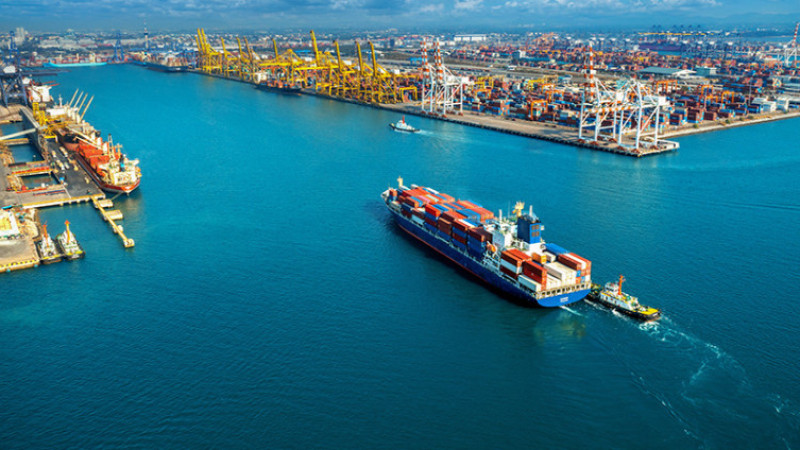
Fabrics are shutting down, companies are downsizing, and bankruptcy announcements are coming one after another; in such a period, the star of domestic investment has been shipowners. Turkish shipowners are marking the 100th anniversary of Maritime and Cabotage Day with major investments. The sector, which has turned global geopolitical crises and changes in supply routes into opportunities, made a massive investment of 42 vessels in just the first six months of 2026.
In maritime transport, freight rates have surged by nearly 100% in the past year due to the Hürmüz crisis, reaching record levels, with tanker freight rates hitting historic highs, becoming the main driving force behind large-scale investments. As rising freight revenues boosted investment appetite to its peak, the focus has particularly shifted toward large-tonnage vessels. The total value of this wave of investments, consisting partly of newbuilding orders and partly of second-hand purchases, has exceeded 1 billion dollars.
Global giants are selling, Turks are buying
One of the most striking aspects of this growth trend is the change of ownership in the global market. While global giants are downsizing their fleets and selling vessels, Turkish shipowners are acquiring them. So much so that vessels belonging to Danish maritime giant Maersk and global mining giant Rio Tinto have also been purchased by Turkish shipowners.
Alongside major groups such as Koç, Sabancı, and Ciner, many companies—from the Kalkavan and Karamehmet families to others—have entered an investment race across all segments, from container ships to tankers and from tankers to dry bulk carriers. Some firms have changed their structural strategies and re-entered the dry bulk sector after 20 years, while others have made container investments for the first time.
Target: Return to the world’s top 10
According to Aysel Yücel’s report in Dünya, sector representatives stated that new investments are also on the way and fleet growth will continue without slowing down. With these investments, the Turkish-owned maritime fleet, which currently ranks 11th globally with a capacity of 50.6 million DWT, is expected to re-enter the top 10 in the world league.
Which company made what investment?
The major ship investments and newbuilding orders of Turkish companies shaping 2026 are as follows:
Yasa Group: Controlled by the Sabancı family, Yasa Shipping attracted attention by ordering four VLCC (Very Large Crude Carrier) tankers, each with a capacity of 319,000 DWT, from China’s Jiangsu New Hantong. The company also entered the container segment strongly by ordering two 3,100 TEU container ships in China. The company also acquired vessels sold by a mining giant. Rio Tinto Shipping, the shipping arm of one of the world’s second-largest mining companies, decided to reduce its fleet. Yasa Shipping purchased three of the global giant’s vessels and added them to its fleet.
Ciner Shipping: Strengthening its presence in the global dry bulk market, Ciner Group placed orders for six new vessels, each with a capacity of 64,000 DWT. The ships will be built at a Chinese shipyard, and the total investment value exceeds 200 million dollars.
Aygaz: Aygaz, a company of Koç Holding, ordered a large VLGC from the HD Hyundai shipyard in South Korea for $119 million. In April, the company also signed another construction contract with the same group for two LPG carriers worth $234 million (346.6 billion KRW).
Beşiktaş Shipping: Scorpio acquired three of six product tankers. Each of the purchased vessels has a capacity of 49,900 DWT, and a total of $105 million was paid for them. In the early months of the year, the company also added the 50,000 DWT tankers named Amasya, Antalya, and Van to its fleet. For the first time in 20 years, Beşiktaş Group is also acquiring bulk carriers, diversifying its strategy. Speaking to DÜNYA, Beşiktaş Maritime Chairman Yavuz Kalkavan said: “Most recently, in June we purchased two 63,300 DWT Ultramax bulk carriers built in 2016 (Huayang Lily and Huayang Rose) for $50.4 million and renamed them Kabataş and Maçka. In the last 6 months, Beşiktaş Maritime has purchased 8 vessels in total, including 6 MR tankers and 2 Ultramax bulk carriers. The total cost of these vessels was $255 million.”
Advantage Tankers: Under the management of Gülsün Nazlı Karamehmet Williams, Advantage Tankers is commissioning two Suezmax tankers at DH Shipbuilding in South Korea with an investment of $177 million. Deliveries are planned for 2029.
EOS Group: Signed a $134 million agreement with China’s Jiangsu Dajin. The company will commission two Ultramax vessels costing $34–35 million each and two Handysize vessels costing $31–32 million each.
Akar Deniz: Purchased two chemical tankers named “Bro Nuuk” and “Bro Nissum,” each with a capacity of 16,600 DWT, from the fleet of global giant Maersk Tankers for $12 million each.
Devbulk: Led by the Deval brothers, the company spent approximately $38 million to acquire two Handysize vessels and expanded its fleet to 18 ships, breaking a record.
Stella Tanker: Expanded its fleet by activating the fourth parcel tanker option, a 7,300 DWT vessel, at Zhejiang Yongxin shipyard in China.
Medkon Lines: The company, which added 4 container ships to its fleet this year, stated: “Our goal is not only to grow our fleet but to build a sustainable structure with fuel-efficient and environmentally compliant vessels.” General Manager Mahmut Işık said they invested $45 million in 4 vessels.
BOTAŞ: The state energy company has launched a tender process for two newly built LNG carriers with a capacity of 174,000 cubic meters each.
Opportunities and Risks in Ship Investments
Prof. Dr. Soner Esmer from Piri Reis University stated that the impact of the Hürmüz crisis on the tanker market will last for a long time. He noted: “Even if the Strait of Hormuz is fully reopened to traffic, demand—especially in tanker shipping—will remain high due to deferred demand. Therefore, I find ship investments profitable for shipowners.”
Cihan Ergenç, President of the Turkish Shipowners Association (TAB), drew attention to the dangerous oversupply created by unreported hidden orders in the global market and called on Turkish shipowners to be cautious in ship investments. Emphasizing that markets are unpredictable due to expectations of a global economic slowdown and rising geopolitical risks, Ergenç stressed that investments should be made strictly with equity rather than credit and advised that historical cycles must be carefully analyzed.