
Hareket and Etihad Rail Sign Strategic Partnership
Hareket has signed a strategic cooperation agreement with the United Arab Emirates’ national railway company Etihad Rail to support major industrial projects in the Middle East.
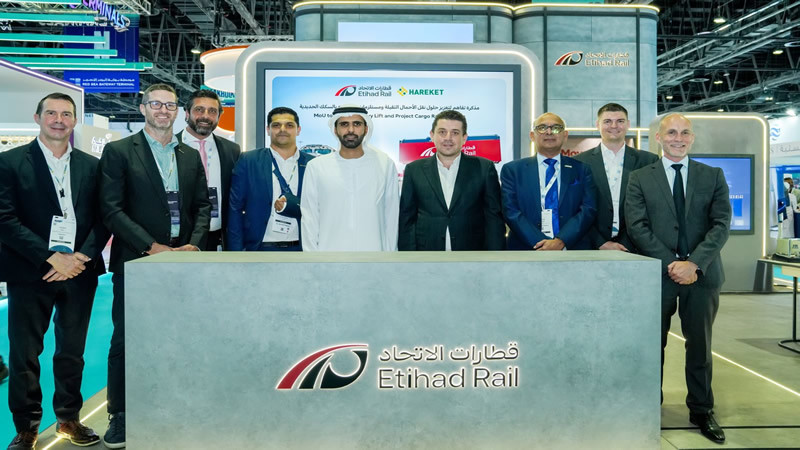

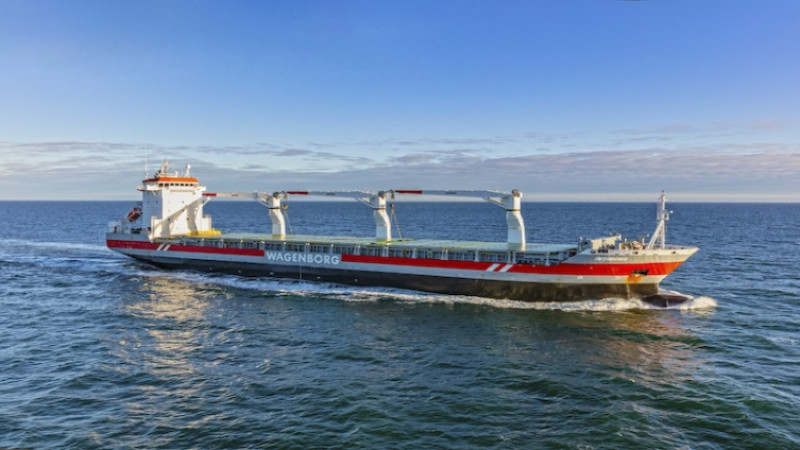
Turkey’s leading company in heavy lifting, project transportation, and load engineering, Hareket, has signed a Memorandum of Understanding (MoU) with the United Arab Emirates’ national railway company Etihad Rail to support large-scale industrial projects in the Middle East.
Under this partnership, Hareket’s engineering expertise in heavy lifting and project logistics will be combined with Etihad Rail’s railway infrastructure to develop integrated solutions for transporting oversized and heavy loads, strengthening long-term strategic cooperation.
Hareket CEO Abdullah Altunkum emphasized that this collaboration marks a transformative step for project logistics in the region:
“We have achieved strong growth momentum in energy, oil and gas, LNG, and mega infrastructure projects. Beyond road and sea, we now see rail transport as a strategic priority. With Etihad Rail, we are integrating our load engineering expertise with railway systems to deliver safer, more efficient, and more sustainable end-to-end solutions across ports, industrial zones, refineries, and mega construction sites.”
Hareket’s R&D and engineering teams will design tailored transport scenarios for projects requiring railway integration, ensuring a seamless engineering chain between
ports, railways, and industrial sites.
Altunkum further noted that railway-based logistics will set a new standard for operational efficiency and carbon footprint reduction in handling large and complex loads. He added:
“We view the Middle East not as a temporary market but as a permanent growth region. This agreement with Etihad Rail is one of the most concrete steps in Hareket’s turnkey project approach, integrating sea, land, and rail transport. Our goal is to become the preferred project logistics and load engineering partner for mega projects in the region.”