
An Integrated Logistics Vision Extending from the Black Sea to the Mediterranean
Since 1969, Cey Holding has been shaping Türkiye’s foreign trade infrastructure through its investments in logistics, port operations, and free zones.

Since 1969, Cey Holding has been shaping Türkiye’s foreign trade infrastructure through its investments in logistics, port operations, and free zones. Today, the company stands out with its integrated structure stretching from the Black Sea to the Mediterranean. Through Samsunport, Ceyport Tekirdağ, Taşucu Port, MESBAŞ, and Erdemir Port operations, the group plays a strategic role within Türkiye’s logistics corridors while also shaping the logistics model of the future through green transformation, intermodal transportation, and digitalization investments.
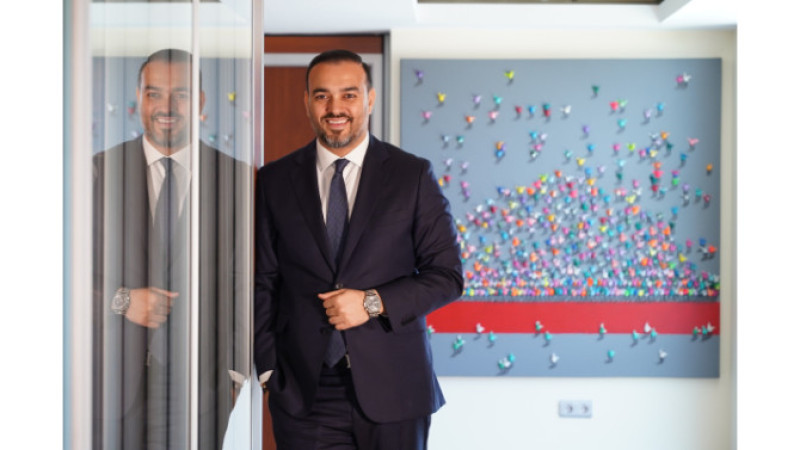
In our interview with Berzan Avcı, Vice Chairman of the Board of Cey Holding, we discussed many important topics ranging from port investments and green transformation to the logistics city vision and Türkiye’s foreign trade targets.
“We Are Building an Integrated Structure That Will Strengthen Türkiye’s Logistics Power”
When we consider Cey Holding’s investment vision together with your “We continue to work for Türkiye” approach, how does this understanding reflect on your daily business strategies?
As Cey Holding, we have been operating with the principle of “doing the business we know best” since 1969, and we limit our strategy to sectors connected with logistics. In our daily strategies, we prioritize the advantages of focus and efficient use of resources. With our unwavering belief in Türkiye’s growth potential, the most important criteria in our investment decisions are benefit and efficiency.
Through the investments we have made so far, we provide integrated solutions with our ports, logistics facilities, and free zones located at critical centers across Türkiye’s four surrounding seas, thereby creating added value for the national economy.
In today’s global trade environment, “speed” and “security” have become the most critical elements. The security crises in the Red Sea and disruptions in the Suez Canal have further strengthened Türkiye’s role as a “safe harbor” within international trade corridors. Therefore, we position our strategy not merely as a logistics company, but as an infrastructure provider that will enhance Türkiye’s strategic depth along the Middle Corridor and the Mediterranean.
Our primary goal is to make the highest contribution to Türkiye’s projected logistics service export target of USD 40 billion by 2028 through our 4 ports, 14 logistics terminals, and 3 free zones built on a total area of 4.2 million square meters.
“We Have Turned Samsunport into One of the Most Important Logistics Centers in the Black Sea”
You tripled the port’s capacity following the Samsunport privatization process. What strategies formed the basis of this transformation?
Our most critical strategy at Samsunport was the rapid implementation of infrastructure, silo, horizontal warehouse, and modern equipment investments after privatization, introducing a modern port management approach. In this way, we transformed Samsunport from merely a coastal facility into an intermodal logistics center.
Thanks to our investments, we increased the annual cargo volume from 1.5 million tons to 5.5 million tons. Today, as the only port in the region with simultaneous sea, road, and railway connections, Samsunport has become one of the most important foreign trade gateways of the Black Sea region.
The 22,000-square-meter inland port project we implemented in Toybelen reduced congestion at the port while supporting intermodal transportation capacity, enabling the region to evolve into a fully operational logistics hub.
“Ceyport Tekirdağ Will Become Marmara’s New Cargo Hub”
How do you evaluate Tekirdağ Port’s role within Türkiye’s logistics map?
Ceyport Tekirdağ holds strategic importance as the only port in Western Marmara with a railway connection and train ferry ramp. With its proximity to Istanbul and intermodal infrastructure, it stands out as a critical transit center along the trade corridor extending from the Far East to Europe.
We position this port as a new cargo hub that will ease Istanbul’s logistics burden and as the main gateway connecting Thrace’s industrial zone to the world.
“Container Operations Will Provide Major Advantages for Regional Industry”
What kind of transformation will your launch of container operations create for the region?
Before privatization, this port did not handle containers. We have now completed our investments and finalized our negotiations with shipping lines. This development means lower logistics costs, shorter transit times, and direct access to global markets, particularly for the intensive industrial clusters located along the Marmara Ereğlisi and Çorlu corridor.
“Taşucu Will Become the New Logistics Hub of the Eastern Mediterranean”
How do you evaluate the impact of your Taşucu Port and industrial zone investments on the regional economy?
Ceyport Taşucu, with its integrated port, logistics, and industrial area reaching 1.5 million square meters, represents a geopolitical investment that will strengthen Türkiye’s logistics dominance in the Eastern Mediterranean.
The capacity congestion at Mersin Port causes serious delays in regional trade. Taşucu Port will become a new center capable of overcoming this bottleneck. It will serve not only logistics operations but also energy projects and industrial investments as a main hub. We foresee that the project will contribute indirect employment opportunities for at least 5,000 people in the region.
“We Are Creating a New Ecosystem with the Green Industrial Zone Concept”
What kind of planning are you implementing for the industrial zone?
We are planning the 715,000-square-meter area behind the port as a Green Industrial Zone. Due to the European Green Deal, exporting companies are required to reduce their carbon footprints.
Here, we are establishing a new logistics-industrial ecosystem supported by solar energy, located at zero distance to the port, and combining warehouse and free zone advantages. We are receiving significant interest particularly from production companies based in the Middle East and the Far East.
“We Will Transform Taşucu into One of the Mediterranean’s Most Important Centers”
How will you transfer your Samsunport and Tekirdağ experience to Taşucu?
We are transferring our know-how in post-privatization capacity expansion to Taşucu. With enclosed storage areas, liquid tank terminals, modern passenger halls, berths with 16-meter draft depth, and digital port automation systems, we aim to transform Taşucu into one of the Mediterranean’s most central ports capable of handling every type of cargo.
Our long-term vision is to transform Taşucu not merely into a port, but into a complete “Logistics City” model with its free zone, industrial area, and logistics terminals.
“MESBAŞ Is One of the Lifelines of Türkiye’s Foreign Trade”
How do you evaluate MESBAŞ Free Zone’s contribution to the Turkish economy?
As Türkiye’s second-largest free zone, MESBAŞ is one of the most important centers of our foreign trade with an annual trade volume exceeding USD 4 billion. Thanks to our infrastructure and solar energy investments, we provide companies with a sustainable production environment at world standards.
“The Erdemir Port Operation Carried Us to a Different Scale”
How did taking over Erdemir Port operations strengthen your company?
Managing the port operations of one of Türkiye’s industrial giants such as Erdemir has provided us with world-class expertise in industrial port operations. Through this cooperation, we increased our total annual cargo handling volume to over 30 million tons, becoming one of Türkiye’s largest port operators.
“Logistics Is No Longer Only About Carrying Cargo, But Carrying Green Cargo”
What kind of transformation have your energy investments within the scope of the EU Green Deal created?
We are among the first companies in Türkiye to invest in solar energy systems at port facilities. We will soon increase our existing 4 MW capacity to annual production of 26 million kWh.
This transformation has reduced our energy costs while making our operations more sustainable. Today, logistics is not only about transporting cargo but also about transporting “green cargo.” Through the solar energy systems at our ports, we also support exporters in their carbon certification processes.
“The Transition to Electric Equipment Increased Operational Profitability”
What advantages has the Green Port Certificate provided?
We implement zero-waste and green transformation standards at all our ports. Through the use of electric cranes and equipment, we reduced fuel costs by 40% while lowering carbon emissions by 60%.
This transformation has created major advantages not only environmentally but also in terms of operational efficiency.
“We Will Turn İskenderun into the Eastern Mediterranean’s Liquid Cargo Hub”
How will the İskenderun Liquid Terminal project contribute to the region?
Through this investment, we aim to make İskenderun one of the Eastern Mediterranean’s largest transfer centers in chemical and vegetable oil trade. By transforming the region into one of the Mediterranean’s largest liquid cargo hubs, we aim to increase Türkiye’s share in transit trade.
“Our Next-Generation Digital Logistics Investments Continue”
Which projects stand out in the upcoming period?
Ceyport Taşucu Port and Industrial Zone investment, the İskenderun Liquid Terminal, and our DENSEB projects are among our top priorities. In addition, within the scope of digitalization, we are also implementing next-generation logistics software and mobile application projects.
“Our Goal Is to Become One of the Largest Integrated Logistics Players in the Eastern Mediterranean”
Where do you see Cey Holding in 10 years?
In 10 years, I see Cey Holding not only as one of Türkiye’s largest integrated logistics players but also as one of the largest in the Eastern Mediterranean and Black Sea basin. We aim to become a structure that has placed artificial intelligence and IoT technologies at the center of port management, achieved carbon neutrality targets, and become an indispensable component of Türkiye’s foreign trade corridors.
HIGHLIGHTED DATA
4.2 Million m² Integrated Logistics Area
Cey Holding operates with 4 ports, 14 logistics terminals, and 3 free zones across Türkiye.
30 Million Tons of Cargo Handling Capacity
With the addition of Erdemir Port operations, the group’s total annual cargo handling volume exceeded 30 million tons.
Green Transformation Initiative
Thanks to investments in electric equipment:
* 40% reduction in fuel costs
* 60% reduction in carbon emissions achieved.