
Hormuz Transit Security Is ‘Hour to Hour’
US efforts to open shipping channels in the Strait of Hormuz will allow a gradual increase in vessel transit, though security remains volatile, Chubb Ltd. Chief Executive Officer Evan Greenberg said.
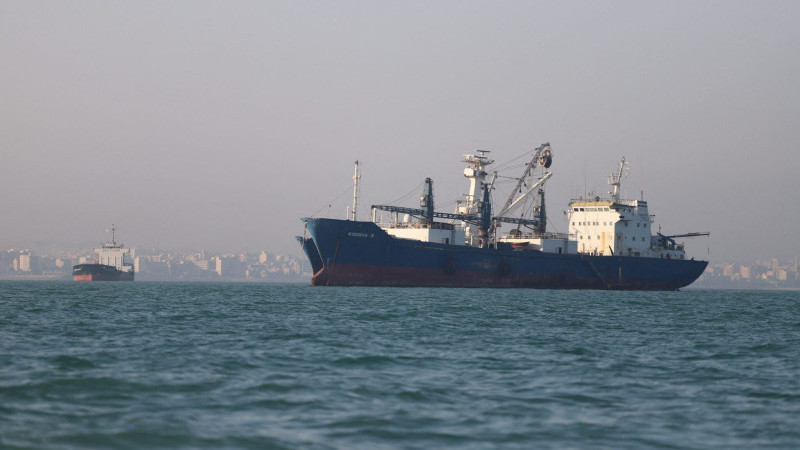

“It’s from day to day, hour to hour,” Greenberg, whose company is a major insurer of commercial shipping, said on Fox News’ Sunday Morning Futures.
“Mines are the greatest uncertainty” in the strait, Greenberg said, as US and Iranian negotiators held talks in Switzerland on a permanent ceasefire and to lock in free passage through the waterway.
“We’re talking more about a war-zone environment,” he said. “Only a narrow channel is really being used to transit, and so it limits the number of ships that can actually go in and out. The Navy has been working to open up a broader set of channels, and as that happens, then shipping will increase.”
Oil has kept flowing even as Iran seeks to exert control, including its announcement Saturday that it had closed the strait once again. The US military’s Central Command said commercial ship traffic increased in the strait on Saturday, with 55 merchant ships transiting cargo and more than 17 million barrels of oil.
Read More: Oil Keeps Flowing Through Hormuz Despite Iran Saying It’s Shut
Lloyd’s of London Ltd. and Chubb announced on Friday a joint $400 million marine war risk consortium offering companies insurance for passage through the Hormuz strait.
The US International Development Finance Corp. announced a $20 billion reinsurance program in March that Chubb and other companies joined in April to provide an extra $20 billion in funds.
The US military says it has defended commercial ships in the Strait of Hormuz against regular threats, according to a document sent to the industry. The US began guiding vessels through the strait with their signals turned off, using a route that hugs the coast of Oman, helping to boost oil and cargo flows.