

A Price War Begins Between Russia and Iran for the Chinese Market
Under heavy sanctions, Russia and Iran have entered into fierce price competition for their biggest buyer, the Chinese market.

Russia’s deeper discounts have allowed it to boost shipment volumes, pressuring Iran’s market share, while both countries are seeing stocks accumulate in tankers at sea.
China continues to serve as the main buyer for both Russia and Iran, who are under severe sanctions. In order to persuade Chinese processors to choose their crude oil, both suppliers are forced to cut prices.
Russia’s discounts have become more attractive, enabling it to surpass Iran in the battle for market share.
According to a Bloomberg report citing sources familiar with the transactions, Urals crude—previously purchased mainly by India—is currently being sold at Chinese ports at a $12 per barrel discount compared to benchmark Brent crude.
In January, this discount stood at $10. Including shipping costs, these figures contrast with Argus Media data, which shows loading prices at Russian ports last week ranged between $41.2 and $43.2 per barrel.
These numbers indicate a discount of about $27 to $29 compared to Brent crude. Sources told reporters that Iranian suppliers also raised their discount levels, from $8–9 per barrel in December to $11 per barrel.
Russia’s Shipment Volume Surpasses Iran
Bloomberg’s vessel-tracking data reveals that Russian crude deliveries to Chinese ports averaged 2.09 million barrels per day in the first 18 days of February.
This represents an increase of about 20% compared to January, and 50% compared to December.
According to Kpler data, Iran’s shipments have remained around 1.2 million barrels per day since the beginning of the year. Although Iranian supply has been flat over the past three months, it is down 12% compared to the same period in 2025.
Independent Refiners Reach Capacity Limits
The main buyers of Russian and Iranian crude are China’s independent refiners, which traditionally accept oil shunned by other countries.
However, these facilities have limited “absorption” capacity. Representing only one-quarter of the country’s total refining capacity, they are also subject to government-imposed import quotas.
China’s major state-owned oil companies have traditionally avoided Iranian crude, and recently have also significantly reduced trade with Russia.
Energy Aspects analyst Cianan Sun noted that sanctioned crude is piling up in both onshore and offshore storage facilities in China, adding: “Private Chinese refiners cannot make further purchases because their capacities are full.”
Floating Storage at Sea Continues to Rise
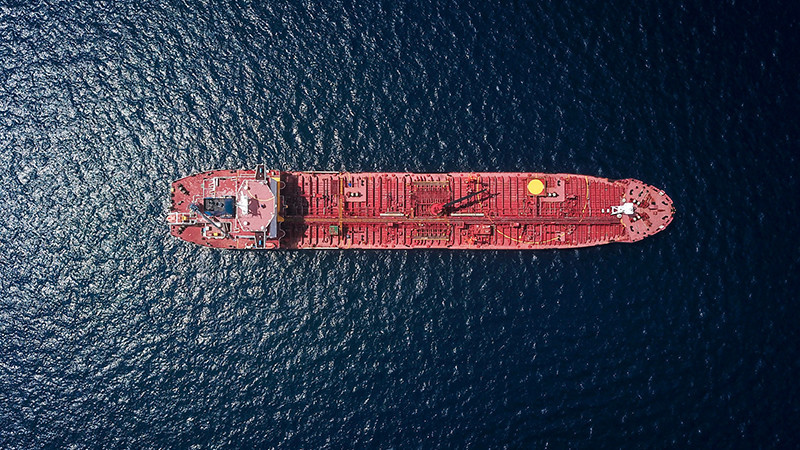
With demand capacity maxed out, Iran and Russia are forced to use tankers as “floating storage” to hold their crude at sea.
The volume of Russian oil stored in these tankers has hovered around 140 million barrels since December. This is 60 million barrels (65%) more than at the end of August, when the U.S. increased pressure on India to abandon Russian oil and doubled customs duties.
India is expected to continue reducing its purchases from Russia. According to a scenario prepared by Rystad Energy, imports from Russia could fall by 40% starting in January, dropping to 600,000 barrels per day.