
Headline: Zengezur Corridor and Alsancak Port in Focus at LOGISTECH
LOGISTECH 2026 addressed the Zengezur Corridor’s role in regional trade and Alsancak Port’s investment plans, with a focus on connectivity, digitalisation and capacity growth.
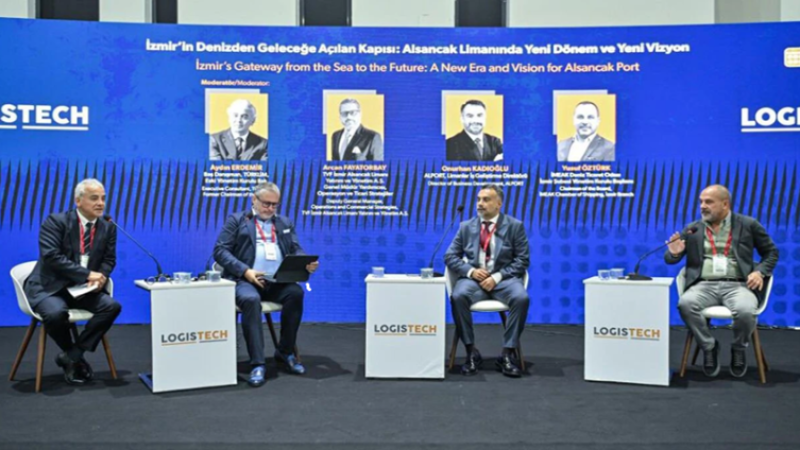

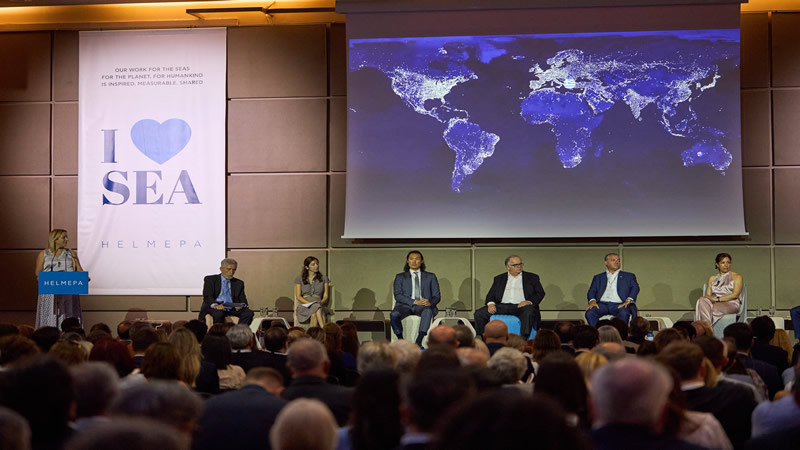
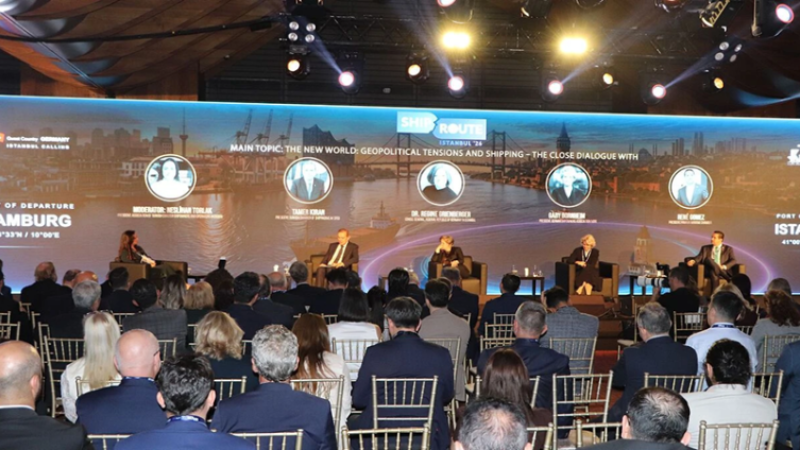
Sessions held at the 5th International LOGISTECH Logistics, Storage and Technologies Fair, hosted by İzmir Metropolitan Municipality and organised by İZFAŞ at Fuar İzmir from 7 to 9 October, addressed the Zengezur Corridor’s contribution to regional trade and Alsancak Port’s objectives for its new era. Strengthening transport links, digitalisation, operational efficiency and infrastructure investments were among the key topics.
“We must assess air, land and sea transport together”
The session titled “The Zengezur Corridor: The Future of Transport Corridors Among Turkic States” was moderated by Vusal Xalilov, Chair of the Logistics and Transport Committee of the Türkiye-Azerbaijan Businesspeople and Industrialists Union (TÜİB).
Speakers included Ayfer Vurgun, Board Member of the Association of International Forwarding and Logistics Service Providers (UTİKAD); Prof. Dr Burcu Aracıoğlu, faculty member in Logistics Management at Ege University’s Department of Business Administration; Fatih Dülger, member of the Logistics Service Providers Association (LOJİDER) and Sales Manager at Artway Logistics; Lamiya Xalilova, Board Member of AGTL and President of WILAT Azerbaijan; and Sena Çelikten, European Countries Specialist at the International Transporters’ Association (UND).
UTİKAD Board Member Ayfer Vurgun said the Zengezur Corridor would strengthen Türkiye’s international transport connections, noting that an alternative to existing routes would be an important factor in reinforcing the regional transport network.
Emphasising that the corridor should not be considered solely in terms of rail transport, Vurgun said: “We must assess air, land and sea transport together. Services and pricing along the route need to be transparent, while ship and train services across the Caspian Sea must become more regular.”
Digitalisation and regulatory alignment come to the fore
Prof. Dr Burcu Aracıoğlu of Ege University said the success of the Zengezur Corridor would depend on more than the construction of transport infrastructure.
“To make a corridor successful, the cost and duration of delivery, as well as responsibility in the event of a problem, must be clearly defined from the outset. Integration between rail and maritime transport at Caspian crossings is also one of the most critical links in this chain,” she said.
Highlighting the importance of digitalisation, border crossings and regulatory alignment between countries, Aracıoğlu said Türkiye’s strengths in warehousing, cargo consolidation and value-added logistics services should also be considered in connection with the corridor.
Fatih Dülger, Sales Manager at Artway Logistics, said the Caspian-crossing East–West Middle Corridor Project needed to be approached holistically.
“We must view the Middle Corridor not as a series of individual routes, but as one continuous line extending from London to China. Digitalisation is also essential to the corridor’s efficiency. If digitalisation begins in one country but stalls in the next, costs and transit times increase,” he said.
“Uncertainty is a cost in transport”
Lamiya Xalilova, Board Member of AGTL and President of WILAT Azerbaijan, stressed that the Zengezur Corridor would strengthen transport and trade links among Turkic states.
“This corridor will be an important transport route connecting Azerbaijan with Nakhchivan, Türkiye and Central Asia. The efficient and regular operation of Caspian crossings is crucial to the corridor’s success,” she said.
Sena Çelikten, European Countries Specialist at UND, highlighted the importance of predictability in transport.
“Uncertainty is a cost in transport. What matters to us is not simply whether a route exists, but whether we can predict how long cargo will take to move and at what cost. Border crossings and differences in regulations will also affect the process. Alongside new routes, existing routes need to be connected, documents digitised and procedures aligned across countries,” she said.
A new era and investment targets for Alsancak Port
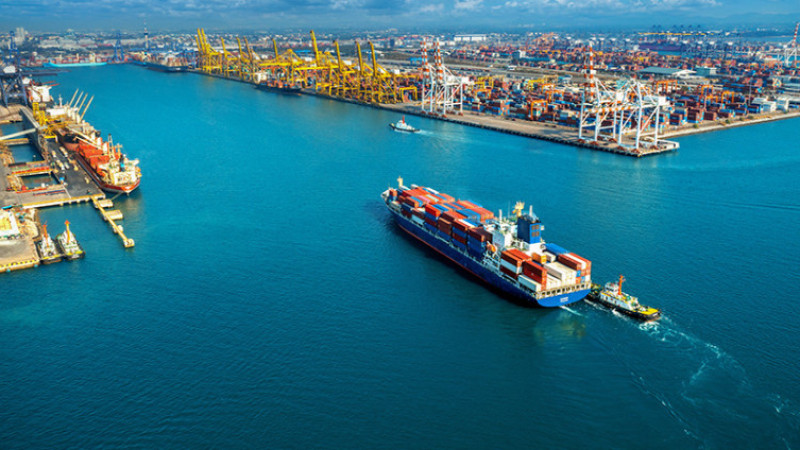
The session titled “İzmir’s Gateway to the Future Through the Sea: A New Era and Vision for Alsancak Port” examined the port’s strategic role in the regional economy, its new operating period and planned investments.
Moderated by Aydın Erdemir, adviser to the Turkish Port Operators Association (TÜRKLİM) and its former Chairman of the Board, the session featured Yusuf Öztürk, Chairman of the Board of the İMEAK Chamber of Shipping’s İzmir Branch; Arcan Fayatorbay, Deputy General Manager for Operations and Commercial Strategies at Türkiye Wealth Fund’s İzmir Alsancak Port Investment and Management Inc.; and Onurhan Kadıoğlu, Business Development Director at Alport Ports.
Yusuf Öztürk highlighted Alsancak Port’s importance to the foreign trade of İzmir and the Aegean region, emphasising that speed and efficiency were decisive factors in port operations.
Stressing the need to reduce vessel waiting times, Öztürk said: “I have been among those defending this port for 35 years. The port’s primary user is the ship, and ships want to move, not stop. Stopping means a loss of money. That is why the port must operate quickly and efficiently.”
Alsancak Port aims to increase cargo volumes
Arcan Fayatorbay, Deputy General Manager for Operations and Commercial Strategies at Türkiye Wealth Fund’s İzmir Alsancak Port Investment and Management Inc., said the aim was to strengthen the port’s infrastructure and make a greater contribution to the region’s commercial activities.
He identified the rehabilitation of quays, improvements to port areas and technological infrastructure, deepening the vessel approach channel, and dry port investments as key priorities.
Fayatorbay said the port aimed to increase its cargo volume to 1 million TEU by 2029, with capacity expected to exceed 3 million TEU following second-phase investments.
He added that Alsancak Port aimed to strengthen its international competitiveness and attract transshipment cargo from the Port of Piraeus, noting that the investments would contribute to the economies of İzmir and the Aegean region.
Fayatorbay said the port also aimed to reduce its impact on urban traffic as capacity increased. Work would begin on establishing a direct connection between the motorway and the port, he said.
He added that improvements would be made to port areas to prevent queues of trucks from forming nearby. Plans also include taking over the port’s existing rail connections and establishing a nearby dry port to enable cargo to be transported by rail. These measures aim to minimise the impact of increased port capacity on traffic in İzmir.
Port–rail connections to be strengthened
Onurhan Kadıoğlu, Business Development Director at Alport Ports, said operations had continued without interruption during the new operating period.
“When we took over the port, ensuring operational continuity was our top priority. Our next goal is to be in a better position every day than we were the day before,” he said.
Kadıoğlu added that the port’s yard, equipment, terminal and digital infrastructure would also be developed.
Session moderator Aydın Erdemir highlighted the important role railways had played in the historical development of Alsancak Port.
“The joint development of the port and railway in İzmir played a significant role in shaping the city’s commercial identity. Today, strengthening port–rail connections through modern infrastructure and efficient management is also of great importance to İzmir’s logistics future,” he said.