
Commercial Vessels Under Fire in the Black Sea: Seafarers at Risk
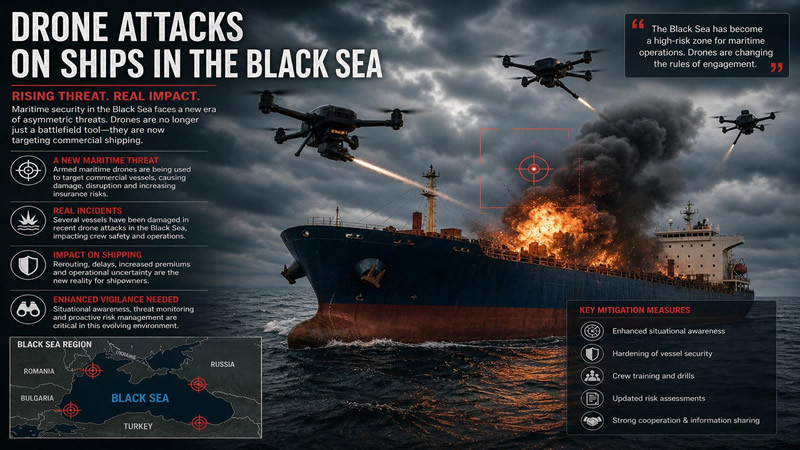
A sharp rise in attacks on commercial vessels in the Black Sea and Sea of Azov has created growing security concerns for shipowners and seafarers, with industry representatives warning that the attacks can no longer be seen as isolated incidents.
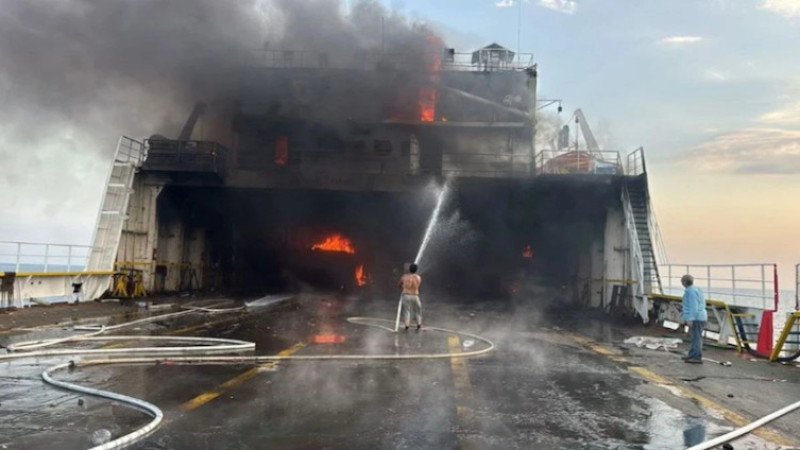

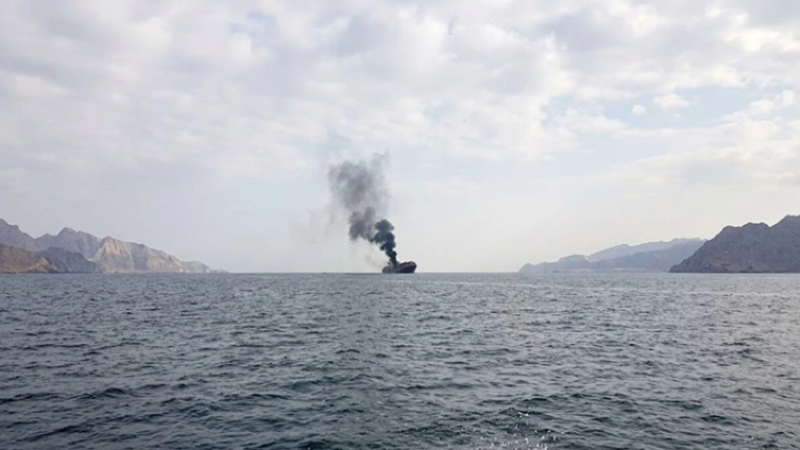
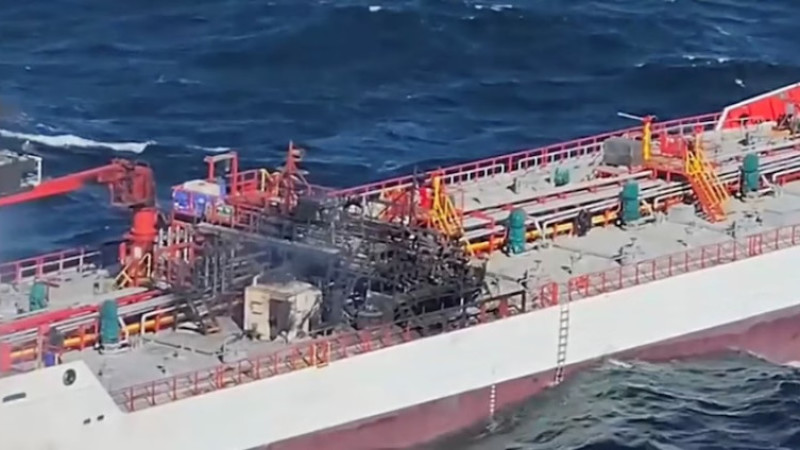
The impact of the Russia-Ukraine war on commercial maritime transportation in the Black Sea is becoming increasingly severe. According to information shared by industry sources with 7Deniz, attacks on commercial vessels have intensified again in recent days, with a large number of vessels reportedly targeted within just the past 24 hours.
The Russian Defense Ministry also stated on August 25 that three cargo vessels and one tanker were hit at the Port of Pivdennyi, while another cargo vessel was hit in Odesa. Reuters reported that it could not independently verify these claims.
Industry sources, meanwhile, say the attacks are continuing and that the risks faced by commercial vessels in the Black Sea may be broader than the picture reflected in official statements.
Claim of 218 Vessels: What Is Behind the Figure?
The figure of “218 vessels hit,” which has recently appeared in the public domain, needs to be assessed in the correct context.
Ukraine’s Unmanned Systems Forces announced that they had hit a total of 218 maritime vessels allegedly linked to Russia’s “shadow fleet” during the “MoLoCHka” operation conducted between July 6 and August 8. According to figures provided by Ukraine, 134 of these vessels were in the Sea of Azov and 84 were in the Black Sea. However, this figure has not been independently verified by other sources. Therefore, the number 218 should not be interpreted as “218 commercial vessels hit in July,” but rather as an operational claim made by the Ukrainian side regarding the period from July 6 to August 8.
Nevertheless, the picture presented by independent news sources also demonstrates the scale of the increase in attacks. Reuters reported on July 16 that Russia and Ukraine had intensified attacks against vessels in the Black Sea and Sea of Azov, with Ukraine announcing that it had hit at least 11 Russian vessels on that day alone.
Turkish Seafarers Also Directly Affected
Turkish-owned and Turkish-flagged vessels have also been seriously affected by the attacks.
On July 22, the Turkish-flagged REYHAN SARI, carrying coal from Russia’s Taman Port to Trabzon, came under a drone attack off Novorossiysk. One Turkish seafarer was killed in the attack, while members of the crew were also injured.
On August 3, Turkish-owned vessels YAŞAR and NADEZHDA were attacked by unmanned aerial vehicles after departing Novorossiysk Port, according to the Ministry of Foreign Affairs of the Republic of Türkiye. The ministry stated that several seafarers, including Turkish citizens, were injured and expressed concern that the war could spread further into the Black Sea.
On August 18, the Turkish-owned, San Marino-flagged NECIBE was reportedly attacked off Tuapse. Its crew was evacuated and rescued by the Turkish-owned URAL. However, URAL itself was attacked several days later. Eight seafarers were reportedly injured in the attack, while Ilker Lazoğlu, a crew member of NECIBE, was reported to have been killed.
These developments demonstrate that commercial vessels owned or flagged by countries that are not parties to the war are also facing the direct consequences of the conflict in the Black Sea.
“A Vessel Being Hit Used to Bring the World to Its Feet; Now Attacks Are Becoming Normalized”
Industry sources speaking to 7Deniz expressed concern over the increasing “normalization” of attacks against commercial vessels. While Turkish shipowners’ vessels attacked this week suffered extensive damage, the fact that there were no fatalities was described as almost a miracle.
Sources noted that in the past, even a single attack on a commercial vessel would have generated major international attention across the maritime community, whereas today, successive reports of attacks are increasingly being treated almost as routine developments.
Yet behind every attack lies not only a vessel or its cargo, but also the lives of seafarers, shipowners’ investments, international trade and global supply chains.
Risks to Black Sea Trade Are Now Affecting the Global Economy
The economic consequences of the attacks are also becoming increasingly evident.
According to a Reuters analysis dated August 5, the increase in attacks against vessels, ports and export terminals in the Black Sea is disrupting grain and oil trade while also increasing the cost of war-risk insurance.
As of August 20, concerns over Black Sea supplies in global wheat markets had grown, with Chicago wheat futures reportedly rising by more than 17% since the beginning of July.
Following the latest wave of attacks, there have also been assessments that Russian oil exports have declined, while Ukraine’s grain exports in August have fallen significantly. The ports around Odesa are critically important to Ukraine’s exports, while alternative land and Danube routes are considered insufficient to handle the volumes carried by maritime transportation.
Industry sources state that security risks are beginning to directly influence commercial decisions, particularly in the transportation of coal, oil, natural gas, grain, and fresh fruits and vegetables.
The Black Sea Is No Longer Merely a Russia-Ukraine Issue
At this point, it is no longer sufficient to view attacks against commercial vessels in the Black Sea solely as an extension of the war between Russia and Ukraine.
The fact that the safety of commercial vessels and seafarers is under threat has turned the issue into an international maritime security problem in terms of freedom of navigation, international maritime trade, food security and global supply chains.
Türkiye has also called on Russia and Ukraine to ensure the safety of commercial maritime transportation following the attacks. The Ministry of Foreign Affairs warned that unless necessary measures are taken, further escalation in the Black Sea could have multidimensional consequences, including for food security.
The General Directorate of Maritime Affairs under the Ministry of Transport and Infrastructure also stated that security risks to merchant vessels and seafarers have increased significantly in maritime areas at risk of conflict, particularly in the Black Sea, and that additional security measures are required.
Türkiye Should Bring the Issue to the IMO and UN Agendas
According to industry sources, there is now a need for a stronger and more institutional international initiative beyond diplomatic statements.
Türkiye has for many years been among the member states serving on the Council of the International Maritime Organization (IMO). It is considered important for this institutional position to be used more effectively to bring attacks against commercial vessels in the Black Sea to the attention of the international maritime community.
Attacks against commercial vessels in the Black Sea could be systematically documented using data such as vessel name, flag, ownership, coordinates, time of attack, nature of the attack, casualties and material damage, and then brought before the IMO.
Similarly, a legal and technical study prepared in coordination with the Ministry of Foreign Affairs, the Ministry of Transport and Infrastructure, and Turkish maritime industry associations could be submitted to the relevant bodies of the United Nations and IMO, within the framework of navigational safety, protection of commercial vessels and the relevant provisions of international maritime law.
The Chamber of Shipping (DTO), the Turkish Shipowners’ Association and other maritime professional organizations should also develop a common position and make the risks faced by Turkish-owned and Turkish-flagged vessels more visible on international platforms.
Seafarers Who Are Not Parties to the War Should Not Pay the Price
The Black Sea has been one of Türkiye’s most important trade routes for centuries. Today, however, seafarers are increasingly being forced to work under the direct risk of war, regardless of which flag they carry.
A month ago, the targeting of a single commercial vessel would have been considered a major event. Today, the targeting of multiple vessels within the same day should not become routine news.
Because the issue is not merely the number of vessels being hit.
The issue is the lives of the people working aboard those vessels, the safety of international maritime trade, and the gradual disappearance of the right to safe navigation in the Black Sea.
Attacks against commercial vessels in the Black Sea should no longer be regarded as isolated maritime incidents or unavoidable side effects of war. They should be addressed as a regional issue threatening international maritime security and navigational safety. Türkiye should also use its institutional position at the IMO and its diplomatic weight at the UN to bring the issue to the international agenda in a documented, legally grounded manner and in coordination with the maritime sector.
Because commercial vessels are not warships, and seafarers are not parties to the war.