
The Carbon Labyrinth in Shipping: Are IMO NZF and FuelEU on the Same Course or on a Collision Course
The maritime sector is at a critical turning point, with the EU’s FuelEU Maritime regulation on one side and the IMO’s still-negotiated Net-Zero Framework (NZF) on the other.

At first glance, these two systems appear to be aimed at the same goal. Both seek to reduce greenhouse gas emissions in maritime transport, accelerate the transition to low-carbon fuels, and support the sector’s energy transformation. However, when examined more closely, a much more critical issue emerges for shipping.
This issue is not only about which fuel will be used or how much a ship will pay. The real question is whether the global shipping industry will move forward in the future under a single and consistent regulatory system, or whether it will be pushed into a fragmented, costly, and unpredictable structure created by overlapping regional and national regulations.
What does FuelEU Maritime introduce?
FuelEU Maritime is a regional regulation created by the European Union to accelerate fuel transition in shipping. This system, which began to apply as of 1 January 2025, covers commercial vessels above 5,000 GT calling at EU ports. There is no flag discrimination. In other words, even if a ship is not EU-flagged, it is still subject to FuelEU obligations if it calls at EU ports.
At the center of the system is the greenhouse gas intensity of energy used on board. It does not only look at CO₂ emitted from the funnel. FuelEU is based on a well-to-wake approach that takes into account the entire process from fuel production to onboard consumption. For this reason, how “green” a fuel truly is is assessed not only by its combustion on board, but by the entire chain of production, transport, storage, and use.
FuelEU requires ships to gradually reduce their annual average GHG intensity compared to a 2020 reference value. The reduction obligation starts at 2% in 2025 and increases to 6% in 2030, 14.5% in 2035, 31% in 2040, 62% in 2045, and up to 80% in 2050. This structure does not directly tell ships which fuel to use. Instead, it requires them to reduce the emission intensity of their energy mix.
For this reason, the system appears technology-neutral. Ships may use biofuels, e-methanol, e-ammonia, synthetic fuels, batteries, shore power, wind-assisted systems, or other solutions. What matters is staying below the annual average greenhouse gas intensity limit.
Another important pillar of FuelEU is the zero-emission requirement at berth. Especially for container ships and passenger ships, it is expected that electricity demand while in port will be covered by shore power or equivalent zero-emission technologies. In this sense, FuelEU is not only a fuel regulation; it is also a tool that aims to transform port infrastructure, electrical connections, and the alternative fuel ecosystem in Europe.
What does IMO NZF aim to achieve?
The IMO Net-Zero Framework is discussed on a very different level. While FuelEU is a regional measure, IMO NZF aims to establish a global system. The objective is to link greenhouse gas reduction in international shipping to a framework that can be applied uniformly worldwide under MARPOL Annex VI.
At the core of NZF are two main components: the first is a global fuel standard, and the second is an economic mechanism, namely GHG pricing and a fund architecture. For this reason, IMO NZF is not only a fuel standard. It is also a system in which ships pay according to their emission intensity performance, low-carbon fuel users are rewarded, and the revenues generated are used for the global maritime transition.
Under the draft framework, an annual GHG Fuel Intensity (GFI) calculation is foreseen for ships of 5,000 GT and above engaged in international voyages. This calculation takes into account all fuels and energy sources used by the ship during the year. Fuel oil, alternative fuels, shore power, wind-assisted systems, solar energy, and similar sources can all be included in this calculation.
In IMO NZF, there are two thresholds: the Base Target and the more ambitious Direct Compliance Target. If a ship’s annual GFI value falls below the Direct Compliance Target, the ship may earn surplus units. This represents a reward for positive performance within the system. If the ship’s value exceeds the targets, a compliance deficit is created. This deficit must be covered by purchasing remedial units or using any available surplus units.
The draft structure also foresees two different levels of deficit, called Tier 1 and Tier 2. Smaller deficits are classified as Tier 1, while higher emission-intensity deficits are classified as Tier 2. Tier 2 obligations are expected to be more expensive, indicating that the system aims to discourage the use of more polluting fuels through a stronger economic signal.
The key difference: FuelEU generates penalties, IMO NZF creates a fund
One of the most important differences between FuelEU and IMO NZF is the issue of funding. Under FuelEU Maritime, there is no centralized FuelEU fund at a regional, EU-wide level that redistributes revenues. Companies pay penalties in cases of compliance shortfalls. These revenues are collected by the relevant Member States and may, in principle, be directed toward areas such as low-carbon fuels, port infrastructure, shore power, and innovative maritime technologies.
IMO NZF, on the other hand, aims to establish a direct fund architecture. The IMO Net-Zero Fund is designed to generate revenues through payments for remedial units from ships. This fund is not intended only to collect penalties, but also to support the maritime energy transition.
Fund revenues may be used for supporting zero- or near-zero emission fuels and technologies, developing new fuel infrastructure, technology transfer, capacity building, adapting seafarers to new fuels and technologies, supporting developing countries, and mitigating the negative impacts on Small Island Developing States (SIDS) and Least Developed Countries (LDCs).
In this respect, IMO NZF offers a much more comprehensive transformation mechanism than FuelEU. This is because emissions reduction in global shipping cannot be achieved solely through the behavior of ships calling at European ports. Issues such as fuel production, bunkering infrastructure, port investments, access to technology, and a just transition must all be addressed on a global scale.
The role of alternative fuels
Both systems place alternative fuels at the center of the transition. However, they do so not by mandating a specific fuel, but by setting performance standards.
From the perspective of FuelEU, what matters is not which fuel a ship uses, but the well-to-wake greenhouse gas intensity of that fuel. For this reason, sustainable biofuels, renewable-derived synthetic fuels defined as RFNBOs, e-methanol, e-ammonia, hydrogen derivatives, battery systems, shore power, and wind-assisted technologies can all play a role within the system.
In IMO NZF as well, zero or near-zero greenhouse gas emission technologies, fuels, and/or energy sources are given a special role. These fuels and technologies will not only help ships comply with the framework, but may also become eligible for reward mechanisms through the fund.
The critical issue here is how the actual low-emission nature of these fuels will be verified and certified. The same fuel can have very different emission values depending on its production pathway. For example, methanol produced from fossil sources has one climate impact, while bio-based methanol has another, and methanol synthesized using renewable electricity has a completely different impact. For this reason, fuel lifecycle labeling, sustainability certification, chain of custody systems, and mass balance approaches are essential for the credibility of both systems.
In the short term, sustainable biofuels and certain fuel blends may provide a transitional pathway for companies. In the medium and long term, however, it is clear that real deep emissions reductions will come from e-methanol, e-ammonia, green hydrogen derivatives, synthetic fuels, battery systems, shore power, and port infrastructure.
Is carbon capture a solution?
One of the most frequently discussed topics in recent years is carbon capture technologies on ships. Onboard carbon capture systems may appear theoretically attractive, especially for the existing fleet. The idea of capturing part of the emissions without completely changing the ship’s fuel is perceived as a practical transitional solution.
However, as of today, the role of these technologies in regulatory systems remains limited. Under FuelEU Maritime, onboard carbon capture is not currently recognized as a direct compliance technology. The main reason for this is that the technology is not yet sufficiently mature, and several issues remain unresolved, such as how captured CO₂ will be transported, where it will be stored, how permanent storage will be verified, and how leakage risks will be managed.
A similar situation exists on the IMO side. Work on onboard carbon capture systems is ongoing; however, it is not yet clear how these systems will be accounted for in the GFI calculation, how captured carbon will be verified, or under which standards permanent storage will be proven.
For this reason, carbon capture represents an important potential today; however, it is too early to consider it a primary compliance tool. Its real role will become clearer once a reliable chain for measurement, reporting, verification, and permanent storage has been fully established.
What will ships have to report?
FuelEU Maritime requires ships to establish a detailed monitoring and reporting system. For each ship, a FuelEU Monitoring Plan must be prepared. This plan includes the ship’s energy systems, types of fuels to be used, consumption measurement methods, voyage and port data, use of shore power, procedures to be applied in case of missing data, and verification processes.
Companies must submit an annual FuelEU Report. This report is reviewed by a verifier. The ship’s annual average GHG intensity value and compliance balance are calculated. If the ship has met its obligations, it receives a FuelEU Document of Compliance. If there is a shortfall, a penalty is paid and the document is issued accordingly.
Under IMO NZF, ships are expected to calculate and report their annual GHG Fuel Intensity (GFI) values. This reporting includes all fuels and energy types used by the ship, their well-to-wake emission factors, total energy consumption, attained annual GFI, target GFI values, compliance balance, and the status of surplus units or remedial units.
At the end of the process, a Statement of Compliance – Annual GHG Fuel Intensity is expected to be issued for the ship. On the IMO side, this process will be verified by Flag Administrations or authorized organizations, while the IMO GFI Registry will provide a global registration and transaction infrastructure.
While verification under FuelEU is carried out through accredited verifiers, the FuelEU database, and the administering Member State, the IMO NZF structure is centered on Flag States, Recognized Organizations, and the IMO GFI Registry. This difference alone already creates a significant potential administrative burden for companies.
The most critical issue: overlap and double payment risk
If IMO NZF enters into force, many ships calling at EU ports will simultaneously face reporting and compliance obligations under both FuelEU Maritime and IMO NZF. When EU ETS is also added to this, three separate carbon regulations would apply to voyages connected to Europe.
At this point, a very careful distinction must be made. If a ship complies with both FuelEU limits and IMO NZF targets, there may not be a direct double payment. However, if the same ship creates a compliance deficit under FuelEU and also generates a GFI shortfall under IMO NZF, the same energy consumption can create two separate financial burdens under two different systems.
Technically, these are obligations under different legal frameworks. However, from the perspective of shipowners, operators, and charterers, the outcome is the same: the same ship, the same voyage, the same fuel consumption, and overlapping payment obligations.
This is not only a cost issue. It can also affect voyage planning, fuel procurement strategies, charter party clauses, freight costs, port selection, and ultimately trade flows.
Shipping is a global industry. A container, bulk carrier, or tanker voyage is not confined to the borders of a single country or region. For this reason, the emergence of separate regional carbon regimes may, over time, create a significant regulatory labyrinth for the sector.
Is FuelEU an obstacle to IMO NZF?
This must be stated clearly. FuelEU Maritime is, from a European perspective, a strong policy tool for achieving climate targets. Europe aims to create demand for low-carbon fuels, transform port infrastructure, and accelerate the energy transition in shipping. These objectives are understandable and important.
However, from a global shipping perspective, regional measures like FuelEU must be handled very carefully. This is because one of the most important factors enabling the development of shipping is globally consistent standards and rules applied in the same way across the world.
Today, maritime transport operates on a global scale largely thanks to IMO standards in areas such as safety, security, environment, and trade. The value of conventions such as SOLAS, MARPOL, STCW, and others lies precisely here. If a ship were to face completely different technical, operational, and environmental rules in every port it visits, shipping would not have reached its current scale.
For this reason, if regional measures like FuelEU are not aligned with IMO NZF, they may not facilitate the establishment of a global system, but rather make it more difficult. Going even further, it can be argued that one of the biggest political and technical obstacles to the adoption of IMO NZF is the overlap created by existing or planned regional and national regulations.
Because some countries and industry stakeholders are rightly asking the following questions: If a global system is established at IMO level, what will happen to regional systems? Will the same ship pay twice for the same fuel? Will the same data be reported in two or three different formats to different authorities? Will the same alternative fuel certificate be evaluated separately under FuelEU, IMO, and other national systems?
Without clear answers to these questions, reaching a global consensus is not easy.
How could convergence work?
In my view, the most appropriate approach would be the complete elimination of FuelEU. However, under the current circumstances, the goal is instead to align it with IMO NZF in an intelligent and fair way.
To achieve this, well-to-wake calculation methodologies must first be harmonized. If the same fuel produces different emission values under the EU system and the IMO system, the market will be distorted. Predictability for fuel suppliers, ship operators, and charterers will disappear.
Second, a structure enabling single data, multi-reporting should be established. Companies should not be required to repeatedly prepare the same fuel consumption, voyage, and energy data for the FuelEU database, EU MRV, IMO DCS, and the future IMO GFI Registry. Digital systems must be able to communicate with each other, data standards must be unified, and administrative burdens must be reduced.
Third, a top-up model should be considered to prevent double payment risk. If IMO NZF establishes a global pricing and fund system, FuelEU should not impose a full additional penalty for the same energy consumption. Instead, a mechanism that only covers the difference between the EU standard and the IMO standard could be applied. This would preserve the strictest environmental target while avoiding double payment for the same emissions.
Fourth, payments made to the IMO Net-Zero Fund could be partially recognized in FuelEU compliance calculations. Conversely, EU penalty revenues could be linked to mechanisms supporting the global transition. The key point here is not for the systems to punish each other, but to complement each other.
Fifth, FuelEU’s port infrastructure and shore power component could be preserved. While IMO NZF establishes a global fuel standard and fund architecture, FuelEU’s requirements for electricity connection, alternative fuel infrastructure, and zero-emission-at-berth operations at EU ports could function as a more regional infrastructure policy layer.
Finally, RFNBO and the IMO concepts of zero or near-zero emission fuels must be aligned. The same molecule—such as e-methanol or e-ammonia—should not generate double counting by being rewarded in one system and treated differently in another. For this, robust mechanisms such as unique certification numbers, chain of custody systems, mass balance approaches, and certificate retirement procedures must be properly established.
Final message: Shipping develops through global rules, not regional labyrinths
IMO NZF has not yet been formally adopted or entered into force. However, progress within the IMO framework continues. The negotiations are difficult, the political balance is delicate, and the economic impacts are significant. Nevertheless, the right forum for global shipping remains the IMO.
Because what makes shipping “shipping” is the ability of vessels to operate under common standards anywhere in the world. As a backbone of global trade, this sector cannot be sustainably governed through fragmented carbon regimes that overlap, conflict, and rely on different calculation methodologies across regions.
In the short term, regional measures like FuelEU may create pressure for emission reductions. However, if these measures are not aligned with the IMO system, they may lead in the long run not to real GHG reductions, but to trade distortion, higher costs, administrative burdens, uncertainty, and reduced competitiveness.
More importantly, the proliferation of regional and national systems makes it harder to reach global consensus. If every region sets its own rules, the industry will spend its time calculating which regulation applies in which market, rather than focusing on transitioning to low-carbon fuels. This does not accelerate emissions reduction; on the contrary, it makes the energy transition more expensive, more complex, and slower.
Therefore, the fundamental question for the coming period is this: will carbon regulations in shipping converge into a global framework, or will regional approaches push the sector into a fragmented structure?
My view is clear. Real and lasting GHG reduction in shipping is only possible under the IMO umbrella, with a system that is globally applied, technology-neutral, fair, measurable, and financially designed to support the global transition.
The experience of FuelEU is important. Europe’s pioneering role is valuable. However, the ultimate goal should not be for regional measures to replace the global system, but to align with IMO NZF and strengthen the global transition.
Otherwise, shipping may evolve not into a system that reduces carbon, but into a complex regulatory labyrinth that distributes carbon costs across different regions. This would serve neither trade, nor the sector, nor the climate.
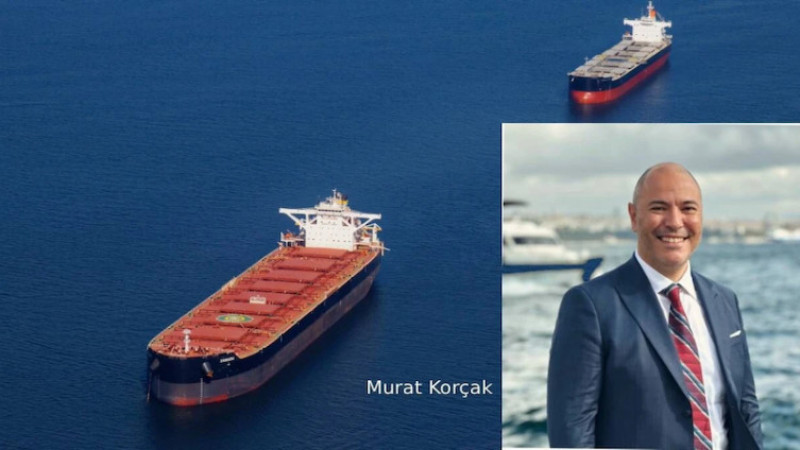
Murat Korçak
Diplomat & Maritime Expert