

A Maritime Corridor Similar to the Grain Corridor Should Be Opened
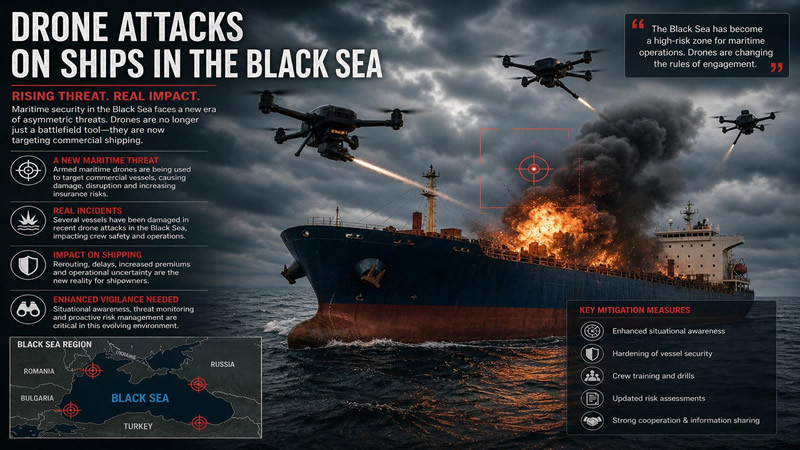
Ondokuz Mayıs University (OMU) Research Assistant Dr. Sümeyye Uzun stated that drone attacks targeting vessels in the Black Sea threaten trade and crew safety, and proposed a “Grain Corridor-like agreement” for the countries in the region.

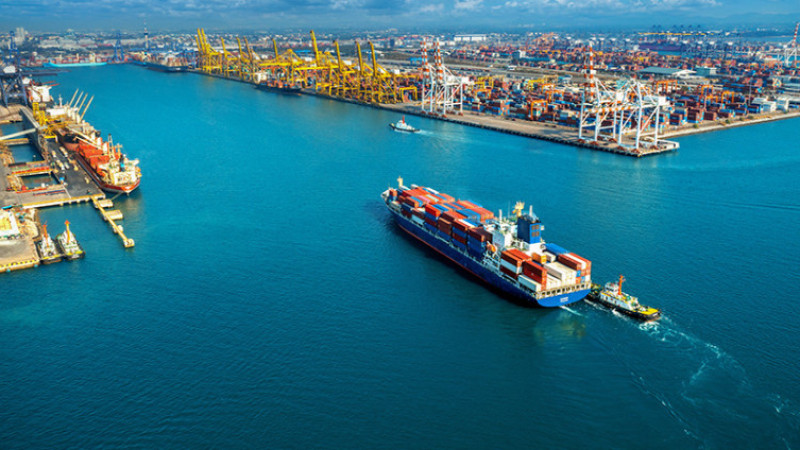
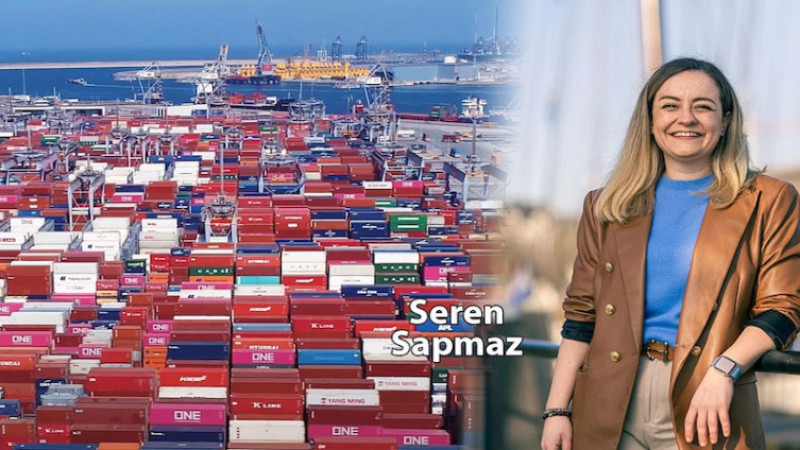
Dr. Sümeyye Uzun, a Research Assistant at the Department of International Trade at the Department of International Trade and Logistics of the Faculty of Economics and Administrative Sciences at Ondokuz Mayıs University (OMU), evaluated the possible effects of drone attacks targeting commercial vessels in the Black Sea on the regional economy. Dr. Sümeyye Uzun said, “Samsun Port is among the Turkish ports most affected by the war due to its geographical location. Because it is a logistical connection point in trade with Russia, Ukraine and other Black Sea countries. Bringing vessels damaged in the attacks to Samsun Port enables the port to assume the role of a natural shelter in addition to its commercial role. Although this situation provides Samsun Port with an advantage in terms of repair and port services, it is impossible to compensate for the loss of trade volume and logistics activities caused by the risk to life in the Black Sea. On the other hand, the increasing insurance and freight costs of vessels heading to the Black Sea, as well as security concerns, are also resulting in the cancellation of voyages. Indeed, following attacks targeting vessels in the fleet of a Samsun-based company, its suspension of Black Sea voyages is causing both a decline in commercial and logistics revenues and a decrease in employment in Samsun. The risks faced by Samsun Port also apply to other Black Sea ports such as Trabzon Port.”
“Alternative routes cannot be a full substitute”
Stating that one of the most important consequences of the attacks for Turkish companies trading with Russia and Ukraine is the security risk, Uzun said the following regarding the costs of alternative routes: “In fact, this issue can be evaluated separately from the perspectives of exporters, importers and logistics companies.” Uzun continued: “The attacks primarily mean a risk to life for commercial vessels, and this risk is beyond a cost that companies can finance. According to the assessment report published by KOSDER (Turkish Shipowners’ and Operators’ Association) on this issue, aside from economic activities in the Black Sea, the loss of seafarers’ lives in attacks is an indication that safety of life is under threat. The report emphasizes that this is not an issue that companies can solve on their own, and that the problem needs to be addressed in a holistic and comprehensive manner from the perspectives of law, diplomacy and states. Frankly, at this point, the cancellation or complete suspension of voyages to the Black Sea may appear to be a solution for companies, but considering that the Black Sea is an important grain and energy transit gateway in world trade, such a solution would deepen the problems, leading both to loss of revenue and employment for companies and to a food and energy crisis that would seriously affect Türkiye. On the other hand, from the perspective of exporting and importing companies, the companies that will be most affected by the attacks will be those operating with low profit margins and those trading in perishable products such as fresh fruits and vegetables. If uncertainty continues, in the long term, large-scale companies may also shift their plans in many areas such as production, inventory, capacity and delivery to alternative routes. Turkish companies can also shift their trade in the Black Sea to different alternative routes. Trade with Ukraine can be carried out through Romania and Bulgaria, while trade with Russia can be carried out through Georgia or Azerbaijan. These routes are already being used. However, these routes are suitable for relatively low-volume transportation and do not have the capacity to carry out all shipments in the Black Sea.”
“Conducting trade through the Black Sea instead of alternative routes is almost a necessity”
Providing information about alternative routes, Uzun noted: “In trade along the Romania-Bulgaria corridor, in addition to waterway transportation via the Danube River, rail and road transportation can be used. However, the fact that the Danube River is not suitable for the passage of high-tonnage vessels due to depth restrictions is an important problem. Transferring the cargo of high-tonnage vessels to lower-tonnage vessels creates significant time and financial costs. On the other hand, the different rail gauges between Ukraine and the railway lines in Europe and Türkiye, the use of road transportation for smaller-volume cargo compared to maritime transportation, and the fact that it requires more fuel consumption are also cost-increasing factors for companies. Similar dilemmas apply to the Georgia and Azerbaijan routes for Türkiye’s trade with Russia. It is also necessary to take into account that although attacks targeting these alternative routes are relatively fewer, they still pose a risk. Therefore, the Balkan and Caucasus corridors can only serve as complementary corridors in Türkiye’s trade with Russia and Ukraine. They can never be a full substitute. Conducting trade in the Black Sea through the Black Sea rather than alternative routes is almost a necessity. For this, long-term and sustainable corridors similar to the Grain Corridor Agreement need to be put into operation through diplomatic steps. Indeed, in 2022, when the Grain Corridor Agreement was in effect, Türkiye’s foreign trade with Ukraine and Russia increased by approximately 79.6 percent compared with 2021, according to TURKSTAT data.”
“There is a contraction in Türkiye’s foreign trade with Russia and Ukraine”
Commenting on the impact of maritime transportation becoming risky in the Black Sea on Türkiye’s trade with Russia and Ukraine, Sümeyye Uzun stated that there is currently a contraction in trade with the two countries and said: “At present, there is a contraction in Türkiye’s trade with Russia and Ukraine. According to TURKSTAT data, Türkiye’s total foreign trade volume with the two countries decreased from $58.8 billion in 2024 to $55.8 billion in 2025. This represents a decline of approximately 5.13 percent. If no solution is found to the increasing security risk, the contraction trend in Türkiye’s foreign trade volume with these countries is expected to deepen. The fact that many transportation companies do not want to send vessels to Russian and Ukrainian ports due to security risks is already a sign of this. If the difficulties faced by companies exporting to Russia and Ukraine in finding vessels to transport their products continue, Türkiye’s export volume could experience a serious contraction. On the other hand, disruptions in imports of grain, oil and other industrial inputs that Türkiye imports from Russia and Ukraine could create new pressure on inflation due to increased production costs, in addition to the decline in imports.”
“Russia and Ukraine’s attacks on vessels are also imposing costs on countries that are not parties to the war”
Stating that the main purpose of the attacks is to disrupt the war economy and logistics capacity of the opposing side, Uzun said:
“The main purpose of these attacks for both countries is to disrupt the war economy and logistics capacity of the opposing side. It can be said that Russia’s aim is to prevent Ukraine’s access to the sea, hinder military logistics and supply processes, and gain an advantage by reducing its war capacity. Ukraine, meanwhile, argues that it is carrying out the attacks in order to disrupt Russia’s logistics activities. In the background, there is also an aim to push Russia into an economic bottleneck by disrupting its grain and energy exports. In short, although the side carrying out the attacks appears to gain a benefit in return for the cost it imposes on the opposing side, in the long term, rising trade and logistics costs harm both sides. Therefore, the attacks also create uncertainty over which side will benefit from the gains. In addition, Russia and Ukraine’s attacks on commercial vessels are also imposing costs on countries that are not parties to the war, such as Türkiye. Although it pursues a policy of balance, Türkiye is also one of the countries most affected by these attacks. We have outlined the risks facing Türkiye above. However, Türkiye is highly likely to assume a strategic mediator role in stopping the attacks or at least opening a maritime corridor similar to the Grain Corridor. In addition, Türkiye’s control of the straits under the Montreux Convention and the strengthening of its defense industry also make it a geopolitical power in the region. However, these benefits and expectations listed above are being built on a highly costly and fragile foundation. Aside from the risks posed by the economic dimension of the attacks, the threat to safety of life also reveals the humanitarian dimension of the war. Particularly in attacks targeting commercial vessels, the targeting of neutral and civilian ship crews also creates strong psychological trauma for people who are simply trying to earn their livelihoods. In the end, it is unknown whom the attacks will benefit, but as always, those who have no say in the decision to wage war are the ones who pay the heaviest price.”