

A Major Misconception About Cruises! Inflation Closed the Price Gap
Rising global costs and inflation data announced in Türkiye are reshaping price perceptions in the tourism sector.

According to the Turkish Statistical Institute’s April 2026 data, the consumer price index reached 4.18 percent monthly and 32.37 percent annually. This increase, felt particularly in transportation and accommodation, has made the total cost of the traditional holiday model more visible, while also paving the way for a reassessment of the long-standing perception of cruise tourism as “expensive.”
As the classic holiday concept gives way to experience-oriented travel models, cruise tourism is becoming one of the standout areas of this transformation. Recently, the cost of a one-week stay in five-star hotels has reached 2,500–3,000 euros per person, and when transportation, food and beverage, and additional expenses are included, the total holiday budget rises even further. Against this backdrop, cruise holidays positioned within a similar budget range stand out as a stronger price-performance alternative, offering accommodation, transportation, and multiple destinations in a single package.
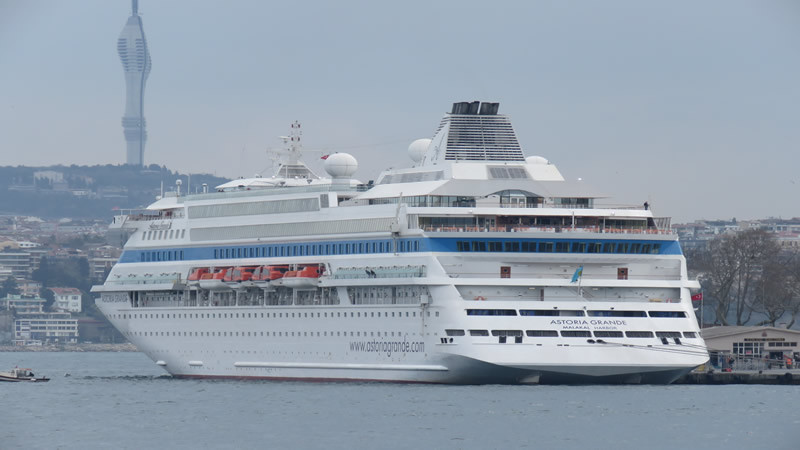
Industry players note that in the face of rising costs, consumers are shifting from single-location holidays to models that offer more comprehensive experiences. Emrah Yılmaz Çavuşoğlu, Chairman of Camelot Maritime—the first company to operate a foreign-flagged cruise ship in Türkiye—points to a similar trend, stating that demand is increasing for cruise models that offer more destinations and content within the same budget.
Inflation Revealed the Reality of Total Costs
Highlighting that inflation data has made the total cost of holidays more visible, Çavuşoğlu drew attention to the fragmented structure of costs in the traditional holiday model. He said: “Today, it is not possible to plan a holiday by looking only at hotel prices. When transportation, accommodation, food and beverage, and daily expenses are considered separately, the total budget rises significantly. This makes cost control difficult. In the cruise model, however, most of these items are offered in a single package. This provides consumers with a predictable budget advantage from the outset. The same cost allows for a more planned and comprehensive holiday experience.”
Cruises Are Not Expensive, They’re on Par with Hotels
Çavuşoğlu clearly stated that the most common perception in Türkiye does not match reality: “There is a perception that cruise tourism is expensive in Türkiye, but this is not true. Today’s economic conditions are clear. If you want to spend a week in a five-star hotel, the budget per person is around 2,500–3,000 euros. When transportation is included, this figure is already fixed. On the cruise side, the cost is at the same level. So, in fact, there is no price difference at all.”
The Real Difference Is Not Price, But the Scope of the Experience
As holiday budgets grow with inflation, consumers are now focusing on the overall experience rather than just the headline price. Summarizing the difference, Çavuşoğlu said: “In a hotel, you stay in one place. On a cruise, you wake up in a different port every day. Every day brings a new city, a new country, a new experience… With the same budget, you see much more. You don’t wake up to the same view every morning, but to a new story.”
Cruises Are Not Luxury, They’re the New Normal
While rising costs challenge global tourism, Türkiye—with its port infrastructure and destination diversity—is among the countries that can turn this transformation into an advantage.
Çavuşoğlu emphasized that as cruise tourism is properly explained, it will move away from the perception of being “luxury and expensive” and reach wider audiences as an accessible and smart holiday model: “Although inflation data increases cost pressures in tourism, it also creates a real basis for comparison. At this point, cruise tourism has the same budget as hotel holidays but offers a much broader experience. Therefore, our message is this: Cruises are not expensive, they have simply been misrepresented until now.”