

Arctic Silk Road Advances as Asia Invests Despite Western Sanctions
Despite Western sanctions and growing geopolitical tensions, the Northern Sea Route (NSR) and the Arctic Silk Road continue to gain momentum
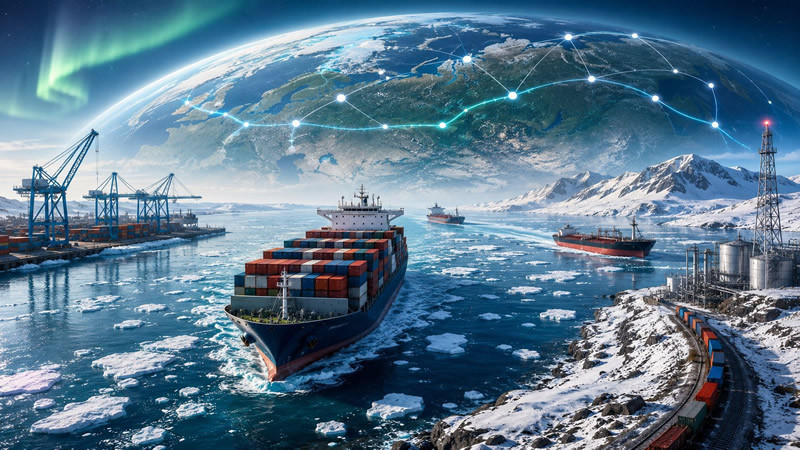

Experts say increasing investments from Asian countries are shifting the center of global trade northward while opening a new era of lower energy and logistics costs.
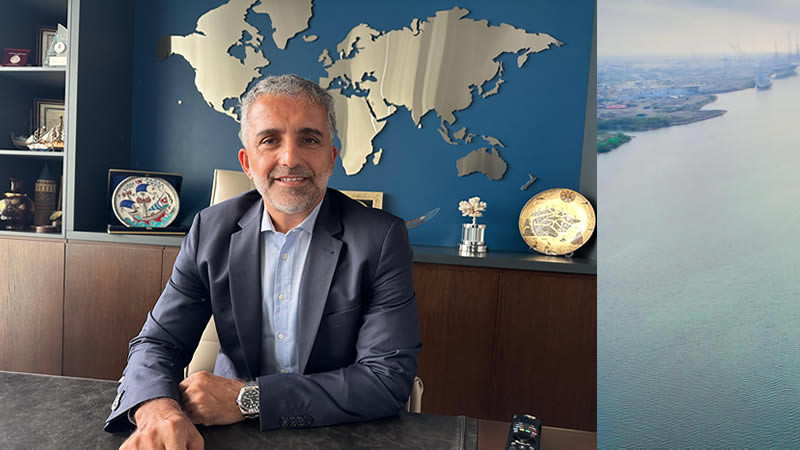
Speaking on a program hosted by Norwegian political scientist Glenn Diesen, Henry Tillman, Founder of Asia Investment Research and CEO of Ayana Research, assessed the emerging geopolitical and economic dynamics surrounding the Northern Sea Route and the Arctic Silk Road.
According to Tillman, sanctions imposed on Russia and ongoing global political tensions have not slowed the commercial transformation of the Arctic; rather, they have accelerated it. With growing interest from China, India, and Southeast Asian nations, the Northern Sea Route is becoming one of the world’s most strategic trade corridors.
Northern Sea Route Cuts Shipping Times in Half
Tillman emphasized that the economic advantages offered by the Northern Sea Route have become too significant to ignore.
According to available data, cargo transported between Vladivostok and London can be delivered in approximately 18 days via the Northern Sea Route. The same shipment takes around 35 days through the Strait of Hormuz and the Suez Canal, while voyages around the Cape of Good Hope can take up to 50 days.
Tillman noted that this difference not only provides a major time advantage but also generates substantial savings in fuel consumption, operational costs, and carbon emissions.
He further highlighted that Russia’s LNG projects in the Yamal region enjoy exceptionally low production costs, giving the country a significant competitive advantage in global energy markets. As a result, Russia has emerged as one of the world’s leading liquefied natural gas producers, second only to Qatar.
Climate Change Opens New Trade Corridors
Tillman pointed out that climate change has played a decisive role in the development of the Northern Sea Route.
According to him, Arctic sea ice coverage has declined by approximately 50 percent over the past half-century. He added that the Arctic is warming nearly four times faster than the rest of the world, and the retreat of ice is making previously inaccessible maritime corridors available for commercial shipping.
This transformation is not only reshaping maritime transportation but also influencing the future development of energy and logistics infrastructure.
Russia and China Strengthen Their Arctic Partnership
Tillman stated that Russia remains the undisputed leader in Arctic logistics.
Russia currently operates more than forty icebreakers, including eight nuclear-powered vessels. China, meanwhile, has accelerated its own nuclear icebreaker projects in recent years.
According to Tillman, the combined icebreaking capacity of Russia and China now exceeds that of many NATO countries combined, giving them a considerable commercial advantage in the region.
He also noted that Russia has historically possessed the largest Arctic population and the longest Arctic coastline, emphasizing that Moscow’s influence in the region is rooted in historical realities rather than recent developments.
Sanctions Accelerate the Arctic Silk Road
According to Tillman, Western sanctions against Russia have unexpectedly provided additional momentum to Northern Sea Route projects.
He cited China’s investment of approximately $2.5 billion in the modernization of Russia’s strategically important Port of Arkhangelsk as a key example. The project is expected to play a critical role in the development of the Arctic Silk Road.
Tillman argued that while sanctions have contributed to higher energy costs in Europe, they have simultaneously encouraged industrial investments in Asia based on access to lower-cost energy. He pointed to German chemical giant BASF’s major investment in China as a concrete example of this trend.
India Emerges as a Key Component of the New Corridor
Tillman stressed that the Northern Sea Route is not solely a Russia-China initiative.
He explained that the International North-South Transport Corridor (INSTC) is increasingly being integrated with the Northern Sea Route, creating a new logistics network linking St. Petersburg with India through Iran. This connection is fostering deeper economic integration among Asian economies.
He also noted that Russia has recently expanded cooperation with Vietnam, Indonesia, and Saudi Arabia in areas such as port development, logistics, and maritime transportation. Growing concerns over energy security and the search for alternative trade routes are further accelerating these partnerships.
Global Trade Is Shifting Northward
Experts believe that the Northern Sea Route is far more than an alternative shipping corridor; it has the potential to reshape the future of global trade.
Its ability to reduce transportation times, lower energy costs, and provide an alternative to geopolitically sensitive routes has encouraged many Asian countries to continue investing in the corridor.
While political tensions between the West and Russia remain unresolved, Tillman argued that economic and energy cooperation has not been completely severed. In the long run, he suggested, economic realities may prove stronger than political divisions.
As global trade routes continue to evolve, the Northern Sea Route is expected to remain one of the most closely watched developments in both the maritime industry and global energy markets in the years ahead.