



A New Grain Corridor Has Become Urgent
DEİK and DTO warned that halted Black Sea shipping traffic is putting grain trade at risk.

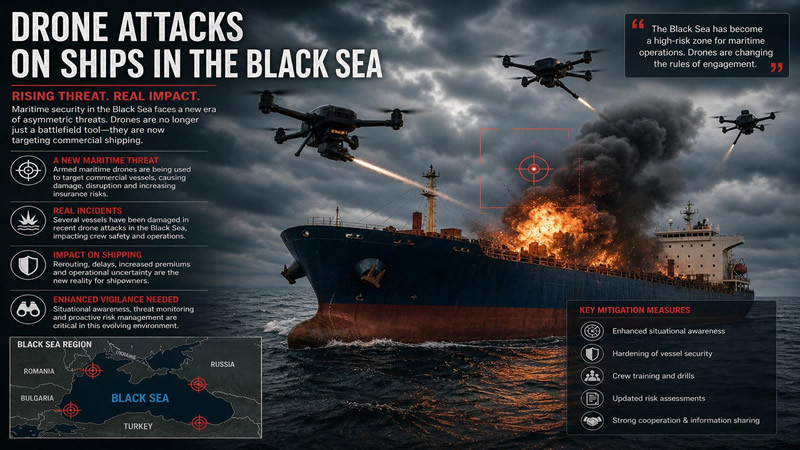
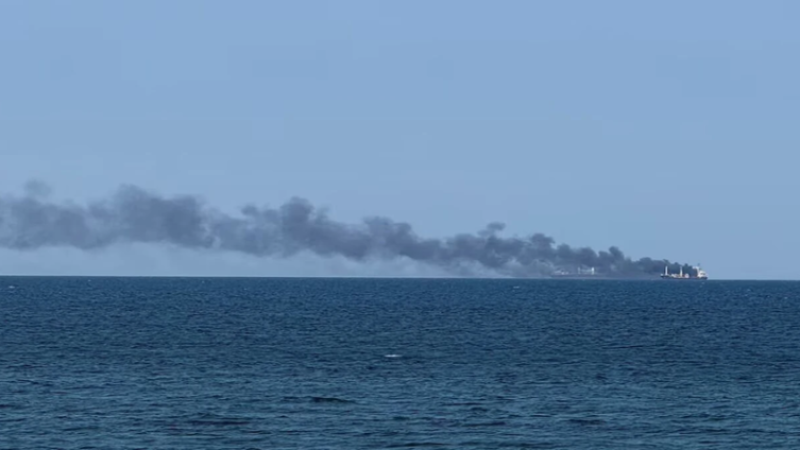
As attacks on ships in the Black Sea continue to cause an increasing number of casualties, the war is also taking a heavy toll on regional economies. As vessel traffic has come to a near standstill, grain trade is being disrupted, while business representatives emphasize that a new secure grain corridor has become an urgent necessity to prevent a global food crisis.
Industry representatives state that re-establishing the grain corridor created in 2022 has now become an urgent necessity not only for regional trade but also for global food supply security. According to a report by Aysel Yücel of Dünya, DEİK/Türkiye-Ukraine Business Council Chairman İsmail Ziya Uzel warned that the security crisis in the Black Sea could create a major supply shock in the global grain market.
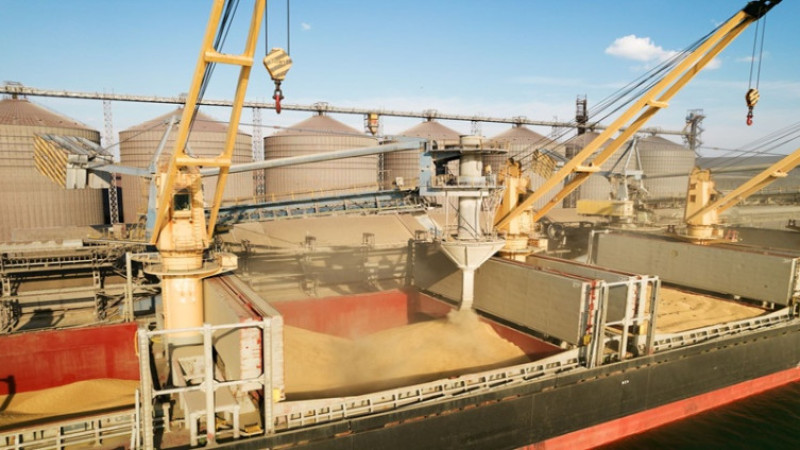
Stating that Russia and Ukraine account for 32% of global grain production, Uzel said it is not possible to transport this volume to world markets by any other mode than maritime transport. Uzel noted that Ukraine accounts for 14% and Russia for 18% of global grain production, adding that strategic products such as wheat, corn, barley, sunflower and soy are transported from these countries to world markets.
“The shock in the Strait of Hormuz could also be seen in grain”
Uzel said that if the crisis in the Black Sea continues, a price shock similar to the one seen in energy markets could also occur in grain, adding that the inability of supply to reach the market would be directly reflected in prices. Uzel said, “The value of something that is unavailable increases. This is a matter of supply and demand. As long as the product cannot reach the market, global food prices will surge.” Stating that the parties need to establish a new mechanism guaranteeing the safe passage of commercial vessels as a solution, Uzel said the corridor model established in 2022 through the initiatives of Türkiye and the United Nations could be adapted to the new conditions.
Uzel proposed establishing a system in which maritime experts acceptable to the parties, rather than military elements, would carry out inspections, and said that vessels could be inspected and allowed to pass safely. Uzel also drew attention to the importance of diplomatic initiatives by international organizations and Türkiye.
“Flour and pasta exports under threat”
One of the most critical consequences of disruptions to vessel traffic in the Black Sea for Türkiye could emerge in processed food exports. Reminding that Türkiye ranks among the world’s leading exporters of flour and pasta, Uzel said that grain supplied from Russia and Ukraine plays an important role in enabling exporters to produce at competitive prices.
Uzel explained that Türkiye is strong in producing high-protein wheat, but that lower-cost wheat from Russia and Ukraine is also used to establish competitive prices in African and Far Eastern markets. He noted that by blending different-quality wheat, both the desired product quality and competitive costs can be achieved.
Uzel said, “If this flow of raw materials stops, our flour and pasta exports, in which we are a world leader, will suffer a very heavy blow.” While vessels operating in the region remain idle due to security risks, increasing revenue losses for shipowners, finding crew members is also becoming more difficult. Uzel drew attention to the scale of the risk to human life, saying that even high salary offers are not enough to persuade seafarers to sail in the Black Sea.
“Road transport cannot be a permanent solution”
Uzel said vessel traffic in the Black Sea has almost come to a standstill and that exporters have therefore partially turned to road transport, adding, “There is no possibility of transporting the cargo of these two countries, which meet one-third of the world’s needs, out by road or other means.
Ships carrying 30,000 to 60,000 tons of cargo even sail from here to the Far East. Transferring these volumes to trucks would create an additional cost and is practically impossible.” İMEAK Chamber of Shipping Assembly President Başaran Bayrak also stated that Turkish exporters have temporarily turned to road and rail routes via Romania.
However, Bayrak emphasized that these methods cannot match the capacity of maritime transport in grain transportation, noting that bulk carriers are the primary means of transporting grain. Bayrak said, “Road transport is a temporary solution; it is not sustainable. No mode of transport can be an alternative to the enormous capacity offered by the sea.”
“Greater risk after September”
Another concern for the industry is the additional cargo that will emerge with the beginning of the harvest season. As grain supply in the region is expected to increase again from September onward, there are concerns that products could accumulate in ports and on alternative routes if safe vessel traffic cannot be ensured.
Industry representatives, particularly noting that North African countries are highly dependent on Black Sea grain, point out that alternative sources of supply would create higher costs. It is stated that freight costs for shipments from distant supply points such as Canada or Australia could put pressure on the budgets of low-income countries. The industry emphasizes that the grain corridor must be reopened to prevent a new food crisis.
If the crisis continues, grain shipments may also have to be directed to more distant markets such as the Far East. However, longer routes will increase fuel, insurance and freight costs. The industry is concerned that this will further increase pressure on global food inflation.
“The next few weeks will be very critical”
Burak Kerimoğlu, Maritime and Air Cargo Manager at Asset GLI, one of Türkiye’s leading foreign trade and logistics companies, stated that the increasing security risks in the Black Sea have recently begun to seriously pressure maritime transportation, and said:
“Especially with commercial vessels also coming under direct threat, shipowners have become much more cautious about the region. Today, the issue is not only whether a vessel can enter a port; war risk insurance, additional freight costs, suspension of services and restrictions on cargo acceptance are affecting the entire trade. Therefore, some cargo may remain waiting in ports and warehouses, shipments may be delayed, or may be redirected to alternative road, rail and different port connections. From Türkiye’s perspective, it is extremely important for Black Sea trade to continue uninterrupted. If the current tensions continue, we may see a period in which logistics costs rise, transit times lengthen and demand for alternative routes increases, particularly in Türkiye–Russia and Türkiye–Ukraine trade. The next few weeks will be critical for the course of maritime transportation.”
“Global organizations have also called for a corridor”
The impact of attacks in the Black Sea on grain trade is also on the agenda of international organizations. It is emphasized that attacks targeting the ports in and around Odesa threaten Ukraine’s agricultural exports and global commodity flows.
While it is stated that alternative road, rail and Danube routes cannot match the volumes carried by maritime transport, Ukrainian officials report that around 30 million tons of grain and oilseeds could be at risk of being unable to reach international markets.
With the new harvest season beginning in September approaching, industry representatives are calling for international organizations and the parties involved to return to the negotiating table under Türkiye’s leadership and for a secure grain corridor protocol to be implemented as soon as possible. The Turkish Shipowners’ and Operators’ Association (KOSDER) had called on public authorities to establish secure maritime corridors.
“The coaster fleet has gathered in the Mediterranean”
The cost of the security crisis in the Black Sea is not limited to grain trade. Turkish coaster shipowners, who play an important role in the region’s maritime trade, are also facing major losses as they are unable to continue their operations.
While many companies have suspended their services to the Black Sea route, some have taken their vessels out of service and sent them to shipyards, while others have redirected their routes to the Mediterranean. However, the redirection of vessels leaving the Black Sea toward the Mediterranean has created excess tonnage in the region. DTO Assembly President Başaran Bayrak said that competition has intensified and freight rates have fallen as supply increased, adding, “When the Black Sea was closed, ships gathered at Mediterranean destinations. This led to excessive competition and freight rates hitting rock bottom. Our shipowners are in a very difficult situation; all balances in the sector have been turned upside down.”
“War risk premium exceeds freight rates!”
With increasing attacks in the Black Sea, war risk and insurance costs have become decisive factors in freight rates. Navis Consultancy Coordinator Engin Koçak stated that a coaster operating in the region, approximately 10 years old and with a capacity of 6,500 DWT, is valued at around $3.5–4 million, while insurance premiums have risen to approximately $200,000.
Koçak said, “On a voyage generating approximately $357,000 in freight revenue, allocating $200,000 of this amount solely to insurance costs shows the extent to which the security crisis has disrupted the economics of transportation. Although freight rates in the Black Sea have increased, war premiums have also risen, resulting in only very small increases in revenues. Shipowners who take the risk without paying war premiums continue to record these freight rates as earnings.”
According to information provided by Customs Consultant Cem Sinan Güzel, war risk premiums of between $500 and $1,000 per TEU have begun to be applied to cargo on container lines passing through Novorossiysk and the Black Sea. Güzel stated, “On some routes where normal freight rates are around $250–400, the war risk surcharge exceeding the freight rate itself by two to three times makes the sustainability of Black Sea trade even more difficult.”