
IMEAK Chamber of Shipping January Assembly Meeting: Naval Power and Global Developments
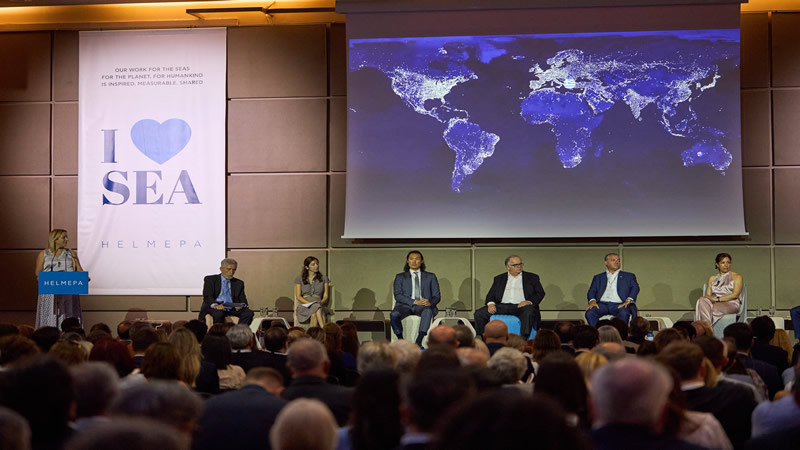
The Istanbul and Marmara, Aegean, Mediterranean, Black Sea Regions (IMEAK) Chamber of Shipping (DTO) held its January Assembly Meeting with the participation of Admiral Ercüment Tatlıoğlu, Commander of the Turkish Naval Forces.
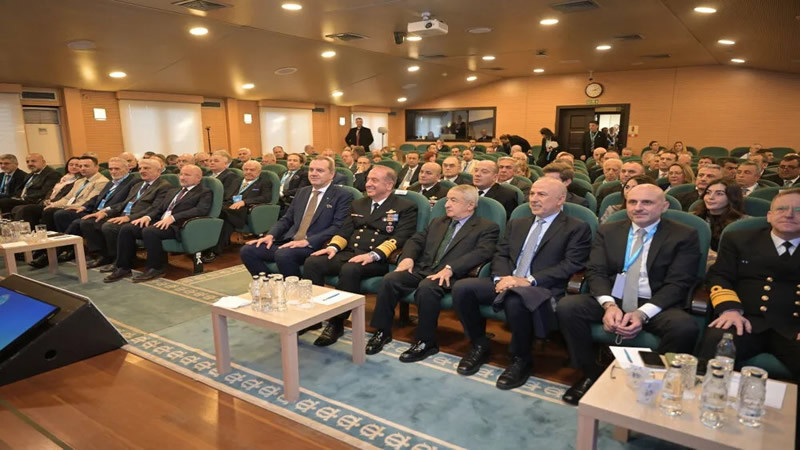

The meeting took place at the IMEAK DTO Assembly Hall under the chairmanship of Başaran Bayrak.
During his speech, IMEAK DTO Chairman Tamer Kıran emphasized that safeguarding Turkey’s rights and interests at sea can only be achieved through a strong, modern, and deterrent naval force. He underlined that the Turkish Navy, with its qualified personnel, modern platforms, and high operational capability, stands as a respected and powerful force ensuring peace and stability in the region.
Kıran highlighted that recent successes in the defense industry, particularly in national shipbuilding projects, are the natural outcome of aligning the Navy’s operational needs with the engineering and production capabilities of Turkish industry:
“In this major breakthrough, the guiding role of our Navy, combined with the production power and dynamism of our shipyards, has become a concrete manifestation of the goal of a strong and sustainable fleet. The journey that began with the MİLGEM project has now expanded to a wide spectrum, from corvettes to frigates, submarine projects, amphibious assault ships, and unmanned naval vehicles.”
He also stressed the importance of private shipyards, noting that in the last decade they have invested in advanced infrastructure, reaching the capacity to build large, complex, and technologically advanced military platforms. Their flexible production models, adherence to quality and certification standards, and international project management experience have elevated Turkish naval shipbuilding to a competitive and respected position globally. Today, Turkish shipyards not only meet the needs of the Turkish Navy but also export military vessels to allied nations, positioning Turkey as a significant player in the defense maritime market.
Kıran pointed out that the very first month of 2026 has already witnessed developments that may shape the coming decades. He referred to the U.S. operation in Venezuela, followed by President Trump’s messages regarding Iran and Greenland, noting that the global agenda’s rapid shift to these issues clearly demonstrates how geopolitics and politics have overtaken economics.
He observed that the U.S.–China rivalry is intensifying in military, technological, and financial domains. The Venezuela move can be read as an effort by the U.S. to reinforce its military presence and regional monetary power, while developments around Greenland represent a strategic attempt to control rare elements essential for technology. Europe’s relative weakness in this struggle, he added, strengthens the likelihood that the U.S. will continue to expand its influence across the Western Hemisphere under its newly announced national security plan.
Turning to Turkey’s economy, Kıran noted that last year’s budget deficit stood at 1.799 trillion TL, equal to 2.9% of GDP—below the 3% forecast in the Medium-Term Program. While a primary surplus of around 19 billion TL had been expected, the actual figure reached approximately 255 billion TL, reflecting increased public savings.
He emphasized that the relatively low budget deficit and higher-than-expected primary surplus present a positive macroeconomic outlook. Although the current account deficit rose more than anticipated, it remains at a manageable level, supported by rising Central Bank reserves, which reached $205 billion—boosted significantly by higher gold prices.
Kıran added:
“Better-than-expected budget performance, a manageable current account deficit, and rising reserves contributed to Fitch revising Turkey’s outlook to positive, even though the credit rating remains at BB(-). Our main challenge continues to be inflation. The Central Bank’s decision to cut rates by 100 basis points instead of the expected 150 shows its concern about high inflation. This suggests that stress in financing costs and access will persist for some time.”
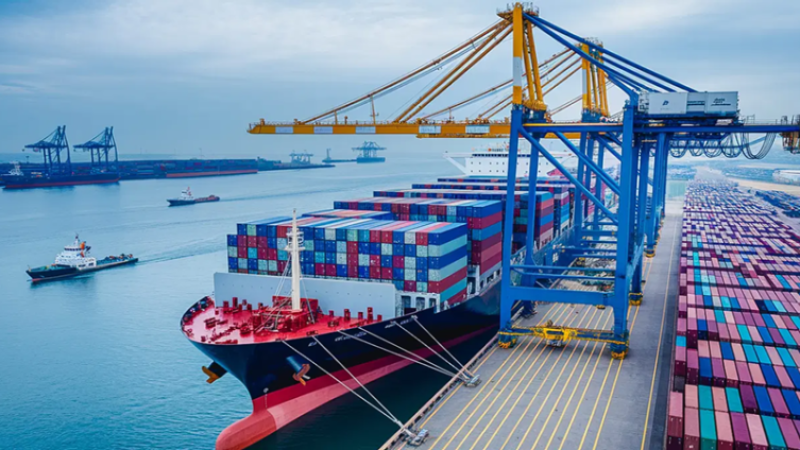
Kıran also evaluated global maritime transport, noting that despite political and geopolitical risks, the sector maintained resilience in 2025. Global seaborne trade grew by 1.1% in tonnage to 12.9 billion tons, and by 1.4% in ton-miles. Although this growth lagged behind the 2.5% increase recorded in 2024, it still demonstrated the sector’s robust structure.
Looking ahead, he described 2026 expectations as “cautiously optimistic.” With continued recovery in oil trade, global seaborne trade is projected to rise by 1.5% to 13.1 billion tons, with ton-mile growth of 1.9%. However, if Red Sea transit returns to normal, this increase may remain limited.
“All these figures show that even in a period full of uncertainties, the global maritime sector retains its growth potential and appetite for investment. At the same time, they highlight the need for Turkey to continue taking determined steps to strengthen its competitiveness in maritime trade.”