



How Can China Survive Without the Strait of Hormuz?
Paradoxically, although China is the world’s largest importer of oil through the Strait of Hormuz, it is one of the countries best positioned to withstand a closure of this waterway.
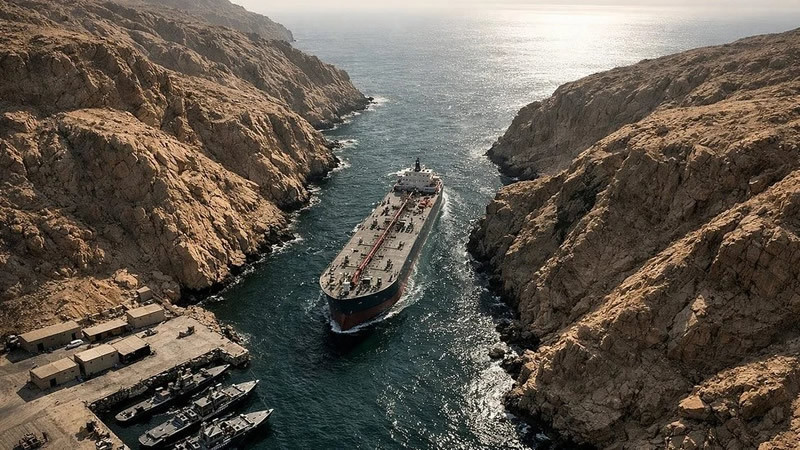

China consumes enormous amounts of oil from the Gulf, importing as much as India, Japan, and South Korea combined. In response to a potential closure, officials across Asia might ask citizens to save energy by taking shorter showers or working from home. China, however, emphasizes that it has its own “energy rice bowl.”
Thanks to years of policy measures aimed at reducing vulnerability to energy shocks, the country is more insulated than many of its neighbors.
China has an electric vehicle fleet equal in size to the rest of the world combined, large and growing oil reserves, diversified oil and gas sources, and an electricity grid that is nearly independent of imports thanks to domestic coal and renewable energy.
Lauri Myllyvirta, co-founder of the Centre for Research on Energy and Clean Air in Finland, told Reuters: “The current situation is very close to what Chinese planners have envisioned for decades. It justifies the effort to reduce dependence on seaborne fossil fuels.”
A Surprising Electric Vehicle Boom
In late 2020, Beijing announced a target for electric vehicle sales to reach 20% of new car sales by 2025. As of last year, sales had already reached half of all new cars.
This unexpected boom means China’s fuel consumption has peaked after decades of dizzying growth. The country now consumes and imports less oil than was forecast just a few years ago.
According to estimates by the Centre for Research on Energy and Clean Air, the amount of oil displaced by electric vehicles last year was roughly equal to China’s imports from Saudi Arabia.
An Insulated Power Grid
China’s electricity grid is powered almost entirely by coal and rapidly expanding renewable energy. The clean energy surge, which has exceeded Beijing’s own targets, means nearly all of the additional energy the economy requires each year is met by new solar or wind power. As a result, coastal provinces import less coal and less liquefied natural gas (LNG).
Lots of Oil, Many Suppliers
China imports vast amounts of oil, but unlike other major Asian importers, it avoids dependence on a single supplier.
Take Japan: Tokyo normally buys about 80% of its oil from Saudi Arabia and the United Arab Emirates. China, by contrast, buys the same share from eight different countries, including large volumes of discounted oil from Russia, Venezuela, and Iran—sources largely off-limits to most buyers due to U.S. sanctions.
China also channels part of these imports into its strategic petroleum reserve. The exact size of the reserves is unknown, but combined with commercial refinery stocks, some estimates suggest China has enough oil stored to cover about seven months of imports through the Strait of Hormuz.
Rising Domestic Production
Last year, China produced 4.3 million barrels of oil per day—a new record, covering about 40% of its total imports. However, reserves are depleting, and a repeat of the U.S. shale boom seems unlikely.
In gas, domestic production is rising so quickly that, combined with pipeline imports, China is actually importing less LNG than in 2020.
Its pipeline network reduces reliance on seaborne imports, enabling supplies from Russia, Central Asia, and Myanmar. Ambitious plans exist for another Russia-China pipeline, Power of Siberia 2, though completion is still years away.
A Safer Future
China’s growth has long relied on imported fossil fuels, especially crude oil. But thanks to the electric vehicle boom, the country is beginning to free its growth engine from dependence on foreign oil.
Chen Lin, vice president of oil and gas research at Rystad Energy, said: “China’s oil demand is likely to peak this year and then decline. So while the share of imports will remain high, the situation is unlikely to worsen.”