Turkish Lloyd Assessed the Future of Maritime at SAFEPASSAGE FORUM 2026
Prof. Dr. Oral Erdoğan, Chairman of the Board of Trustees of the Turkish Lloyd Foundation, shared his views on the future of the maritime industry at an international panel held in Baku as part of SAFEPASSAGE FORUM 2026.
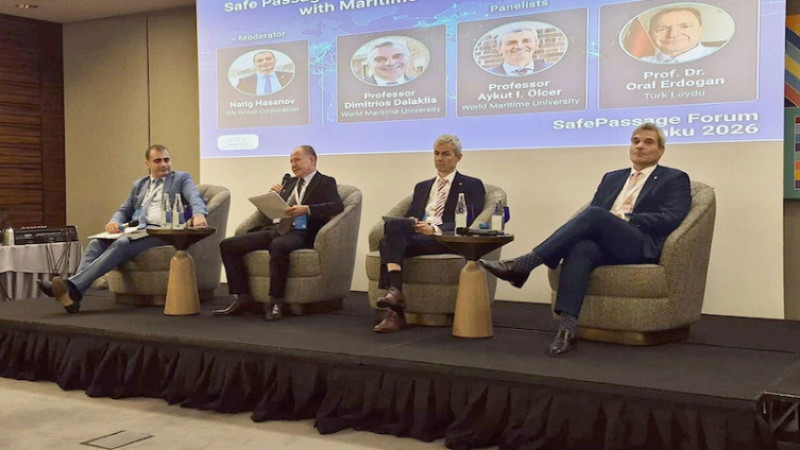

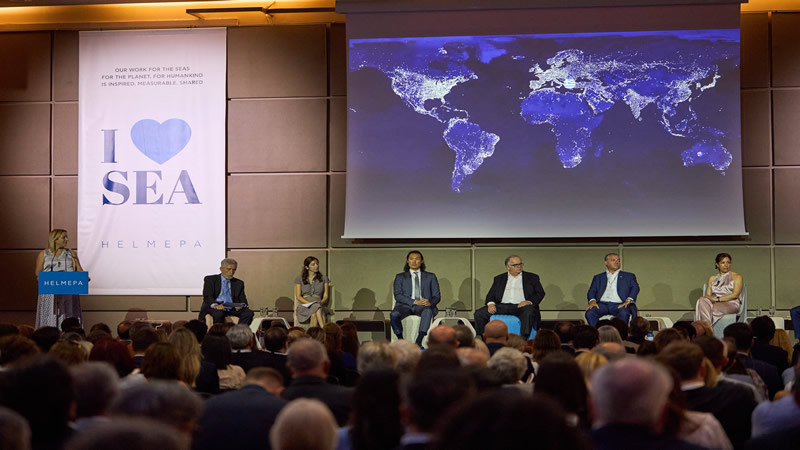
Prof. Dr. Oral Erdoğan, Chairman of the Board of Trustees of the Turkish Lloyd Foundation, participated as a panelist at an international panel held as part of SAFEPASSAGE FORUM 2026 in Baku, the capital of Azerbaijan.
During the panel, where critical topics including the future of the maritime industry, safety, digital transformation, decarbonization, and autonomous ships were discussed, Prof. Dr. Oral Erdoğan shared his views on the evolving role of classification societies and the future of maritime safety.
The panel was also attended by Mustafa Zorlu, Treasurer of the Turkish Lloyd Foundation, and Hüseyin Doğar, General Manager of Turkish Lloyd Conformity Assessment Services Inc.
Opening his remarks, Prof. Dr. Oral Erdoğan referred to the transformation of risk management in the banking sector as an example, stating that the maritime industry should adopt a similar approach. He said:
"The banking sector has learned important lessons from past crises. Today, banking risks can be measured, monitored, and managed in real time, allowing timely intervention when necessary. The same approach should apply to the maritime industry. Identifying, measuring, continuously monitoring, and effectively managing all risks related to ships will form the foundation for taking maritime safety to a higher level. This objective can only be achieved through the joint efforts of shipowners, operators, shipyards, classification societies, insurance companies, and maritime administrations."
Prof. Dr. Erdoğan also addressed the most significant challenges classification societies will face in the coming years, noting that the maritime industry's decarbonization and digitalization processes are rapidly transforming classification rules. He emphasized that ensuring the safe implementation of alternative fuel systems, artificial intelligence-based software, cybersecurity solutions, and carbon capture technologies is one of the primary responsibilities of classification societies.
Highlighting that classification societies support innovation without compromising safety, Prof. Dr. Erdoğan stated that these organizations are no longer merely rule-making bodies. Instead, they conduct risk analyses, perform engineering assessments, and guide the safe implementation of new technologies through simulations and pilot projects.
He also stressed the importance of cooperation with the International Maritime Organization (IMO) and flag states, stating that classification societies contribute their technical expertise to the development of international regulations and play an active role in preparing new regulatory frameworks, particularly the Maritime Autonomous Surface Ships (MASS) Code.
Prof. Dr. Erdoğan stated that by 2030, the technologies expected to have the greatest impact on classification rules will include alternative fuel systems, carbon capture technologies, artificial intelligence applications, cybersecurity, and continuous condition monitoring systems. He added that sensor technologies, digital twin applications, remote surveys, and data analytics are enabling the transition from periodic inspections to a continuous monitoring model, which will significantly enhance maritime safety.
Commenting on autonomous and remotely controlled ships, Prof. Dr. Erdoğan said that classification societies now adopt a holistic certification approach that covers not only vessels but also remote control centers, communication infrastructure, software reliability, cybersecurity systems, and emergency response scenarios. He emphasized that these technologies should achieve a safety level at least equal to, and preferably higher than, that of conventional ships.
In a statement, Turkish Lloyd said:
"By taking an active role on international platforms, Turkish Lloyd continues to contribute to the safe, sustainable, and technological transformation of the maritime industry while creating value on a global scale through its expertise and technical knowledge."