



China Restricts Supply, Japan Deploys Ship to Search for Rare Earths on the Seabed
Following China’s continued restrictions on the supply of critical minerals, Japan is intensifying efforts to secure rare earth resources.

Strategic Move
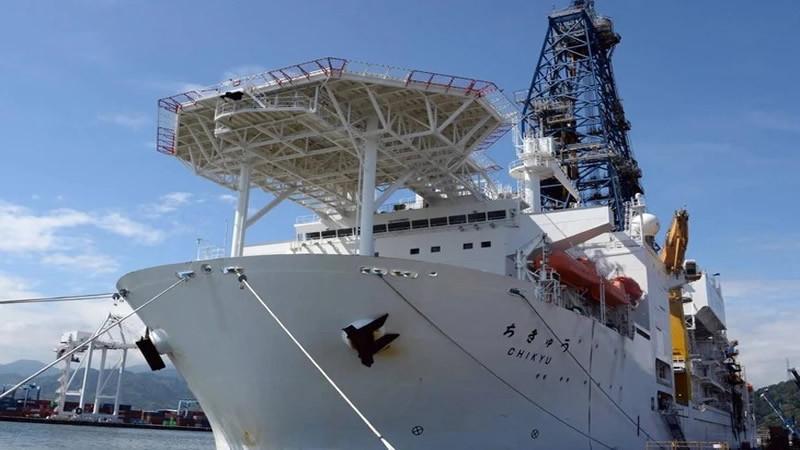
According to the South China Morning Post, on January 12 Japan dispatched the geological research vessel Chikyu to Minamitori Island. The mission aims to extract mud containing rare earth elements from a depth of 6 kilometers. This marks the world’s first attempt to pump rare earth–rich seabed mud directly onto a ship.
Importance of Minamitori
Located about 1,900 km southeast of Tokyo, Minamitori is known to be rich in rare earth elements. Japan hopes to establish a domestic supply chain to ensure stable access to minerals vital for industries such as electric vehicle production, smartphones, and military equipment.
Project leader Shoichi Ishii stated: “Our mission is to build a domestic rare earth supply chain to secure stable mineral supplies for key sectors.”
Diplomatic Tensions
The initiative comes amid escalating diplomatic strains. Last week, China banned exports of dual-use products—those with both civilian and military applications—to Japan. According to the Wall Street Journal, Beijing has also begun restricting rare earth exports on a broader scale.
Economist Takahide Kiuchi of the Nomura Research Institute commented: “The fundamental solution for Japan is to produce rare earth elements domestically.”
Reducing Dependence on China
Through projects in Australia and increased recycling, Japan has reduced its dependence on Chinese rare earths from 90% to 60%. However, for certain heavy rare earth elements used in electric vehicle magnets, Japan remains almost entirely reliant on China.
Investment and Future Plans
Since 2018, the Japanese government has invested 40 billion yen (about 250 million USD) in the project. If the current trial succeeds, full-scale mining is scheduled to begin in February 2027.
Economic and Geopolitical Dimensions
Although deep-sea mining is costly, analysts believe the project could become economically viable if China continues to restrict supplies. China is closely monitoring developments; last June, a fleet of Chinese naval vessels was spotted near a Japanese research ship.