
US Plans 500% Tariff on Russian Oil
US Treasury Secretary Scott Bessent announced that President Donald Trump could impose a 500% customs tariff on countries importing Russian oil without requiring Senate approval.
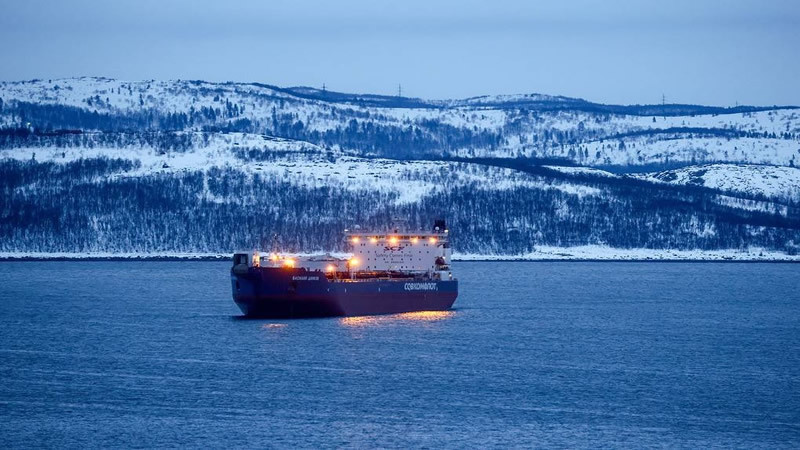

As Washington’s pressure grows, Russia’s oil exports have fallen to their lowest levels in recent years due to logistical problems and sanctions, causing significant losses in budget revenues.
Trump’s Authority in Focus
Bessent stated that Trump could implement this step by invoking the “International Emergency Economic Powers Act” (IEEPA). Speaking to Fox Business during the World Economic Forum in Davos, Bessent emphasized Trump’s capacity to use this authority: “We don’t think President Trump needs Senate approval. He can do this under IEEPA, but the Senate wants to grant him this power,” he said.
Bessent also pointed out that, despite sanctions, European countries continue to purchase Russian oil.
The Bill in Congress
A bill proposing a 500% tariff on imports of oil, gas, and other natural resources from Russia was introduced to Congress on April 1, 2025, by Senators Lindsey Graham and Richard Blumenthal. Although the bill has not yet become law, Graham has repeatedly stated that Trump supports it. In January 2026, Trump confirmed that he was “constantly” discussing tougher sanctions on Russia with Graham. He had also announced new restrictions on Russia-linked oil companies in October 2025.
Record Decline in Exports
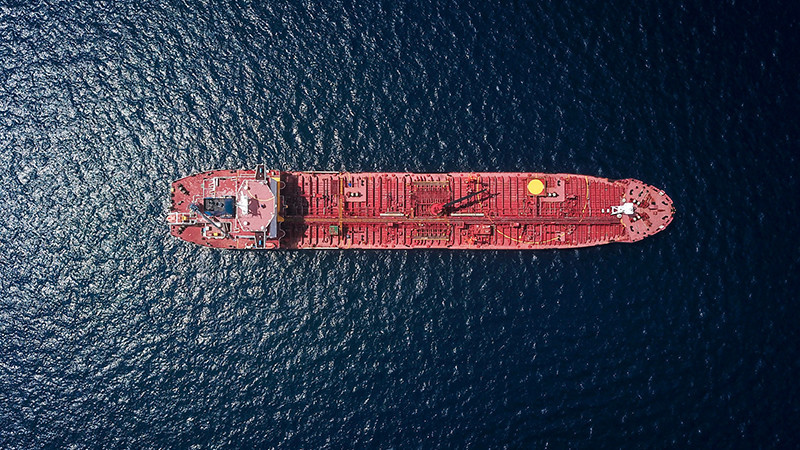
Although the tariff decision has not yet been formalized, energy shipments by tanker have already contracted. Bloomberg data shows that Russia’s seaborne oil exports fell to their lowest level since August during the December–January period, averaging 3.16 million barrels per day in the 28 days to January 18. This represents a drop of 700,000 barrels per day compared to the period before December 25, 2025.
Exports to India, one of Russia’s main buyers, fell sharply: from 1.78 million barrels per day in November to 1.2 million barrels in December, the lowest in three years. This decline came immediately after Trump’s sanctions on major Russian oil companies took effect.
Despite the drop in export volumes, the value of shipments increased. Between January 11–18, total shipment value rose by $40 million compared to the previous week, reaching $910 million.
China and Europe’s Role
According to China’s General Administration of Customs, cited by TASS, China’s imports of Russian oil in 2025 fell by 7.1% in volume and 20.4% in value, totaling $49.8 billion. However, in December, China purchased 11.7% more oil from Russia compared to November.
Hungary’s Warning
Hungarian Foreign Minister Péter Szijjártó, in a video message referring to the April 2026 parliamentary elections, warned that if the opposition comes to power, Budapest would halt oil and gas imports from Russia. He argued that such a scenario would have “tragic consequences” for the Hungarian economy.
Russia’s Energy Revenues
On January 19, Russia’s Finance Ministry released a preliminary assessment of the 2025 federal budget. The country’s oil and gas revenues fell by 23.8% compared to the previous year, dropping to 8.477 trillion rubles—the lowest level since 2020.